

A 28 day workout challenge is a four-week plan that repeats the same core exercises each week while you add weight, reps, or sets as you go. It mixes strength, cardio, and mobility, needs little to no equipment, and gives you a fixed end point to work toward instead of an open-ended routine.
Who this 28 Day Workout Challenge is for
This plan works best for someone who hasn’t trained consistently in a while, or who wants a structured reset without committing to a full gym program. The movements stay simple and repeatable, which matters more than most people expect. If a beginner is still learning basic form, changing the exercise list every week gets in the way of that. Someone with more training experience can still use this challenge; they’ll just start with a heavier load or a harder variation of each move from day one.
How the 4 Week Structure Works
The exercises don’t change from week to week. What changes is the volume, meaning the weight you lift, the reps you perform, or the number of sets you complete. Each week nudges one of those variables up, so by week four you’re doing noticeably more work than you were in week one, using the exact movements you’ve already practiced.
1. Week 1, Establish your Baseline
Perform each exercise at a manageable weight and rep range, focused on form rather than effort. This week exists so you have a number to compare against later, not to test your limits.
2. Week 2, Add Reps or Sets
Keep the weight the same as week 1, but add two to three reps per set, or add an extra set to each exercise. This is a small enough jump that recovery shouldn’t be an issue.
3. Week 3, Increase the Load
If your form held up through week 2, add weight to the main lifts, dumbbells, resistance bands, or a heavier household object, and drop back to your week 1 rep count at that new weight. Bodyweight-only exercises can add reps again instead.
4. Week 4, Combine Progress and Push the Pace
Take the highest weight, reps, and sets you managed across the first three weeks and try to hit all three at once. This is the week most people notice a real difference compared to day one.
A Sample Weekly Split
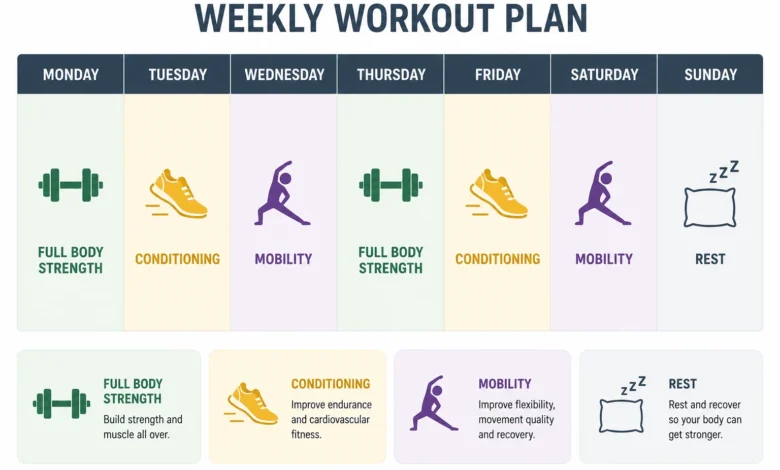
Spread the workouts across the week with rest or active recovery days between the harder sessions, rather than stacking every session back to back.
1. Full Body Strength, Twice a Week
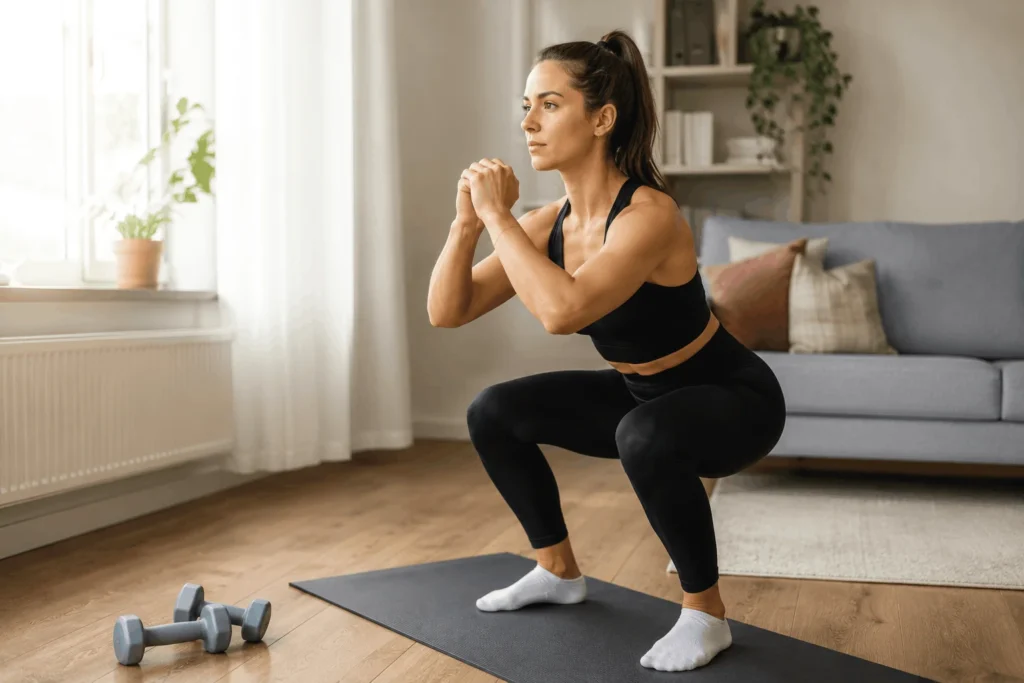
Squats, push-ups, rows using a band or dumbbells, and a hip hinge movement like a deadlift or glute bridge, done for 3 sets each. This covers the major muscle groups without needing a long list of exercises.
2. Conditioning, Once or Twice a Week
Short intervals such as 30 seconds of work followed by 30 seconds of rest, using moves like jumping jacks, mountain climbers, or a brisk walk or jog. This is where most of the cardiovascular benefit comes from.
3. Mobility, at Least Once a Week
Hip openers, shoulder circles, and a few minutes of stretching for the muscles that got worked hardest that week. This session is short but it protects the joints doing the heavier lifting on strength days.
Do You Need Equipment for this Challenge
No. Every movement in this challenge can be done with just bodyweight, and a pair of dumbbells or a resistance band simply gives you more room to progress once bodyweight reps get easy. If you’re working out at home with no equipment at all, lean harder on rep and set progression instead of load progression through weeks 2 through 4.
What Results to Expect from a 28 Day Workout Challenge
Four weeks is enough time to notice better exercise form, more consistent energy, and a small but real jump in strength on the specific movements in the plan. It’s not enough time to expect a dramatic change in body composition. The Centers for Disease Control and Prevention recommends adults get 150 minutes of moderate to vigorous activity a week, and this challenge is built to land in that range once you count the strength and conditioning sessions together. Fat loss depends on your overall calorie balance and diet as much as the workouts themselves, so pair the plan with reasonable eating habits if that’s part of your goal.
What to do if You Miss a Day
Missing a session doesn’t reset the challenge. Pick the plan back up on the day you would have trained next, rather than trying to cram in the missed workout on top of your next one. If you miss most of a week, it’s fine to repeat that week’s volume once more before moving to the next stage instead of jumping straight to the harder week.
How to Stay Consistent Through All 4 weeks
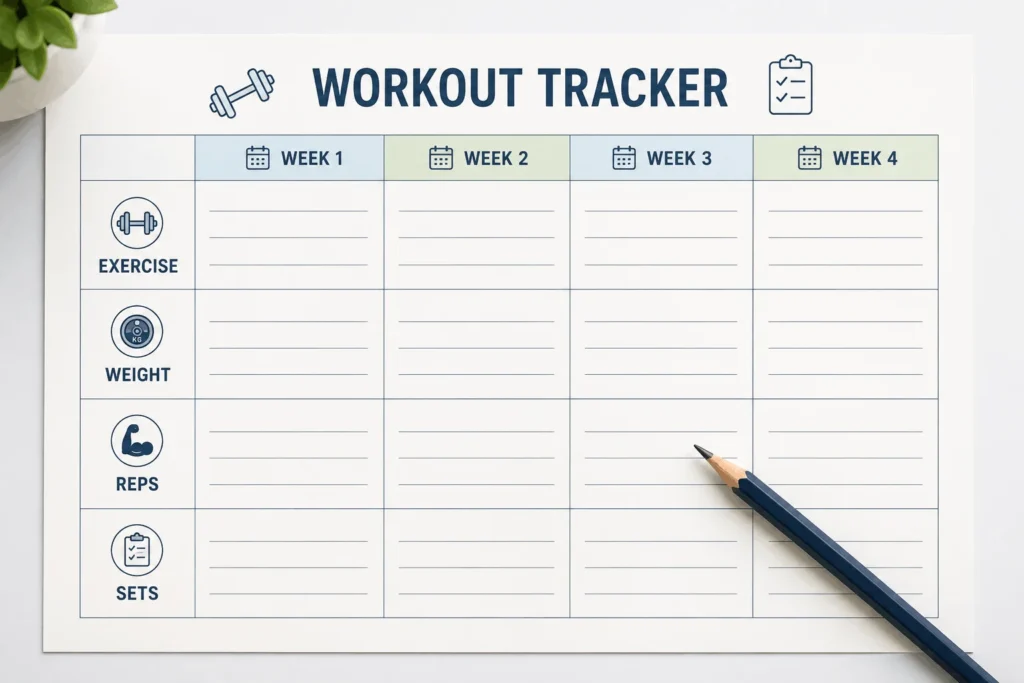
Write your numbers down every session. A blank chart with a spot for weight, reps, and sets takes ten seconds to fill in and turns “I think I did more last week” into something you can actually compare. Scheduling the workout at a set time, rather than fitting it in whenever the day allows, also makes it far more likely to happen; treating it like an appointment removes the daily decision of whether today’s the day.
A 28 day workout challenge won’t turn four weeks into a finished physique, but it will leave you with a working routine, a record of your own progress, and a clear sense of what to do with week five.
FAQ’S
1. Can beginners do a 28 day workout challenge?
Yes. The exercises stay the same throughout, so beginners get repeated practice with the same movements while gradually adding weight, reps, or sets instead of learning new exercises every week.
2. Do I need a gym for a 28 day workout challenge?
No. Bodyweight exercises can carry the entire plan, and a set of dumbbells or a resistance band is optional for extra progression once bodyweight reps get easy.
3. How much weight can I expect to lose in 28 days?
Weight loss depends mostly on your overall diet and calorie balance, not just the workouts. Four weeks of consistent training supports fat loss but isn’t guaranteed to produce a specific number on the scale.
4. What if I can’t complete a full week?
Pick up the plan on your next scheduled workout day. If you miss most of a week, repeat that week’s volume once before moving on rather than skipping ahead.
5 .Can I do this challenge every day?
The sample split spreads strength, conditioning, and mobility across different days on purpose. Training every single day without rest or recovery raises the risk of overuse injury rather than speeding up results.