


To lose 2 pounds a week, eat about 1,000 fewer calories per day than your body burns, using a mix of smaller portions, more daily movement, and better sleep. Two pounds a week is the upper end of what the Centers for Disease Control and Prevention (CDC) calls a safe pace: 1 to 2 pounds per week. It works well for many adults, but it is not right for everyone, and it takes planning.
This guide covers the math, the food choices, the exercise, and the mistakes that stall progress. Everything is written for a typical American routine, with grocery store food and a normal work week.
Is Losing 2 Pounds a Week Safe and Realistic?
For most adults with a meaningful amount of weight to lose, yes. The CDC states that people who lose weight gradually, about 1 to 2 pounds per week, are more likely to keep it off. Two pounds is the top of that range, so it fits best if you have more than a few pounds to lose.
If you are already near a healthy weight, aiming for 2 pounds a week is usually too aggressive. A slower pace of 0.5 to 1 pound is easier to sustain and less hard on your muscles. Your own number should depend on your starting weight, your age, and your health history.
People with diabetes, heart disease, kidney problems, a history of disordered eating, or who are pregnant or nursing should talk with a doctor first. The same goes for anyone taking medication that affects weight or blood sugar. A short visit before you start costs little and can prevent real problems.
The Math Behind a 2-Pound Weekly Loss
One pound of body fat is commonly estimated at 3,500 calories. To lose 2 pounds in seven days, that works out to roughly 7,000 calories, or a daily gap of around 1,000 calories between what you eat and what you burn.
This formula is a starting point, not a promise. The National Institute of Diabetes and Digestive and Kidney Diseases (NIDDK) offers a free Body Weight Planner that models how your metabolism shifts as you lose weight. It shows that weight loss usually slows over time, because a lighter body burns fewer calories.
Expect faster results in week one. Part of that early drop is water and stored carbohydrate, not fat. Do not be discouraged when the scale slows in week three.
Find Your Daily Calorie Target
Start by estimating how many calories you burn each day. The Mayo Clinic Mifflin-St Jeor style calculators and the NIDDK planner both do this using your age, height, weight, sex, and activity level. Write down that number, then subtract your deficit.
Here is a simple example. Say a 200-pound man burns about 2,800 calories a day. A 1,000-calorie deficit puts his target near 1,800, which is workable.
Now take a 150-pound woman who burns about 1,900 calories a day. A 1,000-calorie deficit would drop her to 900, which is too low and not safe without medical supervision. For her, 2 pounds a week is the wrong goal.
Mayo Clinic and Harvard Health both note that diets below about 1,200 calories for women and 1,500 for men should only be followed under a doctor’s care. Treat those as floors, not targets. If the math puts you below them, slow the pace instead.
Split the Deficit Between Food and Movement
You do not have to cut all 1,000 calories from your plate. A common split is 500 to 700 from food and 300 to 500 from activity. This keeps hunger manageable and protects your energy for work and family.

Cutting everything from food is the quickest way to burn out by week two. Moving more gives you a bigger eating budget and helps hold on to muscle. Most people find the split easier to repeat for months, which is where results come from.
What to Eat to Stay Full on Fewer Calories
Volume and protein are your two best tools. Foods with lots of water and fiber fill the stomach for few calories, while protein keeps hunger down between meals. Build each plate around those two ideas.
1. Put Protein First
The National Academies of Sciences recommends a minimum of 0.8 grams of protein per kilogram of body weight for adults, which is about 0.36 grams per pound. Many dietitians suggest going higher during a calorie deficit to protect muscle, but the right amount depends on your kidneys and overall health, so ask your doctor or a registered dietitian.
Practical choices include eggs, plain Greek yogurt, chicken breast, canned tuna, cottage cheese, lentils, and tofu. A palm-sized portion at every meal is an easy rule that needs no app.
2. Eat More Vegetables, Fruit, and Fiber
The Dietary Guidelines for Americans from the USDA and the Department of Health and Human Services recommend filling half your plate with fruits and vegetables. A big salad, roasted broccoli, or a bowl of berries takes up space on the plate for very few calories. Beans, oats, and whole grains add fiber that slows digestion.
Skip the fancy diet products. A bag of frozen vegetables from Walmart or Kroger does the same job for a couple of dollars.
3. Cut the Liquid Calories
A 20-ounce regular soda holds roughly 240 calories, and a large sweetened coffee drink from a chain can top 400. Swapping those for water, sparkling water, black coffee, or unsweetened tea is often the single easiest cut. Many people drop 200 to 400 calories a day with this one change and never feel hungry.
Alcohol counts too. A glass of wine runs about 120 calories and a pint of beer around 150, and both lower your guard around snacks.
A Sample Day at Around 1,800 Calories
This is an example for illustration, not a prescription. Adjust portions to your own target.
Breakfast could be three scrambled eggs with spinach and one slice of whole-grain toast, plus a cup of berries. Lunch might be a grilled chicken salad with chickpeas and olive oil dressing, with an apple on the side. Dinner could be baked salmon, a medium sweet potato, and a large serving of green beans.
Add a snack such as plain Greek yogurt with a few almonds. Water or unsweetened tea fills the gaps. Totals will vary by brand and portion, so check labels or use a free tracker like the USDA’s FoodData Central to verify numbers.
Exercise That Burns Calories Without Wrecking You
The CDC recommends at least 150 minutes of moderate aerobic activity a week for adults, plus muscle-strengthening work on 2 or more days. That is the baseline for health. For weight loss at a 2-pound pace, many people need to go beyond it.
Walk More Than You Think You Need To
Walking is the lowest-risk option for beginners. A brisk 45-minute walk burns roughly 200 to 300 calories for most people, depending on body weight and speed. Five of those a week covers a large share of your activity goal.
Daily steps outside of workouts count too. Parking farther away, taking stairs, and walking during phone calls add up.
Lift Weights Twice or Three Times a Week (H3)
Strength training helps you keep muscle while you lose fat, which matters because muscle keeps your resting metabolism higher. Simple moves like squats, push-ups, rows, and deadlifts with moderate weights are enough. Two full-body sessions of 30 to 40 minutes are a good start.
If you are new to lifting, learn the form from a certified trainer or a reputable video first. Poor technique causes injuries that sideline you for weeks.
Add One or Two Higher-Intensity Sessions
Cycling intervals, a hill walk, or a jog can burn 400 to 600 calories in an hour for many adults. Keep these to one or two a week while you build up. If joint pain is an issue, a stationary bike or pool is gentler.

Sleep, Stress, and Hunger Hormones
Sleep gets overlooked, but it changes how hungry you feel. The CDC recommends at least 7 hours of sleep per night for adults. When you sleep less, cravings for sugary and salty food tend to rise, and self-control falls.
Stress works the same way. If evenings are your danger zone, plan a walk, a shower, or a hobby instead of heading to the pantry. Small habits like these protect your deficit better than willpower alone.
How to Track Progress Without Going Crazy
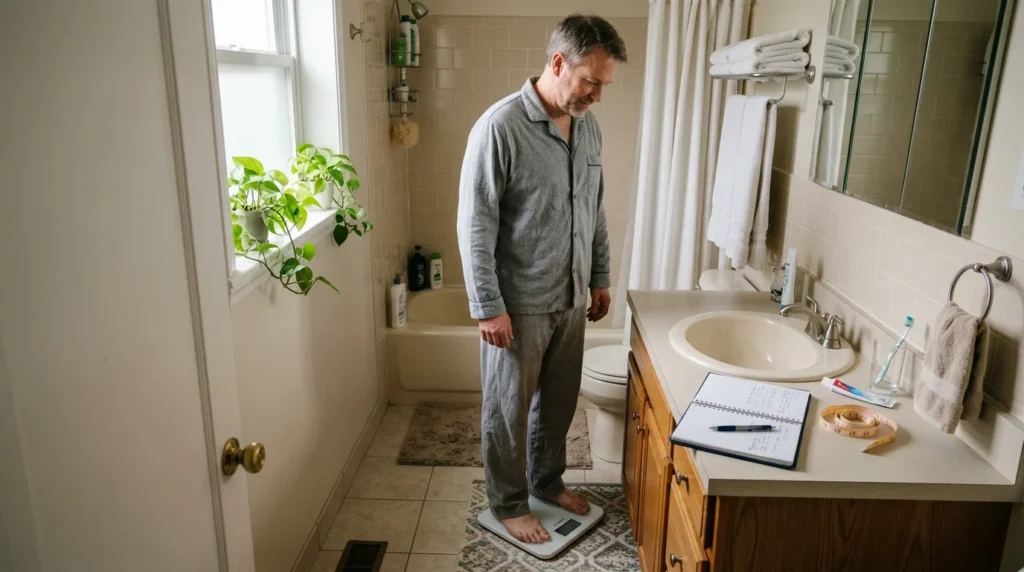
Weigh yourself at the same time each morning, ideally after using the bathroom and before eating. Then look at the weekly average rather than any single day. Daily swings of 2 to 4 pounds from salt, hormones, and water are normal.
Also track your waist measurement and how your clothes fit. These often move even when the scale holds still. A photo every two weeks in the same lighting can show changes you will not notice day to day.
Keep a simple food log for the first few weeks. Many people discover 300 to 500 untracked calories in sauces, oils, and weekend snacks. Writing it down is usually enough to fix it.
Why You May Not Be Losing 2 Pounds a Week
If the scale is flat after two weeks, check the basics before cutting more. The most common culprits are portion creep, weekend eating, and a calorie target that was set too high from the start. Another frequent mistake is overestimating exercise burn, since fitness watches often run high.
Water retention can mask fat loss for a week or more, especially after a hard workout or a salty meal. Give it a full two to three weeks of consistent data before changing the plan. If you have followed the plan closely for that long with no change, ask your doctor to rule out thyroid or hormone issues.
Plateaus are also a built-in part of the process. As you lose weight, you burn fewer calories, so the same eating plan produces a smaller deficit. Recalculate your target every 10 to 15 pounds lost.
Mistakes That Make a 2-Pound Pace Backfire
Crash dieting is the biggest one. Going far below your needs raises the chance of losing muscle, feeling dizzy, and rebounding with a binge. Skipping meals to save calories often leads to overeating at night.
Another mistake is relying on so-called detox teas, cleanses, or supplements. The Federal Trade Commission has repeatedly acted against weight loss products with unproven claims, so treat any promise of fast results from a pill as a red flag. Real change comes from food and movement.
Finally, do not treat 2 pounds as a rule you must hit every week. Some weeks you will lose 1, and some weeks 3. The average across a month is what counts.
Who Should Aim for a Slower Pace
Aim for 0.5 to 1 pound a week if you have less than 20 pounds to lose, are older with joint or heart concerns, or are newly active after a long break. A slower pace is also wise if you struggle with hunger or have a demanding job with little time to prepare food. Consistency beats speed over a year.
If counting calories or chasing weekly numbers triggers anxiety, guilt, or restrictive habits, stop and speak with a doctor or mental health professional. The National Alliance for Eating Disorders runs a helpline for anyone worried about their relationship with food.