

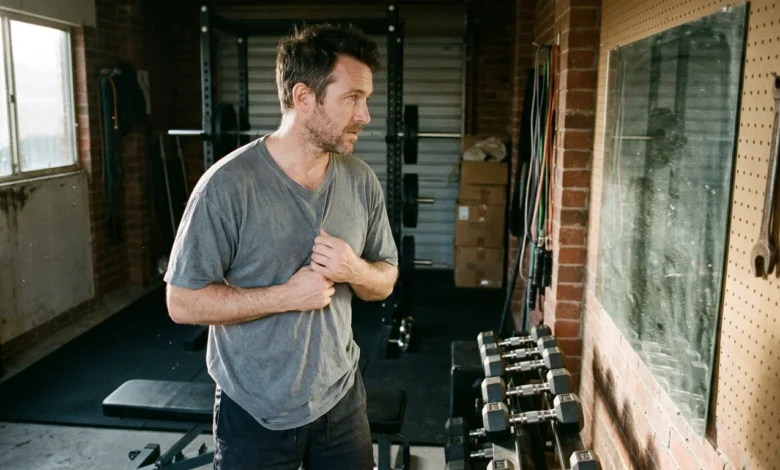
How to get rid of man boobs comes down to one question: is the extra chest tissue fat, glandular tissue, or both? If it is mostly fat, losing body fat through a modest calorie deficit, strength training, and regular cardio will shrink it. If it is firm glandular tissue, no number of push-ups will remove it, and your options are to address the cause or do surgery.
This guide explains how to tell the difference, what to do for each type, and when a chest change needs a doctor instead of a gym plan. It is written for adult men in the US and is general information, not a diagnosis.
Fat or Gland Tissue? Start Here
Doctors use two terms for an enlarged male chest. Gynecomastia is growth of actual breast gland tissue. Pseudogynecomastia is extra fat with no gland growth. The Mayo Clinic explains that gynecomastia comes from an imbalance between estrogen and testosterone, while fat-only enlargement tracks with overall body weight.
You can get a rough idea at home. Lie on your back and press gently around the nipple. A firm, rubbery disk under the nipple that feels separate from the surrounding soft tissue suggests glandular tissue. Even soft tissue that feels like fat elsewhere on your body points to fat.
A home check is only a hint, since many men have both. A primary care doctor can confirm with a physical exam and, when needed, blood tests or imaging.
Common Causes of an Enlarged Male Chest
1. Hormone Shifts
Hormones change at predictable times. According to the Mayo Clinic, newborns, teenage boys, and men between roughly 50 and 69 are the groups most often affected. In teens, it often fades on its own within six months to two years.
In adult men, low testosterone, liver or kidney disease, thyroid problems, and some tumors can also tip the balance toward estrogen. These need a medical workup, not a workout plan.
2. Medications and Substances
Many drugs are linked to breast growth in men. The Mayo Clinic’s list includes anabolic steroids, anti-androgens used for prostate conditions, some heart medications (spironolactone and digoxin), the ulcer drug cimetidine, certain antidepressants, and some HIV medications. Heavy alcohol use, marijuana, and opioids are on the list too.
Never stop a prescription on your own. Bring your medication list to your prescriber and ask whether an alternative exists.
3. Weight Gain
Body fat raises estrogen because fat tissue converts some androgens into estrogen. That is one reason a bigger belly and a bigger chest often arrive together. It also means fat loss can help even when some gland tissue is present.
Fat Loss Steps That Shrink the Chest
You cannot choose where your body burns fat. Spot reduction is a myth, so chest fat leaves only as total body fat drops. The good news is that the chest often responds once overall fat comes down.
Eat in a Modest Calorie Deficit
The CDC suggests aiming for 1 to 2 pounds of weight loss per week. A daily deficit of about 500 calories is a common starting point. Crash diets backfire because they cost muscle and are hard to keep up. Track your food for two weeks to see where the calories really come from.
Protein helps you keep muscle while you lose fat, and a palm-sized serving at each meal is a workable target for most men. Fiber from beans, oats, vegetables, and fruit keeps you full longer.
Alcohol adds calories fast, and a few beers a night can erase a deficit. Heavy drinking also appears on the list of possible contributors to male breast enlargement.
Cardio and Strength Work
The CDC recommends adults get at least 150 minutes of moderate aerobic activity a week, plus muscle-strengthening work on two or more days. Brisk walking, cycling, swimming, and rowing all count. Add short interval sessions once your base is built.
Strength training protects muscle during a diet. Train legs and back as hard as chest, because large muscle groups burn more energy.
Chest Exercises That Improve Shape
Exercises do not burn chest fat directly. What they do is build the pectoral muscle under the fat, which gives the chest a firmer, flatter profile as the fat drops. Pick a few movements and add weight or reps over time.
- Push-ups with hands slightly wider than shoulders, 3 sets close to failure
- Dumbbell or barbell bench press, 3 to 4 sets of 6 to 12 reps
- Incline dumbbell press for the upper chest
- Cable or dumbbell fly for a controlled stretch
- Rows and face pulls, since a strong upper back pulls the shoulders back and makes the chest look less rounded
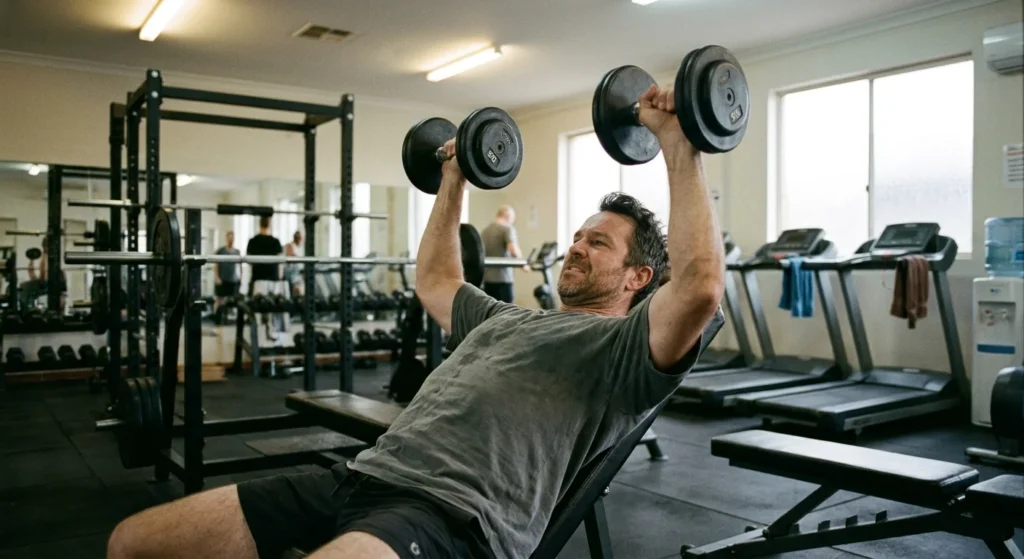
Train chest two or three times a week, with a rest day between sessions. Posture matters too, because rounded shoulders push the chest forward. Rows, band pull-aparts, and a few minutes of doorway chest stretching help.
Do Supplements, Creams, and Compression Shirts Work?
Mostly no. Pills and creams sold as gynecomastia fixes have no solid proof that they remove gland or fat tissue, and some products have turned up with undisclosed drug ingredients. The FDA has issued repeated public warnings about tainted supplements sold for bodybuilding, so a bottle promising a flat chest in weeks deserves suspicion.
Compression shirts are a different story. They do not shrink tissue, but they flatten the look of the chest under clothes and cost little. Treat them as a cover-up while the real work happens.
Tell a doctor before taking any supplement that claims to affect hormones, especially if you already take prescriptions.
Medical Treatment Options in the US
1. Medication and Hormone Review
A doctor can check your medication list, order blood tests for testosterone, estrogen, thyroid, liver, and kidney function, and screen for underlying conditions. Treating the cause sometimes reduces the tissue, especially when the growth is recent.
2. Drug Treatment
Some specialists prescribe tamoxifen or similar drugs off-label for painful, recent-onset gynecomastia. The FDA has not approved a drug specifically for this use, so the decision is individual and should come from an endocrinologist or an experienced physician.
3. Surgery
Firm tissue that has been present for a long time rarely goes away on its own, and surgery is the most dependable fix. The American Society of Plastic Surgeons describes male breast reduction as liposuction, gland removal, or both, depending on what the chest contains.
Surgeon fees alone often run several thousand dollars in the US, and the total rises with facility and anesthesia charges. Insurers frequently treat the procedure as cosmetic, though some cover it when there is a documented medical cause or pain. Ask for a pre-authorization answer in writing before you book.
Choose a board-certified plastic surgeon, ask how many male breast reductions they perform each year, and look at before-and-after photos of patients with a build like yours. Expect swelling, a compression garment for a few weeks, and a pause from heavy lifting.

A 12-Week Test to See Whether Fat Loss Is Enough
If you are working out how to get rid of man boobs with lifestyle changes alone, a short experiment gives you a real answer instead of a guess.
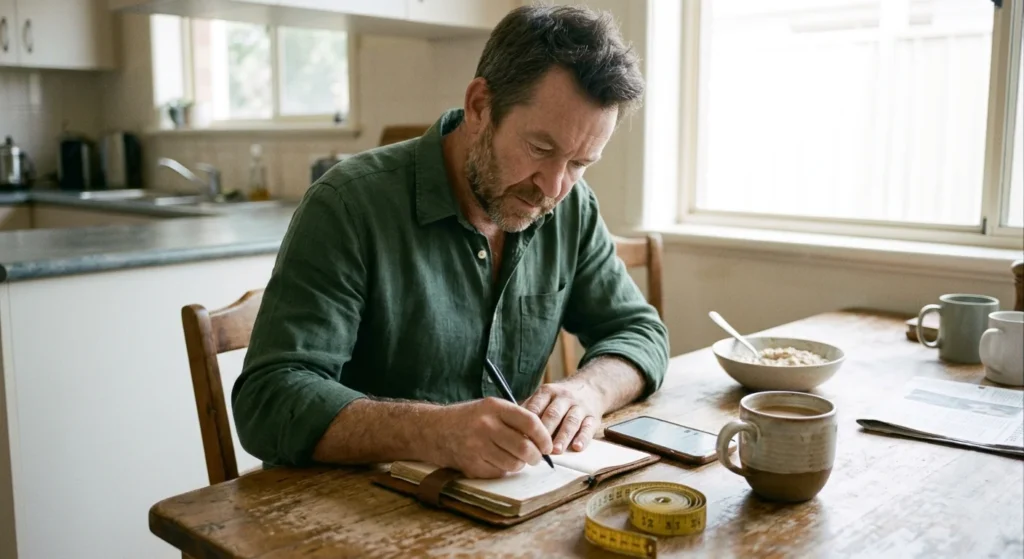
- Week 0: Take front and side photos in the same light, measure chest circumference across the nipple line, and record your weight.
- Weeks 1 to 12: Hold a modest calorie deficit, strength train three days a week, and walk or do cardio most days.
- Every two weeks: Repeat the photos and measurements, and watch the trend rather than a single day’s reading.
- Week 12: Compare. A chest that softened and shrank along with your weight is mostly fat. A firm disk that stays the same size while your waist shrinks is likely gland tissue.
If you have lost 5 to 10 percent of your body weight and a firm, stubborn disk remains, book a doctor’s visit instead of dieting for another 12 weeks.
Mistakes That Slow Progress
Doing hundreds of chest reps while eating at maintenance is the most common one. Others include crash dieting and wearing sweat suits to “melt” fat, since the water you lose comes back with your next drink.
Short sleep also gets in the way. The CDC lists seven hours as the minimum for adults, and poor sleep makes appetite harder to control.
When to See a Doctor Right Away
Most cases of an enlarged male chest are not cancer, but a few signs call for prompt attention. See a doctor if you notice:
- A hard lump on one side only, or one breast much larger than the other
- Nipple discharge or a nipple turning inward
- Dimpling, redness, or scaling of the skin
- Pain or tenderness that does not fade
- Swollen lymph nodes in the armpit
The American Cancer Society says breast cancer in men is rare, making up about 1 percent of all breast cancers, but it does happen. Men with a family history of breast cancer or BRCA gene changes should be quick to get a lump checked.
Sudden growth in a teen or an adult with no clear cause also deserves a visit.