

A good pilates arm workout does more than shape your biceps and triceps. It trains the small stabilizing muscles around your shoulders and upper back, the ones that keep your posture upright and your joints supported as you age. That combination of endurance work and control is why so many people notice a leaner, more defined look in their arms within a few weeks of consistent practice, without ever touching a heavy dumbbell.
This workout uses eight moves you can do on a mat with light hand weights or a resistance band. Each one targets a different part of the arm, from the shoulders down to the wrists, so by the end you have worked the whole limb rather than just one muscle group.
Why Pilates Is Effective for Toning Arms
Traditional weight training builds size through heavy loads and low reps. Pilates takes the opposite route. It uses light resistance, high repetition, and slow, controlled tempo, particularly on the eccentric or lowering phase of each movement. That eccentric emphasis is what creates a long, defined muscle shape rather than bulk.
The other piece is stability. Because pilates keeps your core engaged and your spine in a neutral position throughout every arm movement, your shoulders and upper back have to work continuously just to hold your form. This is why a pilates arm workout tends to leave your whole upper body feeling worked, not just your arms in isolation.
None of this replaces strength training if your goal is to build significant muscle mass. But for lean definition, better posture, and joint health around the shoulder, it is one of the most efficient formats available.
What You Need Before You Start
You do not need a reformer or a studio membership for this routine. A few basics are enough.
A yoga mat gives your spine and hips support during floor work. A pair of light dumbbells, in the one to three pound range, adds enough resistance to make the higher-rep moves challenging without straining your joints. If you do not have weights, a resistance band or even two filled water bottles will work just as well. A pilates ring is optional but useful for the isometric moves later in this routine.
Wear something that lets you see your arm alignment in a mirror if possible. Form matters more than speed in every one of these exercises.
The Pilates Arm Workout
Do each exercise for 10 to 15 reps, or 20 to 30 seconds for isometric holds. Move through all eight once for a quick session, or repeat the full circuit two to three times for a longer workout.
1: Tricep Press
Stand or kneel tall with a dumbbell in each hand, elbows bent and lifted to shoulder height, as if holding a torch in each palm. Press your arms straight out to the sides until they are fully extended, then bend back to the starting position with control. Keep your shoulders down and away from your ears the whole time. This move isolates the triceps, the muscle most people mean when they talk about toning the back of the arm.
2: Bicep Curl with a Twist
Start in a standing pilates stance, heels together and toes turned out, elbows tucked to your waist. Curl the dumbbells up toward your shoulders while rotating your palms to face you, then lower with control while rotating back. The rotation recruits more of the forearm and bicep than a standard curl, and the narrow stance forces your core to stay engaged for balance.
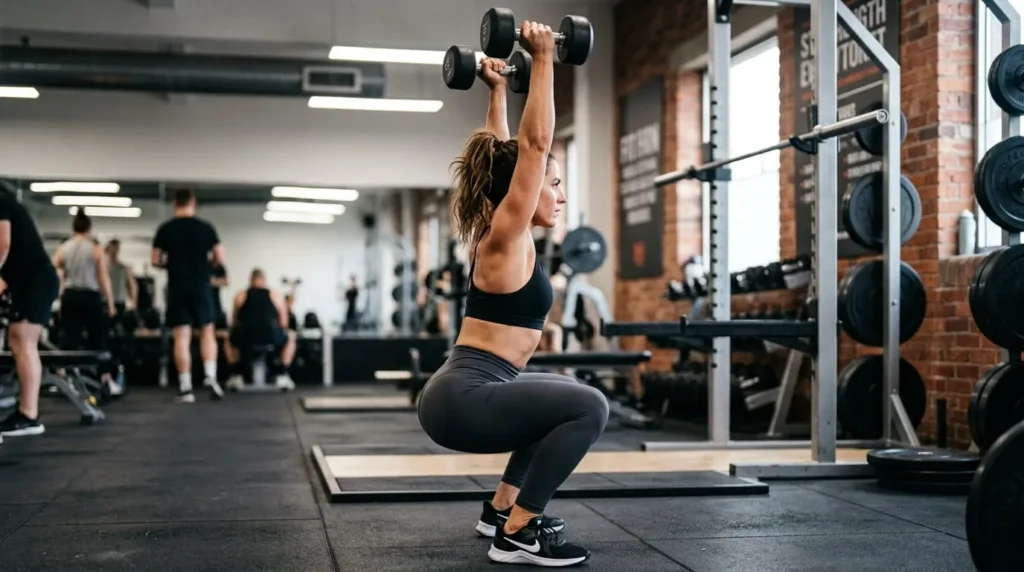
3: Shoulder Press to Squat
Lower into a squat with your feet hip-width apart, dumbbells held at shoulder height with elbows tucked in. Press your arms straight up overhead, then lower back down as you sink deeper into the squat. Combining the press with a squat turns this into a full-body move, but keep your focus on pressing straight up rather than letting your arms drift forward.
4: Reverse Fly
Hinge forward slightly at the hips with a soft bend in your knees, dumbbells hanging below your shoulders and palms facing each other. Lift your arms out to the sides until they reach shoulder height, squeezing your shoulder blades together, then lower slowly. This move targets the rear deltoids and upper back muscles that most arm workouts skip entirely, and it is one of the best exercises here for improving posture.
5: Tricep Kickback
From the same hinged position, bend your elbows so your upper arms are parallel to the floor. Straighten your arms back behind you until they are fully extended, pause, then bend back to the starting position. Keep your upper arms still throughout so the movement comes entirely from the elbow joint. This is the move that most directly targets the underside of the upper arm.
6: Pilates Ring Squeeze
Hold a pilates ring between your palms at chest height, elbows bent and slightly lower than your wrists. Squeeze the ring inward and hold for two to three seconds, then release without letting the ring fully open. This isometric hold builds endurance in the chest and inner arm muscles and is a useful substitute if your wrists need a break from gripping dumbbells.
7: Plank Shoulder Taps
Hold a forearm or high plank position with your feet slightly wider than hip-width for stability. Lift one hand and tap the opposite shoulder, then set it back down and repeat on the other side. Keep your hips as still as possible throughout. This move builds shoulder and wrist stability while also challenging your core, making it one of the more demanding exercises in this workout.
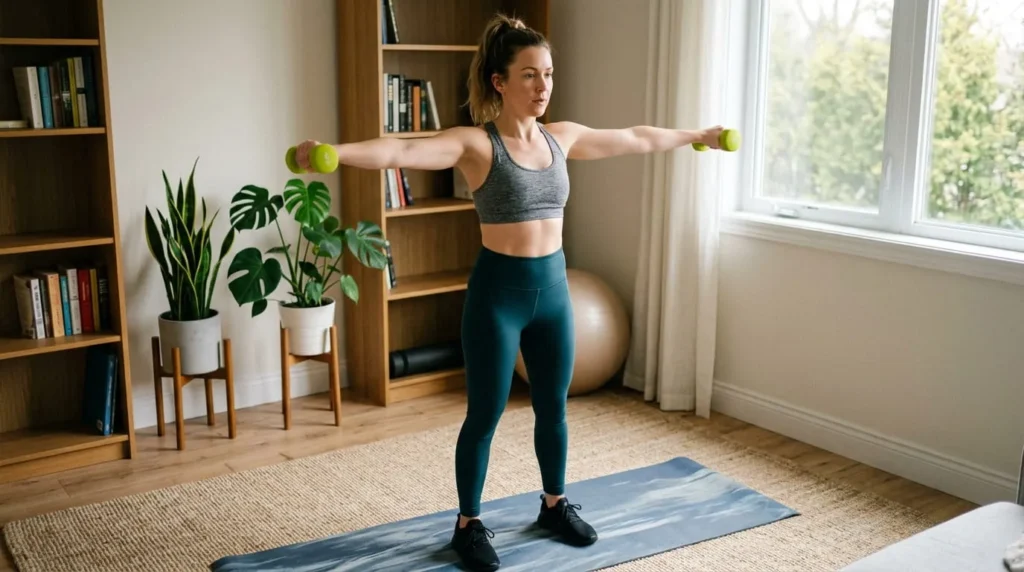
8: Arm Circles with Weights
Extend both arms straight out to the sides at shoulder height, dumbbells in each hand. Make small, controlled circles forward for 20 seconds, then reverse direction for another 20 seconds. Keep your shoulders relaxed and avoid shrugging as fatigue sets in. This finishing move burns out the shoulders after the heavier pressing and curling work earlier in the routine.
How to Fit This Workout Into Your Week
Three sessions a week is enough to see noticeable change in arm tone and shoulder stability within four to six weeks, provided your diet and overall activity level support it. Muscle definition depends on reducing the layer of fat over the muscle as much as it depends on building the muscle itself, so pilates alone will not create visible tone if nothing else in your routine changes.
Pair this arm circuit with your regular core or full-body pilates sessions rather than doing it as a standalone workout every day. The shoulders and forearms need at least one full rest day between sessions to recover, especially once you increase your weight or rep count.
Common Mistakes to Avoid
The biggest mistake is choosing weights that are too heavy. Pilates arm work depends on slow, controlled movement through a full range of motion, and a weight that forces you to rush or use momentum defeats that purpose. Start lighter than you think you need.
The second mistake is letting your shoulders creep up toward your ears, particularly during presses and curls. This shifts the work away from your arms and onto your neck and upper trapezius, which can lead to tension headaches over time. Keep actively pulling your shoulder blades down your back throughout every rep.
Finally, avoid holding your breath. Pilates breathing is meant to be continuous and controlled, exhaling on the effort phase of each move. Holding your breath raises your blood pressure unnecessarily and makes it harder to stay stable through your core.