
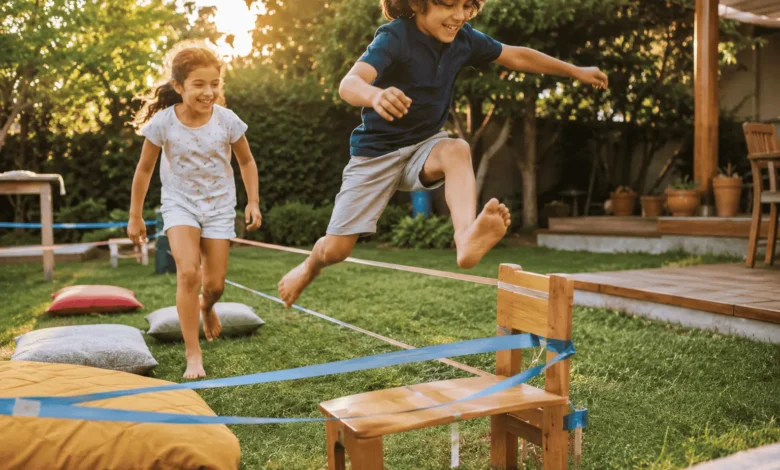
Kids fitness activities work best when they don’t feel like exercise. Games like tag, obstacle courses, dance freezes, and balance challenges build strength and coordination while kids just think they’re playing. The goal is 60 minutes of movement a day, spread across whatever keeps them engaged
How much Physical Activity Do Kids Actually Need
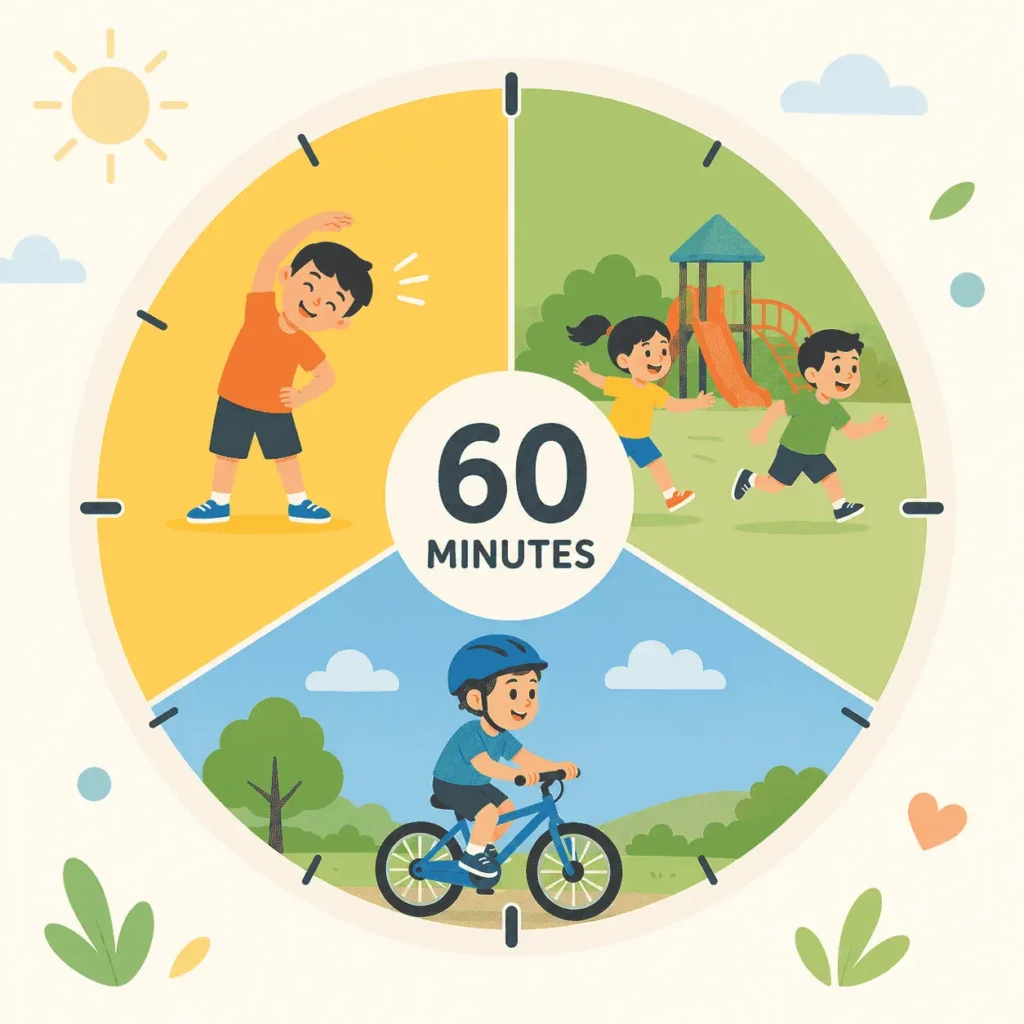
The Centers for Disease Control and Prevention recommends that children and adolescents ages 6 to 17 get at-least 60 minutes of moderate to vigorous physical activity every day. That hour doesn’t need to happen in one block. Ten minutes of jumping jacks before school, a bike ride after dinner, and a game of tag at recess all count toward the same total.
Younger kids, ages 3 to 5, don’t have a strict minute target, but pediatric guidelines call for active play throughout the day, both structured and unstructured. A toddler chasing a ball around the living room is doing exactly what their body needs.
Indoor Fitness Activities For Kids
Bad weather, small apartments, and busy schedules don’t have to mean a sedentary day. Indoor play can build the same gross motor skills as a playground, just with a little creativity.
Activities for Toddlers and Preschoolers
Balloon volleyball is a favorite for this age group. Blow up a balloon and keep it off the floor using hands, heads, or feet. Because balloons float slowly, even a 3-year-old can track and hit one, which builds hand-eye coordination without the frustration of a faster ball.
A towel folded lengthwise on the floor makes an instant balance beam. Start wide for beginners and fold it thinner as your child gets steadier on their feet. Add a theme, like crossing a lava bridge, and the balance practice turns into a story.
Animal walks are another simple win. Walking like a bear, crab, or frog across the room builds core strength and coordination, and kids rarely notice they’re working out because they’re too busy being an animal.
Activities For School-Age Kids
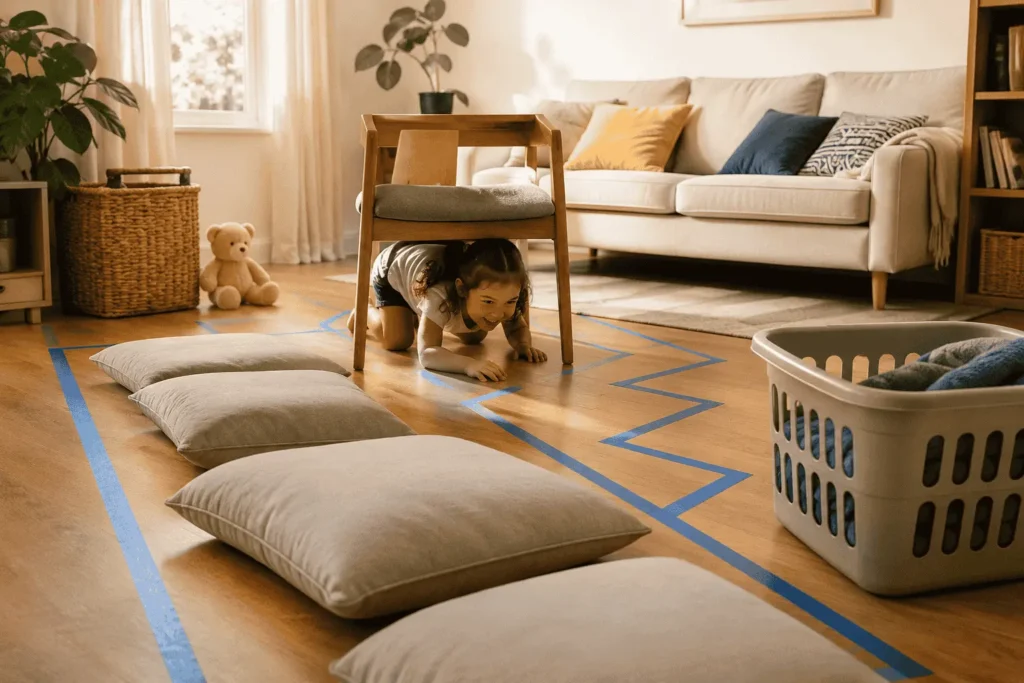
An indoor obstacle course, built from couch cushions, painter’s tape lines, and a laundry basket to push, works well for older kids who need a bigger challenge. Time each run and let your child try to beat their own record. This adds a layer of goal-setting on top of the physical benefit.
Freeze dance is another low-effort, high-energy option. Play music, dance, and freeze when it stops. It works for a group of siblings or a solo living-room dance party, and it’s genuinely tiring in the best way.
Outdoor Fitness Activities For Kids
Outdoor play adds space to run, fresh air, and often a social element that indoor games can’t match.
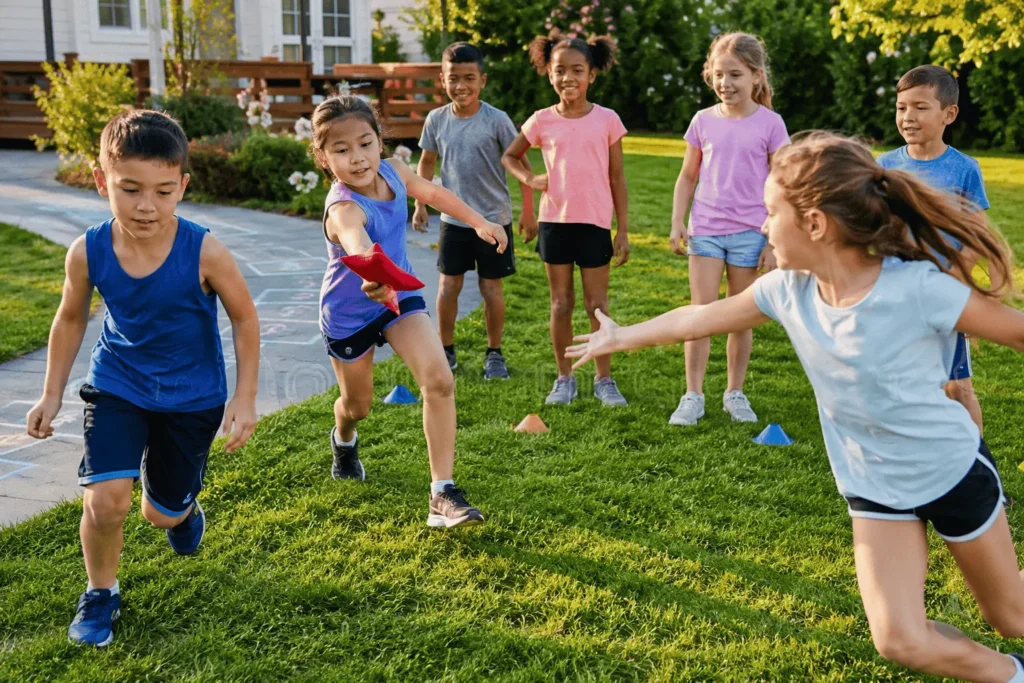
Relay races are easy to set up in a backyard or driveway. Split kids into teams, mark a start and finish line, and race back and forth carrying a ball, a beanbag, or even a spoon with an egg balanced on it. Siblings or neighborhood friends can turn this into a standing tradition.
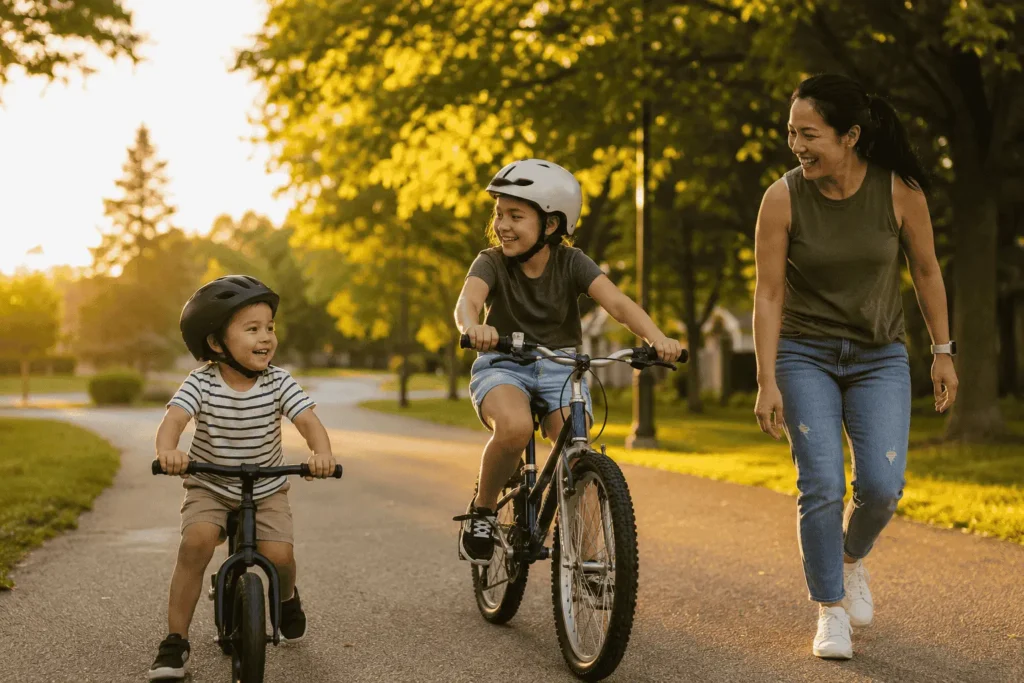
A family bike ride gets the whole household moving at once, and it scales easily. A 4-year-old on a balance bike and a 10-year-old on a two-wheeler can ride the same route at their own pace, with parents adjusting speed to match.
Sidewalk chalk hopscotch remains one of the cheapest, most effective outdoor fitness activities for kids. Draw a course, add color-coded circles for younger kids, and let older siblings invent harder versions with bigger jumps or added rules
Fitness Activities For Kids Who Don’t Like Organized Sports
Not every child wants to join a team, and that’s fine. Nemours Kids Health notes that free play, meaning unstructured activity like riding bikes, playing tag, or shooting hoops on their own, can meet a child’s daily activity needs just as well as a formal sport.
If your child has said no to soccer or basketball, ask what they actually enjoy about movement before pushing another team sport. Some kids prefer individual activities like swimming, martial arts, or gymnastics, where their own progress matters more than a scoreboard. Others simply need a sport that matches their body type or confidence level. A child who’s intimidated by a fast-moving ball might thrive at track, dance, or rock climbing instead.
The pressure to compete can be part of the problem. Most children aren’t ready for the stress of competitive scorekeeping until around age 11 or 12, so a noncompetitive league, or no league at all, often works better for younger kids who say they hate sports.
Turning Family Time Into Fitness Time
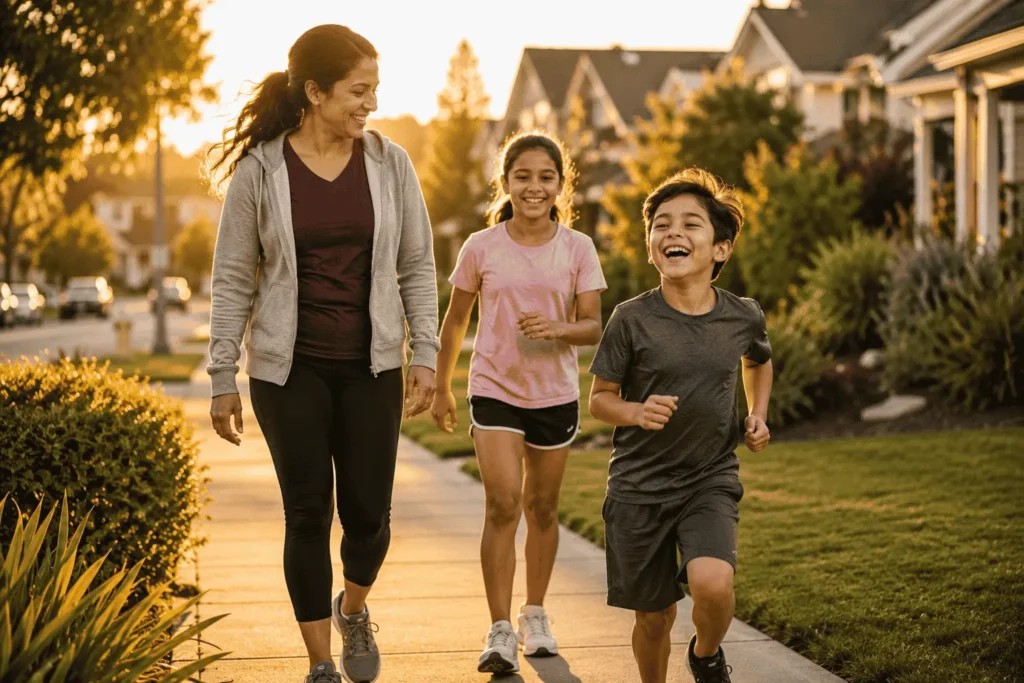
Kids are more likely to stay active when a parent joins in. A 20-minute family walk after dinner, a round of contactless soccer in the yard, or a shared dance-along video all model the behavior you want your child to build. Screen time itself isn’t the enemy, but health experts generally recommend keeping recreational screen time to two hours or less a day for school-age kids, which leaves plenty of room for movement.
Nutrition-based games add another layer without feeling like a lecture. A relay race where kids sort food pictures into the right food group combines movement with a health lesson, and it works well for classroom settings or birthday parties.
Safety Tips For Active Kids
Clear a play area of furniture corners and slippery rugs before starting any obstacle course or balance activity. Choose grass, padded mats, or carpet over hard tile for jumping games. Make sure bikes, scooters, and skates come with a properly fitted helmet, and check that outdoor games happen away from driveways or streets.
Kids fitness activities don’t need a gym membership or expensive equipment. A towel, a balloon, some sidewalk chalk, and a little imagination cover most of what a child needs to hit their daily 60 minutes. Pick two or three activities that match your child’s age and mood, keep a few backups for rainy days, and let them lead the way on what turns into their new favorite game
FAQ’S
1. How many minutes of exercise does a child need per day?
The CDC recommends 60 minutes of moderate to vigorous activity daily for children ages 6 to 17. This can be split into shorter chunks throughout the day rather than all at once.
2. What indoor fitness activities are good for kids on a rainy day?
Balloon volleyball, animal walks, freeze dance, and a homemade obstacle course using pillows and tape lines all work well indoors and need little to no equipment.
3. My child says they hate sports. What can they do instead?
Free play like biking, tag, or shooting hoops can meet the same activity needs as a team sport. Individual activities such as swimming, dance, or martial arts also work well for kids who prefer not to compete on a team.
4. What age should kids start organized sports?
Most kids develop the physical skills, attention span, and rule comprehension for organized sports around age 6 or 7, though informal active play should start much earlier.
5.How can I keep my toddler active indoors?
Simple games like balloon volleyball, a towel balance beam, or animal walks across the room work well for toddlers and preschoolers, since they build coordination without needing real equipment.