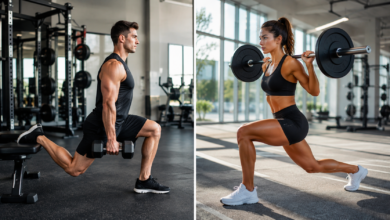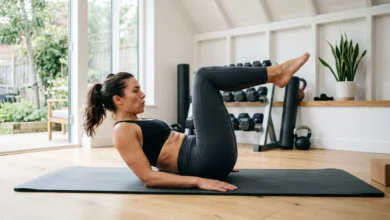


Most lifters load the leg press, place their feet wherever feels comfortable, and assume the quads are doing the work. They often are not. Foot position, seat angle, and depth change which muscle group absorbs most of the load, and small setup errors can quietly shift tension away from the quads and onto the glutes and hamstrings instead. This guide breaks down exactly how to set up a leg press so your quads, not your posterior chain, take the brunt of the work.
What Makes a Leg Press “Quad Focused”
The leg press is not one exercise. It is a range of exercises that live on the same machine, and where you place your feet decides which one you are actually doing. A quad-focused leg press keeps the knees traveling far forward over the toes and limits hip flexion, which puts most of the mechanical tension on the quadriceps rather than spreading it across the glutes and hamstrings.
This matters because most people default to a stance built for total leg strength, not quad isolation. If your goal is bigger, stronger quads specifically, the setup needs to change on purpose.
Foot Placement for Maximum Quad Recruitment
1. Low and Narrow Foot Position
Placing your feet low on the platform, close to the bottom edge, and about hip-width apart is the single biggest lever for quad emphasis. This position forces the knees to bend deeply and travel forward, which lengthens the quadriceps under load and increases their share of the work.
Keep your heels no more than an inch or two from the bottom of the platform. If your heels lift off the plate at the bottom of the movement, you have gone too low, and your ankles are compensating instead of your quads doing the job.
2. Why High or Wide Placement Shifts Load to Glutes and Hamstrings
A high foot position, with feet near the top of the platform, reduces knee flexion and increases hip flexion. That shifts the dominant muscle group from quads to glutes and hamstrings. A wide stance with toes turned out recruits more adductor and gluteal involvement.
Neither of these is a wrong way to leg press. They are simply different exercises wearing the same machine. If your program calls for posterior chain work, use a high, wide stance. If the goal is quad size, keep it low and narrow.
Seat Angle and Depth: The Overlooked Variable
Seat angle gets ignored far more often than foot placement, but it has just as much influence on quad involvement. A more reclined seat position increases hip flexion at the bottom of the rep, which again pulls tension toward the glutes and hamstrings. A more upright seat angle keeps the hip joint less flexed and forces the quads to handle more of the load.
On machines with adjustable seat backs, set the angle as upright as your comfort and the machine’s range allow. On fixed-angle machines, you cannot change this variable, so foot placement becomes even more important for controlling quad emphasis.
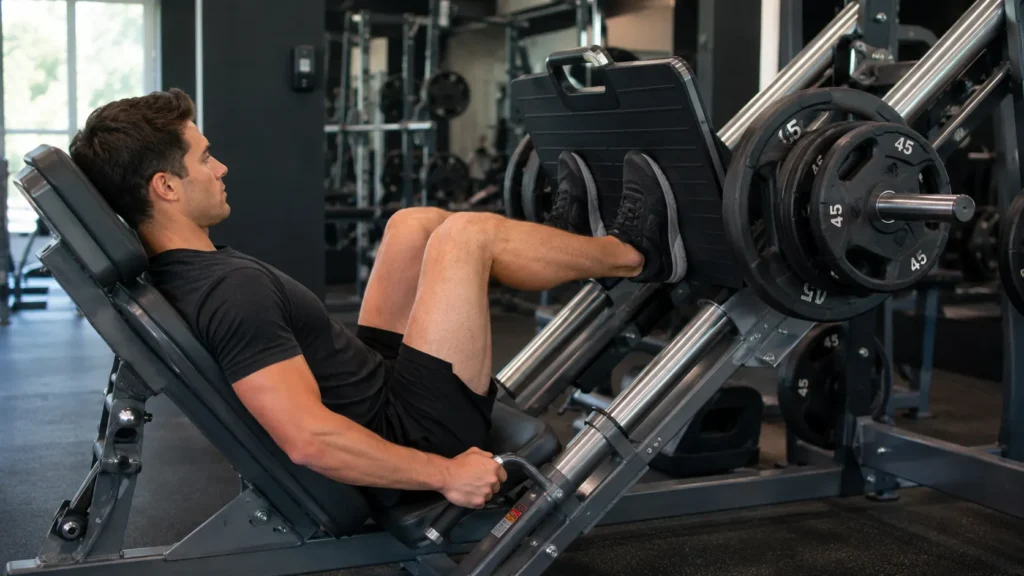
Depth matters just as much as angle. Lowering the sled until your knees reach roughly 90 degrees, or slightly past it if your hips and lower back stay flat against the pad, maximizes the stretch placed on the quads at the bottom of the rep. Stopping short at a quarter or half rep leaves quad growth on the table, since most of the tension in a deep quad stretch position never gets applied.
Leg Press Machine Types and Quad Emphasis
1. 45-Degree Sled Leg Press
This is the most common leg press machine in US commercial gyms. The angled sled path means gravity and the load both work against a diagonal line, which allows heavier loading than other leg press variations. Low, narrow foot placement on a sled machine gives strong quad emphasis while still allowing for real weight progression.
2. Horizontal Leg Press
Horizontal leg press machines, where the platform moves in a straight line parallel to the floor, tend to isolate the quads more directly because the movement path removes some of the momentum assistance a 45-degree sled provides. The tradeoff is that horizontal machines usually support less total weight, so the loads will feel lighter even at a similar level of effort.
3. Vertical Leg Press
Vertical leg press machines, where you lie on your back and push the platform straight up, put the hips in a more flexed position by design. This variation naturally favors the glutes and hamstrings more than a sled or horizontal machine, even with a low, narrow foot placement. If a vertical leg press is your only option, low and narrow is still the right call, but expect somewhat less quad isolation than the other two types offer.
Sets, Reps, and Tempo for Quad Hypertrophy
For quad size specifically, moderate to higher rep ranges tend to outperform very heavy, low-rep loading, mostly because a deep, controlled leg press with true quad emphasis is hard to load as heavily as a sloppy, shallow one. Aim for 3 to 4 sets of 8 to 15 reps per session, taken close to muscular failure on the final one or two sets.
Control the eccentric portion of the lift, lowering the sled over two to three seconds rather than letting it drop. This extends time under tension in the deep stretch position where the quads are working hardest, which is exactly where most of the hypertrophy signal comes from.
Common Mistakes That Reduce Quad Activation
Locking the knees out completely at the top of each rep removes tension from the quads and shifts load onto the joint itself. Stop just short of full lockout to keep the muscle under continuous load.
Letting the lower back and hips lift off the seat pad at the bottom of the movement is another frequent error. This usually means the load is too heavy or the range of motion is too deep for your current hip mobility. Reduce the weight or shorten the range slightly rather than letting the pelvis tuck under.
Bouncing the sled off the bottom stops to use momentum for the next rep also short-circuits quad tension. Pause briefly at the bottom of each rep instead of rebounding out of it.
Leg Press vs Squat for Quad Development
The squat trains the quads along with significant core, upper back, and stabilizer demand, since the lifter has to control a loaded bar through space. The leg press removes that stabilization requirement entirely, which lets you isolate and fatigue the quads more directly without the rest of the body becoming the limiting factor.
Neither exercise replaces the other for a well-rounded leg program. Squats build the coordinated strength and stability that carry over to sports and daily movement. A quad-focused leg press lets you push the quads specifically past the point where squat form would otherwise break down. Many lifters use squats as their primary compound movement and the quad-focused leg press as an accessory to finish the quads off after the main lift.
Programming the Quad-Focused Leg Press Into Your Routine
Placing the leg press after your primary squat or lunge variation, rather than before it, lets you use heavier compound loading first while your legs are fresh, then finish the quads with a higher-rep, deep-range leg press once fatigue is less likely to compromise your squat form.
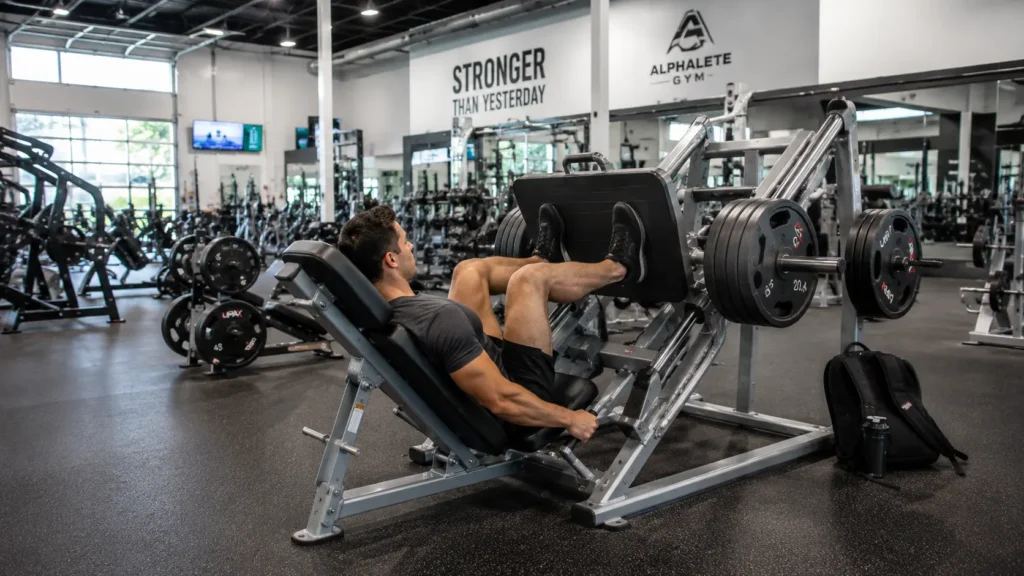
Training legs twice per week, with one session leaning more quad-focused and the other leaning more posterior chain-focused through hip thrusts or Romanian deadlifts, gives balanced development without overloading any single muscle group.