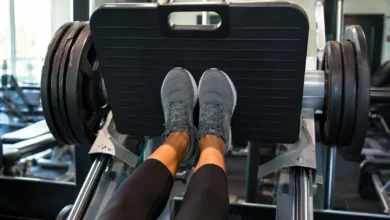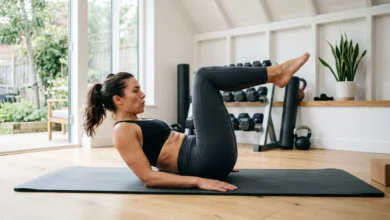

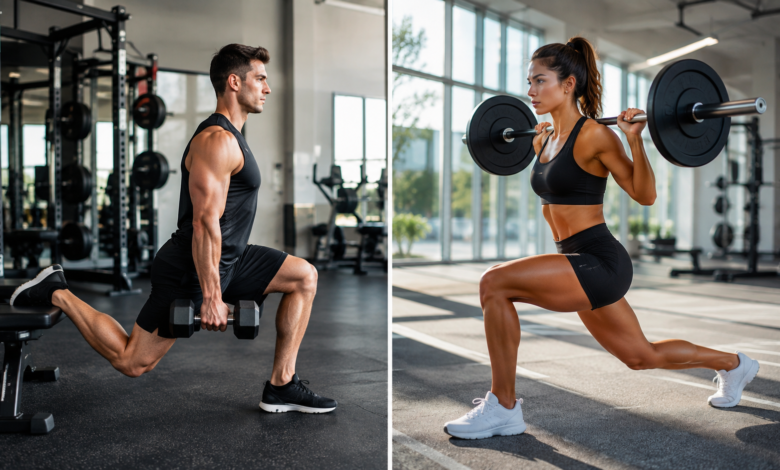
If you have stood in a gym staring at a barbell trying to decide between a split squat and a lunge, you are not alone. Both are unilateral leg exercises, both build strength and size in the quads, glutes, and hamstrings, and both show up in nearly every serious lower body program. But they are not interchangeable, and picking the wrong one for your goal can slow your progress or aggravate an old injury.
The short answer: split squats are better for building raw strength and size because your feet stay planted, which lets you load heavier and control the movement more precisely. Lunges are better for building athletic transfer, coordination, and cardiovascular demand because you are moving through space with each rep. Most well-built programs use both, just for different purposes.
Below is a full breakdown of how these two movements differ, who should use which, and how to program them without wasting time or beating up your joints.
What Is a Split Squat
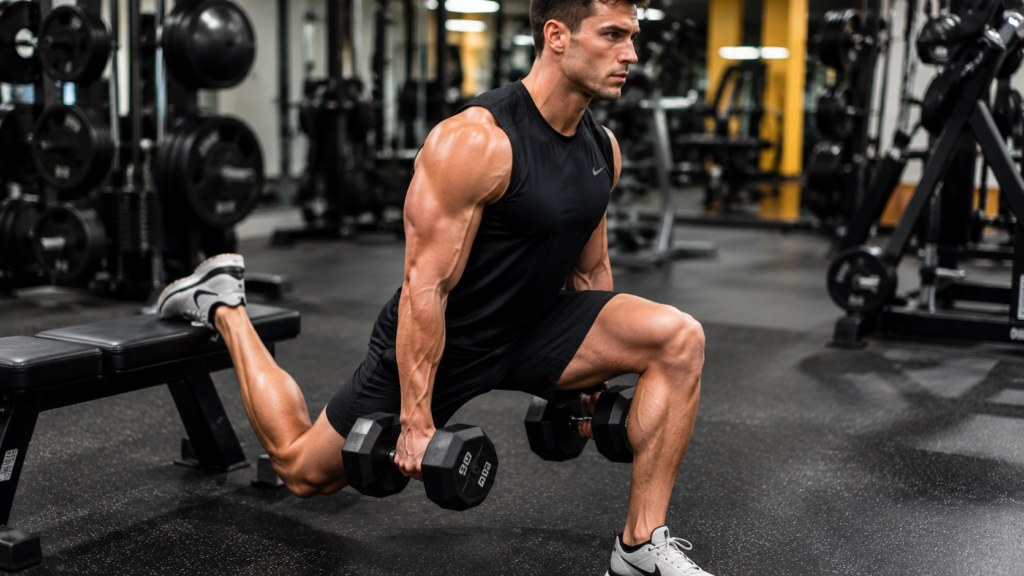
A split squat is a stationary unilateral exercise. You set your feet in a staggered stance, front foot flat on the floor and back foot either flat, on its toes, or elevated on a bench, then bend both knees to lower your back knee toward the ground before pressing back up. The key detail is that your feet never move during the set. Every rep starts and ends in the same footprint.
This fixed base is what separates a split squat from a lunge, and it changes almost everything about how the exercise feels and what it trains. Because you are not stepping, you can focus entirely on the up and down motion, which means you can load it heavier and control the tempo more precisely than you can with a moving exercise.
Common split squat variations include the standard split squat, the rear-foot-elevated split squat (often called a Bulgarian split squat), and the front-foot-elevated split squat, which increases range of motion and glute involvement.
What Is a Lunge
A lunge is a dynamic unilateral exercise. You start standing with your feet together, then step forward, backward, or to the side, lower your body until both knees reach roughly 90 degrees, and either return to the starting position or continue stepping through the movement. Unlike a split squat, your feet move on every rep.
That movement through space is the defining feature of a lunge. It adds a deceleration component, since your body has to absorb momentum as your front foot lands, and it demands more dynamic balance than a split squat does. This is part of why lunges feel more athletic and why they show up so often in sports conditioning and functional training programs.
Common lunge variations include the walking lunge, reverse lunge, forward lunge, lateral lunge, and curtsy lunge, each shifting the emphasis slightly across the quads, glutes, and adductors.
Key Differences Between Split Squats and Lunges
1. Stability and Balance Demands
Split squats ask for static balance. Once your feet are planted, your job is simply to control the vertical movement without your knee caving in or your torso tipping forward. This makes split squats a good entry point for people who struggle with single-leg stability but still want the strength benefits of unilateral training.
Lunges ask for dynamic balance. You have to stabilize your body while your foot is still landing and while your center of mass is shifting forward or backward. This is a harder skill and takes longer to master, but it also carries over more directly to sports and daily movement, where you rarely stand perfectly still.
2. Range of Motion
Split squats, especially the rear-foot-elevated version, typically allow a deeper range of motion because your back leg is out of the way and your front hip can travel lower without your back foot getting in the way. This deeper stretch under load is one reason lifters often feel more muscle soreness after heavy split squats than after lunges.
Lunges generally use a moderate range of motion, roughly stopping when the front thigh is parallel to the floor, since going lower would require the back knee to travel further than a single step naturally allows.
3. Muscle Activation
Both exercises train the quads, glutes, hamstrings, and adductors, but the emphasis shifts based on setup. Rear-foot-elevated split squats bias the front leg quads and glutes heavily because almost all the load sits on that leg. Reverse lunges shift more work to the glutes and hamstrings because of the hip hinge involved in stepping back. Forward lunges put more shear stress through the front knee on landing, which increases quad involvement but also increases knee stress.
4. Joint Stress and Injury Risk
This is where the two movements diverge the most. Because a split squat has no landing phase, it puts less shock through the front knee and ankle. This makes it a safer choice for people rebuilding strength after a knee issue or those who simply want to train hard without extra joint wear.
Lunges involve a landing impact on every rep, particularly forward lunges, where the front foot decelerates forward momentum. That impact is not inherently dangerous for a healthy joint, but it does add cumulative stress that split squats avoid, which matters for anyone managing patellar tendon issues or early-stage knee arthritis.
Split Squat vs Lunge for Muscle Growth
If hypertrophy is the primary goal, split squats generally have the edge. The fixed base lets you load more external weight safely, control eccentric tempo, and take the working leg closer to failure without worrying about footwork breaking down mid-set. Rear-foot-elevated split squats in particular allow a long stretch under load in the front leg quad and glute, which is a strong driver of muscle growth.
Lunges can absolutely build muscle too, but the coordination demand of stepping tends to cap how heavy you can safely load them, especially as fatigue builds late in a set. For most lifters chasing size, split squats as the primary heavy movement, with walking lunges added as a higher-rep finisher, is the more efficient combination.
Split Squat vs Lunge for Athletic Performance
For athletes, lunges usually win. Sports rarely happen from a static stance, so training the body to absorb force while moving forward, backward, or sideways builds a more direct transfer to running, cutting, and change of direction. Walking lunges, reverse lunges, and lateral lunges all train deceleration and re-acceleration, which are skills split squats simply do not touch.
That said, split squats still belong in an athlete’s program. They build the raw strength base that dynamic movements like lunges and sprinting draw from. A common and effective approach is to build strength with heavy split squats early in a training block, then shift toward lunges and other dynamic variations as competition season approaches.
Which Is Better for Beginners
Beginners are usually better off starting with split squats. The static stance removes one variable, footwork, which lets a new lifter focus entirely on learning proper knee tracking, torso position, and depth. Once someone can perform a controlled, pain-free split squat with bodyweight or light dumbbells, adding lunges becomes a much smoother progression.
Jumping straight into weighted lunges before mastering basic single-leg balance is a common reason beginners feel unstable, skip depth, or complain of knee discomfort during their first few weeks of training.
Which Is Better for Bad Knees
Neither exercise is automatically off-limits for knee pain, but split squats are generally the safer starting point. Removing the landing impact and letting the lifter control tempo precisely gives the knee joint more predictable loading, which physical therapists often use when reintroducing single-leg strength work after injury.
If lunges cause sharp or lingering knee pain, reducing range of motion, switching to a reverse lunge instead of a forward lunge, or dropping back to split squats for a few weeks are all reasonable adjustments. Anyone with a diagnosed knee condition should get guidance from a physical therapist or doctor before loading either movement heavily, since the right progression depends on the specific injury.
How to Program Both Into Your Routine
A simple and effective way to use both movements is to treat split squats as your primary strength builder and lunges as your dynamic accessory work. A typical lower body day might look like this:
Split squats, 3 to 4 sets of 6 to 10 reps per leg, done early in the session while you are fresh and can push load safely.
Walking lunges or reverse lunges, 2 to 3 sets of 10 to 15 reps per leg, done later in the session to add volume and conditioning without needing heavy weight.
Rotate which variation of each you use every 4 to 6 weeks, cycling between rear-foot-elevated split squats, front-foot-elevated split squats, forward lunges, reverse lunges, and lateral lunges, to keep progress moving and avoid overuse patterns from repeating the same angle for months at a time.
Common Mistakes to Avoid
1. Split Squat Mistakes
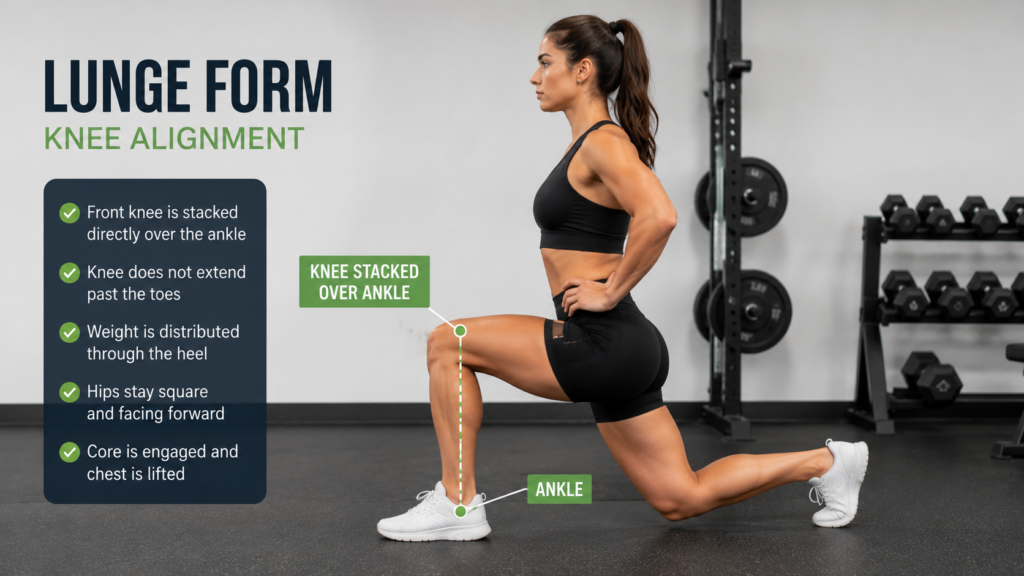
The most common error is letting the front knee cave inward as fatigue sets in, which shifts stress toward the inside of the joint. Keep the knee tracking over the second and third toes throughout the set. A second common mistake is setting the stance too short, which forces the front knee too far forward and limits how deep the hip can drop.
2. Lunge Mistakes
The most frequent lunge mistake is letting the front knee travel far past the toes on landing, which increases shear force through the knee. Take a slightly longer step and focus on dropping the back knee straight down instead of driving the front knee forward. Rushing the tempo on walking lunges is another common issue, since landing too fast removes the controlled deceleration that makes the exercise valuable in the first place.
Final Verdict: Split Squat or Lunge
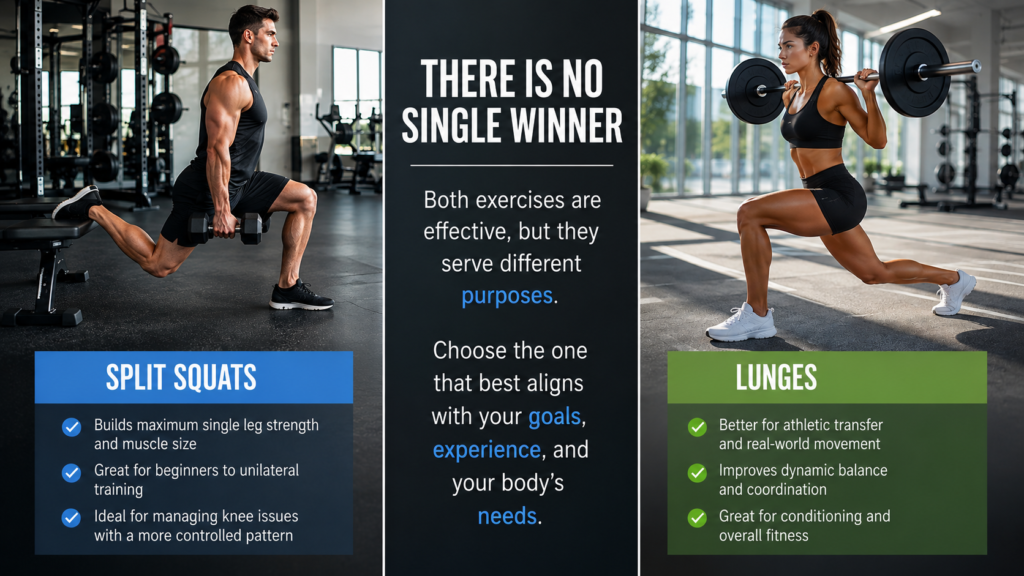
There is no single winner because the two exercises answer different questions. Choose split squats when your goal is building maximum single-leg strength and muscle size, when you are new to unilateral training, or when you are managing a knee issue and need a more controlled movement pattern. Choose lunges when your goal is athletic transfer, dynamic balance, or conditioning, and your joints can already handle impact without discomfort.
Most well-rounded lower body programs do not have to choose at all. Use split squats to build the strength foundation, then use lunges to teach your body how to express that strength while moving. Together, they cover more ground than either one does alone.