
Ask five trainers which squat is “best” and you’ll get five different answers, because the honest answer is that no single squat variation does everything well. A back squat that builds serious lower-body strength isn’t the right tool for someone rehabbing a knee. A pistol squat that fixes a left-right strength imbalance is the wrong choice for someone who just wants to move more weight. The real question isn’t which squat is best. It’s which squat fits what you’re actually training for.
This guide breaks down the different types of squats by category, explains which muscles each one emphasizes, and gives you a straightforward way to match a variation to your goal, whether that’s building strength, fixing an imbalance, working around a limitation, or training explosive power.
The Five Categories of Squat Variations
Every squat variation falls into one of five broad categories, and knowing which category you’re working from tells you a lot about what it’s actually good for.
Bodyweight squats use only your own body as resistance and are where technique gets built. Barbell squats add external load through a bar on your back or front rack, and they’re the main strength-building tool for most lifters. Unilateral, or single-leg, squats train one side of the body at a time, exposing and correcting imbalances that bilateral lifts can hide. Machine squats use a fixed or guided path, trading some stabilizer demand for the ability to isolate specific muscles safely. Explosive squats add speed or a jump to the pattern, training power rather than raw strength.
Bodyweight Squats: Where Everyone Should Start
The Air Squat
The air squat, sometimes called the bodyweight squat, is the foundation every other variation builds on. Stand with your feet about shoulder-width apart, push your hips back, and lower until your thighs are at least parallel to the floor, keeping your chest up and your knees tracking over your toes. If you can’t do this cleanly for 15 to 20 reps with full depth, adding a barbell before fixing that pattern is a mistake that shows up later as a form breakdown under load.
The Sumo Squat and Foot Position
Widening your stance and turning your toes out, as in a sumo squat, shifts more of the work onto your inner thighs and glutes. Narrowing your stance does the opposite, pushing more demand onto the quads. This is one of the most useful things to understand about squats in general: foot position changes muscle emphasis more than most people realize, and you can adjust almost any squat variation this way to target a specific area.

Dumbbell and Kettlebell Squats: The Bridge to Barbell Training
The Goblet Squat
Holding a single dumbbell or kettlebell at chest height, as in a goblet squat, is the easiest entry point into loaded squatting. The weight sitting in front of your chest naturally counterbalances your hips, which makes it easier to keep an upright torso and hit full depth than it is with a bar on your back. This makes the goblet squat a strong teaching tool for anyone still building the bodyweight pattern before adding real load.
The tradeoff is a ceiling on how much weight you can use, since your grip and your ability to hold the load at your chest become the limiting factor well before your legs are the limiting factor. Most lifters eventually need to move to a barbell to keep building strength, but the goblet squat remains useful as a warmup or as a lighter session option.
Barbell Squats: Building Real Strength
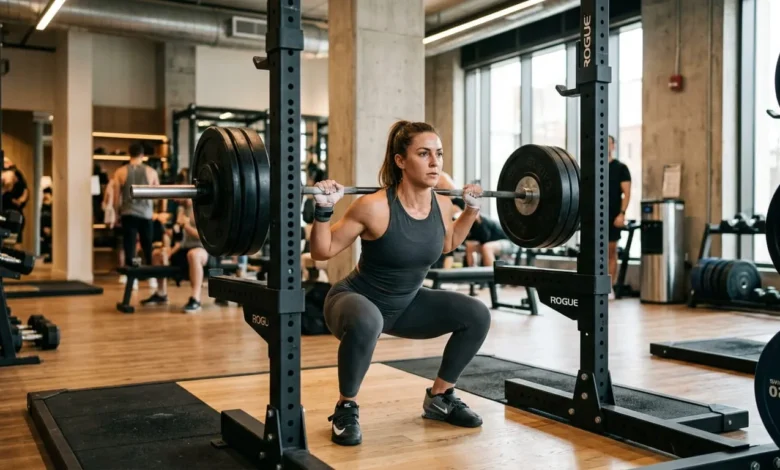
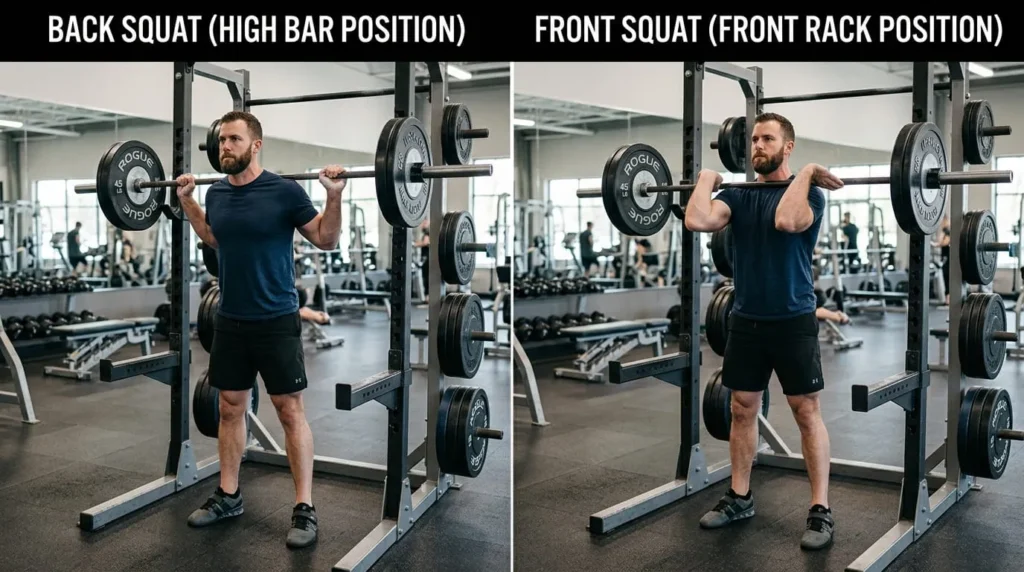
The Back Squat
The back squat, with the bar resting across your upper traps or rear delts, allows most lifters to move the heaviest loads of any squat variation. That’s because the forward lean it requires shifts more work onto the hips and hamstrings, muscles that are naturally strong movers. The tradeoff is more shear force on the lower back, which is why lifters with existing lumbar issues are often steered toward other variations first.
The Front Squat
Resting the bar across the front of your shoulders forces a more upright torso, shifting emphasis toward the quads and core while reducing lower back shear. Research comparing muscle activation across squat variations has found front squats can produce glute activation on par with, and in some cases higher than, several back squat variations, which surprises most lifters who assume the back squat is unmatched for the posterior chain. The catch is that the front rack position demands more wrist and shoulder mobility, which is why it’s usually introduced after a lifter has some barbell experience.
How Depth Changes What a Squat Variation Actually Does
Depth changes a squat’s effect as much as loading or foot position does, regardless of which variation you’re doing. A quarter squat, stopping well above parallel, keeps more of the work on the quads and asks less of your hips and ankles. A full squat, going below parallel until your hamstrings meet your calves, brings the glutes and hamstrings into the movement far more and requires more mobility through the ankles and hips to control.
There’s a common belief that squatting deep is harder on the knees than stopping at parallel. For most healthy knees, that’s backwards: a controlled full-depth squat spreads load across the knee joint through a longer range of motion, while a shallow squat run with heavy weight concentrates force through a narrower range. The real limiting factor for depth is mobility, not knee safety. If your heels lift or your lower back rounds as you descend, that’s a mobility restriction to work on, not a sign you should avoid depth altogether.
Single-Leg Squats: Fixing What Bilateral Lifts Hide
The Bulgarian Split Squat
With your rear foot elevated on a bench and most of your weight on the front leg, the Bulgarian split squat trains one side at a time under real load. Because each leg has to stabilize and produce force independently, it exposes a weaker side almost immediately, something a back squat can mask by letting the stronger leg compensate.
The Pistol Squat
The pistol squat, a full single-leg squat with the other leg extended forward, demands more ankle and hip mobility than almost any other variation on this list. It builds serious single-leg strength and balance, but it’s not a beginner movement. Most people need months of unilateral training before they can perform one with full control.

Machine Squats: When They’re the Right Tool
Leg press and hack squat machines guide the bar or sled along a fixed path, removing the balance and stabilization demand of a free-weight squat. That makes them genuinely useful in specific situations: early in a rehab program, when a lifter needs targeted quad volume without spinal loading, or when technique breakdown from fatigue is a real injury risk late in a workout.
What machine squats don’t do is build the trunk stability and coordination that free-weight squats develop. Treating a hack squat as a full replacement for barbell squats, rather than a complement to them, is a common mistake that leaves a gap in real-world strength.
Explosive Squats for Power and Athletic Performance
The squat jump, where you drop into a squat and explode upward into a jump, trains the same pattern for speed and power rather than maximum load. It’s a staple in athletic training programs for sports that demand jumping or sprinting, but it asks a lot of your joints on landing. Build a base of strength with bodyweight and barbell squats first, and layer explosive variations in once your form holds up under fatigue.
How to Choose the Right Squat for Your Goal
If knee pain is the concern, start with a wall-supported bodyweight squat or a box squat to a comfortable height, and add depth gradually as tolerance improves. If lower back pain is the issue, a front squat or goblet squat reduces spinal shear compared to a back squat. If you’re chasing quad size, a narrow-stance front squat or hack squat targets that area directly. If glutes and inner thighs are the priority, a sumo squat or wide-stance variation does more of that work. If you’ve noticed one side is visibly weaker or less stable than the other, a Bulgarian split squat or pistol squat will address it directly, and no amount of bilateral squatting will fix that gap on its own. If you’re training for jumping or sprinting, explosive squat variations belong in your program once your base strength is solid.
How Many Squat Variations You Actually Need
You don’t need ten squat variations in rotation to make progress. Most well-built programs use two to three: one primary loaded squat, either a back or front squat, one unilateral movement like a Bulgarian split squat, and a bodyweight or machine variation for extra volume without added fatigue. Rotate in an explosive or specialty variation only when your training goal specifically calls for it. Adding variety for its own sake is a common way to slow progress rather than speed it up, since strength gains come from consistent practice with a movement, not constant novelty.