
The average squat weight for male lifters who log their training is 289 pounds for one rep, based on Strength Level’s database of about 25 million lifts. That lands in the intermediate tier. A man in his first month of squatting sits closer to 145 pounds, and elite lifters pass 480.
The catch is that “average” changes with who gets counted. App users, powerlifting competitors, and men who rarely train produce three different averages. This guide sorts them out so you can see where you stand.
The Short Answer by Experience Level
Strength Level sets male one-rep maxes at 145 lb for beginners, 209 lb for novices, 289 lb for intermediates, 382 lb for advanced lifters, and 482 lb for elite lifters. These weights include the bar, which normally weighs 44 lb (20 kg).
Each tier also comes with a training history. Beginner means a month of practice, novice about six months of regular training, intermediate about two years, and advanced more than five years. The percentile attached to each tier is the share of lifters you outlift: 5%, 20%, 50%, 80%, and 95%.
The “average” is the 50th percentile of people who log lifts. That group already trains, so it runs stronger than the general population.
Why Sources Disagree on the Average
Three Groups, Three Different Averages
Strength Level’s number comes from people who track workouts in an app. Most are regular gym-goers, so the average sits above what a random man could squat.
Competition data runs higher. FitnessVolt’s analysis puts the middle male competition lifter at about 1.58 times bodyweight. Powerlifting Technique reports ratios of 2.1 to 2.3 times bodyweight for male lifters in their early twenties. Those lifters chose a strength sport, so they say little about a typical gym member.
At the casual end, FitnessVolt pairs CDC bodyweight data with an estimate of 145 lb for a man who doesn’t lift and 215 lb for a rookie lifter.
What Coaches Consider Strong
A BarBend feature built on a strength athlete’s advice calls a one-rep max of 275 lb strong for an average male athlete. It also calls five reps at 225 lb strong. Both sit close to the app data, which is reassuring.
Average Squat Weight by Bodyweight
Bodyweight changes your target more than any other factor. Heavier men lift more total weight, but lighter men lift more per pound of bodyweight. In Strength Level’s chart, intermediate lifters land between roughly 1.5 and 1.7 times bodyweight (my calculation from the table).
These one-rep maxes in pounds come from Strength Level’s male chart.
| Bodyweight (lb) | Beginner | Novice | Intermediate | Advanced | Elite |
| 140 | 119 | 168 | 229 | 300 | 376 |
| 160 | 145 | 199 | 265 | 340 | 421 |
| 180 | 169 | 228 | 298 | 377 | 462 |
| 200 | 193 | 255 | 329 | 413 | 501 |
| 220 | 216 | 281 | 359 | 446 | 538 |
Finding Your Row
Pick the row closest to your weight and read across. If you sit between rows, split the difference. The average squat for a 180 lb man at intermediate level is 298 lb, while a 220 lb man needs 359 lb for the same label.
The same weight means different things at different sizes. A 300 lb squat is intermediate for a 180 lb man, but for a 250 lb man it falls between beginner (249) and novice (319).

Is 225 or 315 a Good Squat?
Two plates per side (225 lb) is the number most men ask about. For a 180 lb man, it matches the novice mark of 228, which is a solid six months of work. For a 200 lb man, it falls between beginner and novice.
Three plates per side (315 lb) is a bigger milestone. A 200 lb man at 315 is just under the 329 lb intermediate mark. A 180 lb man at 315 sits between intermediate (298) and advanced (377).
Both numbers assume full-depth, controlled reps. A shallow 315 doesn’t compare with a deep 225.
What Counts as a Squat Weight
One Rep Versus Working Sets
Most charts list a one-rep max, but most people train with sets of five or more. A common rule of thumb, the Brzycki formula, puts a five-rep weight at about 89% of your max. On that estimate, a 289 lb max works out to roughly 257 lb for five reps.
That also explains the BarBend benchmark. Five reps at 225 lb implies a max near 253 lb, a little below the intermediate mark. The most popular male squat scheme in Strength Level’s logs is five sets of five reps at 22%, with three sets of five at 19%.
Depth, Bar Position, and Honest Reps
Standards assume a barbell back squat, and gyms disagree on what depth counts. Pick one standard, film yourself from the side, and use it every session. Your own trend over time is a better guide than a number from a website.
The bar counts toward the total. Loading 135 lb means two 45 lb plates plus the bar, not 135 lb of plates.
How Long It Takes to Reach Each Level
The tier definitions above give a rough timeline: about six months to novice, two years to intermediate, and more than five years to advanced. Those are labels for regular training history, not promises. Sleep, food, programming, and body type change the pace.
In general, early progress comes fast. A beginner can often add weight every week. By the intermediate stage, gains slow to monthly, and that slowdown is normal and not a sign you are doing something wrong.
Where Age Fits In
Age moves the numbers, though less than bodyweight or training history. Strength Level’s page has an age tab if you want a comparison for your decade. The competition data mentioned earlier covers young lifters heavily, so treat its ratios as a ceiling and not a typical result.
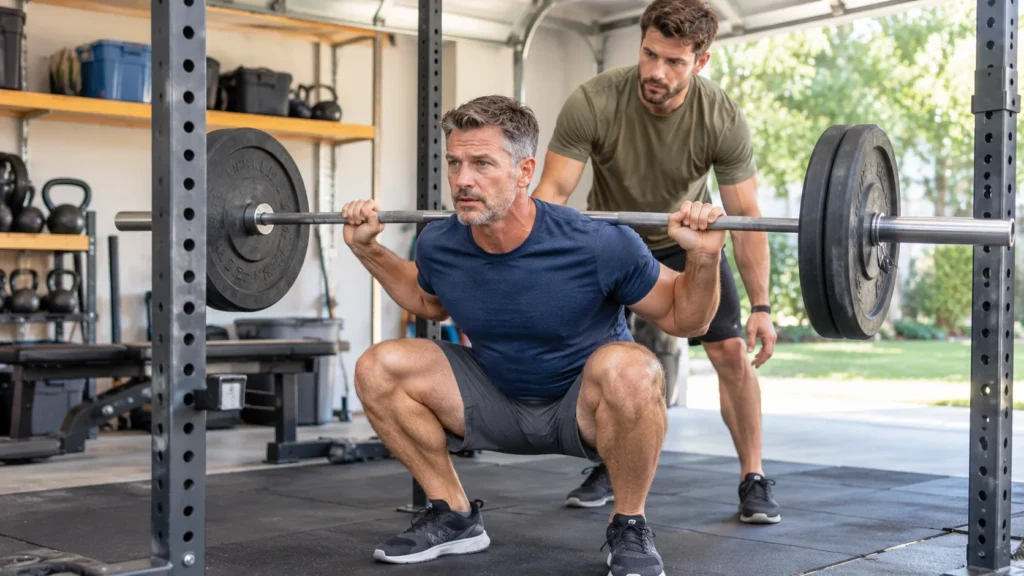
If you are returning after a layoff or starting in your 40s or later, compare against your own starting point first. Consistent training for a year will tell you more than any chart.
Raising Your Number Safely
A simple five-by-five or three-by-five plan fits the way most lifters progress. Add small jumps, such as 5 to 10 lb per week while it feels smooth, and drop the weight about 10% if reps get ugly. Squat two or three times a week so the pattern stays practiced.
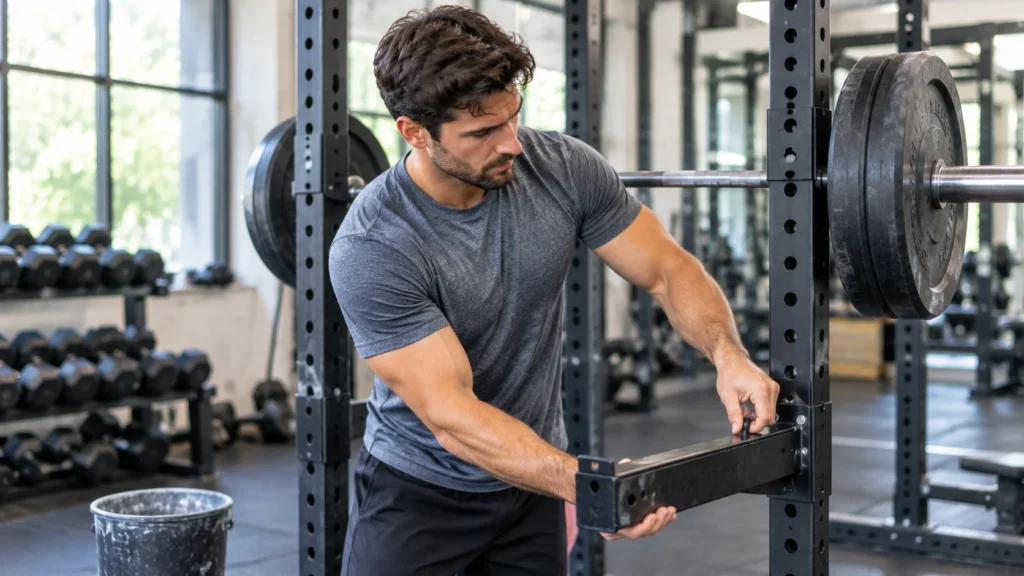
Warm up with lighter sets before heavy work. Set the safety arms in the rack just below your lowest squat depth, or use a spotter, so a missed rep is only an inconvenience. If you feel pain in your knees, hips, or back that doesn’t ease, or you have a health condition, see a physician or qualified coach before adding load.
The number worth chasing is your own. Log your squat, compare it against your row in the table once a quarter, and let the trend show you whether you are moving toward the average squat weight for male lifters your size.