
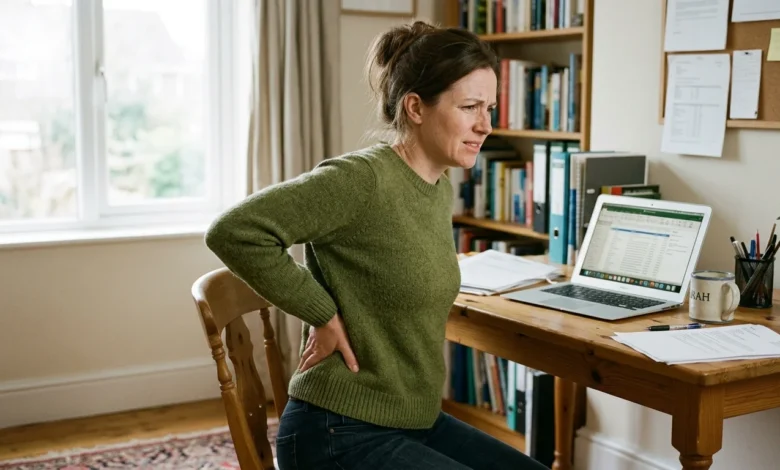
Stiff and tight muscles result in back pain by pulling the spine and pelvis out of their usual alignment, limiting how far your back can move, and forcing nearby muscles and joints to carry extra load. That is the short answer to how stiff and tight muscles result in back pain, and it explains why the ache often lands in your lower back even when the real trouble sits in your hips or hamstrings.
Back pain is one of the most common reasons adults in the United States see a doctor, according to the National Institute of Neurological Disorders and Stroke (NINDS). Many muscle-related cases ease with simple changes at home, though some need a medical check. Below, you will find how the process works, which muscles cause the most trouble, and what actually helps.
What Muscle Tightness Really Means
A tight muscle feels short, resists stretching, and stays partly contracted even when you are resting. Stiffness is the same problem felt as reduced movement, such as struggling to bend forward to tie a shoe in the morning.
A spasm is different. It is a sudden, involuntary contraction that can lock a muscle for minutes or days, and Mayo Clinic notes that back muscle spasms often follow heavy lifting or an awkward twist. Tightness builds slowly from sitting, repetitive work, or skipping movement, which is why many people do not notice it until the back starts to complain.
How Tight Muscles Put Strain on Your Back
Tight muscles can hurt your back in four connected ways, and they often stack on top of each other.
1. They Pull Your Posture Out of Line
Muscles attach to bones, so a muscle that stays short tugs on whatever it connects to. Tight hip flexors can tilt the pelvis forward and deepen the curve in the lower back, while tight hamstrings often tilt it backward and flatten that curve. Either way, the spine sits in a position it was not built to hold for hours, and the joints and discs absorb the difference.
2. They Limit Movement, So Other Tissues Overwork
When one area cannot move, the body borrows motion from somewhere else. If your hips and upper back are stiff, your lower back often does the bending and twisting for them. The lumbar spine is built more for stability than for range, so repeated extra motion there can irritate muscles, ligaments, and joints.
3. They Develop Painful Trigger Points
Cleveland Clinic describes myofascial pain syndrome as pain that comes from sensitive spots in muscles and the connective tissue around them, called trigger points. These knots can feel tender under pressure and may send pain to other areas. A tight muscle in the buttock, for example, can send an ache toward the lower back or down the leg.
4. Pain Makes Muscles Guard Even Tighter
When your back hurts, nearby muscles often tighten to protect it. That guarding can help for a day or two after an injury, but if it lingers, it adds stiffness and reduces movement, which feeds more discomfort. Researchers still debate how neat the old “pain-spasm-pain cycle” really is, so treat it as a useful picture, not a proven rule.
Which Tight Muscles Cause the Most Back Pain
The muscle that hurts is not always the muscle at fault. This table shows common culprits and where the pain tends to show up.
| Muscle Group | What Tightness Can Do | Where You May Feel It |
| Hip flexors | Tilt the pelvis forward and deepen the lower back curve | Low back, front of the hip |
| Hamstrings | Tilt the pelvis backward and flatten the lower back | Low back, back of the thigh |
| Glutes and piriformis | Limit hip rotation, shifting the work to the spine | Buttock, low back, sometimes down the leg |
| Quadratus lumborum | Hitch one side of the pelvis upward | One side of the low back, above the hip |
| Erector spinae | Stay tense to hold you upright | Along both sides of the spine |
| Chest and upper back | Round the shoulders and stiffen the mid-spine | Between the shoulder blades |
A tight calf or foot can matter too, because it changes how you walk, but the hips and hamstrings are the most common places to start.
Why Sitting All Day Makes It Worse
Long hours in a chair keep the hip flexors in a shortened position and the glutes mostly idle. Mayo Clinic lists lack of exercise as a risk factor for back pain, noting that weak, unused muscles in the back and abdomen can contribute.
Posture is less of a villain than stillness. Even a good chair position becomes a problem after an hour or two without a break. Standing, walking to refill your water, or doing a minute of hip stretches every 30 to 60 minutes gives tight tissue a reason to loosen.
How to Tell Muscle Tightness From a Nerve or Spine Problem
Muscle-driven back pain usually feels dull, achy, or tight, and it often changes with position. It may ease with gentle movement or heat and flare after a long stretch of sitting. The pain tends to stay in the back, buttock, or upper thigh.
Nerve or disc involvement looks different. Mayo Clinic advises seeing a doctor when back pain lasts more than a few weeks, is severe, or spreads down a leg below the knee. Weakness, numbness, or tingling in a leg also deserves a medical visit.
Get emergency care if back pain comes with new bladder or bowel problems, a fever, or follows a fall or blow to the back.
What Helps When Tight Muscles Are Behind Your Back Pain
The American College of Physicians (ACP) 2017 guideline, published in Annals of Internal Medicine, recommends starting with nondrug options for low back pain. For short-term pain, that includes superficial heat, massage, acupuncture, or spinal manipulation. For long-lasting pain, the guideline lists exercise, tai chi, yoga, and mindfulness-based stress reduction among the first choices.
1. Heat and Gentle Movement
Warmth relaxes tight tissue for a while, and a heating pad for 15 to 20 minutes is a common way to use it. Pair it with easy walking, since major medical sources, including Mayo Clinic, advise against extended bed rest for most back pain.
2. Stretches for the Muscles That Pull on Your Spine
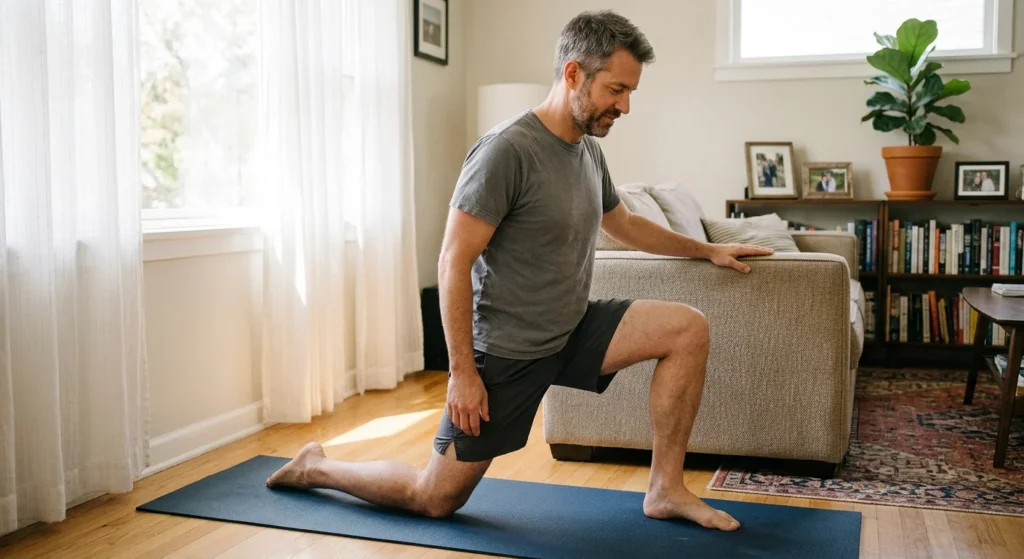
Start with a kneeling hip flexor stretch, a lying hamstring stretch, and a gentle knee-to-chest stretch. Hold each for about 30 seconds, breathe slowly, and repeat two or three times per side. Stretch to a mild pull, never sharp pain, and stop if symptoms travel down a leg.
3. Strengthening So the Tightness Does Not Return
Tight muscles often sit next to weak ones. Glute bridges, bird dogs, and side planks build the hip and trunk strength that lets your back stop bracing all day. Start with a few slow sets and add repetitions gradually.
4. Massage and Manual Therapy
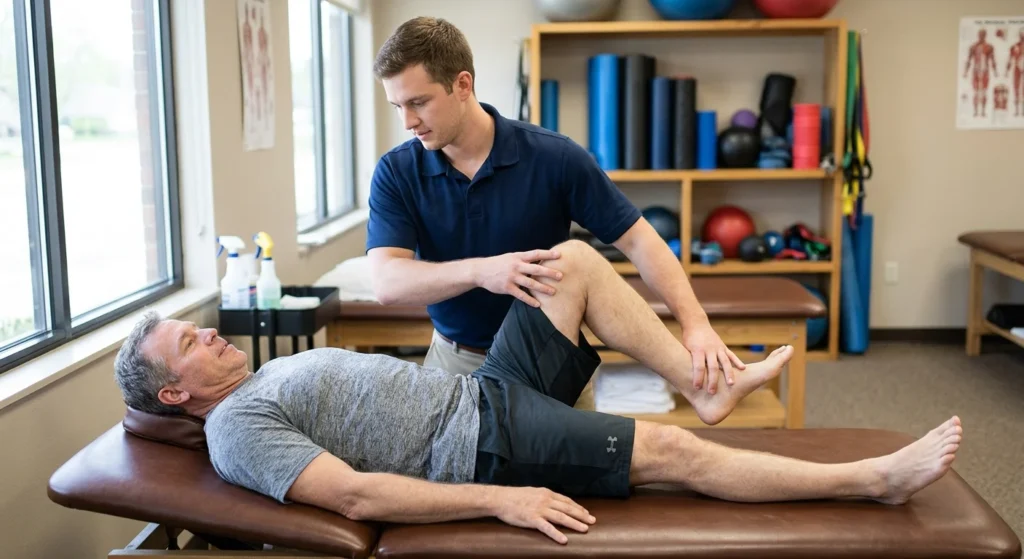
Massage, foam rolling, and trigger point work can reduce tenderness short term, and massage appears in the ACP guideline for short-term pain. A physical therapist can find which muscle is actually driving the problem and teach you a routine matched to it.
5. Daily Habits That Keep Muscles Loose
Change positions often, set up your desk so your hips and knees sit at roughly right angles, and take short walking breaks. Sleep in a position that keeps your spine neutral, such as on your side with a pillow between your knees. A few slow breaths during a tense workday can also help you notice when your shoulders and back are clenched.
Why Stretching Alone Sometimes Fails
Many people stretch their hamstrings for weeks and feel the same tightness. One reason is that the body sometimes keeps a muscle tight on purpose, as a brace for an area it senses as unstable or weak. In that case, strengthening the trunk and hips often helps more than another round of stretching.

Other factors can feed tightness, including poor sleep, high stress, a sudden jump in activity, or very little movement during the week. If tightness returns within hours of every stretch session, look at those patterns and bring it up with a clinician instead of stretching harder.
When to See a Doctor or Physical Therapist
Book an appointment if the pain has not improved after a few weeks, keeps waking you at night, or limits daily tasks. A physician can rule out disc, nerve, or other causes, and a physical therapist can build a plan around your movement patterns. In the United States, rules and insurance coverage for seeing a physical therapist without a referral vary by state and plan, so check with yours first.
This article is general education, not medical advice, and does not replace an exam by a licensed clinician.