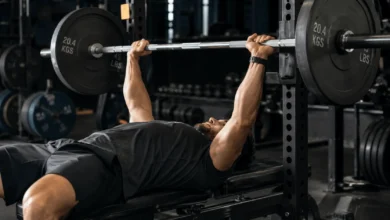

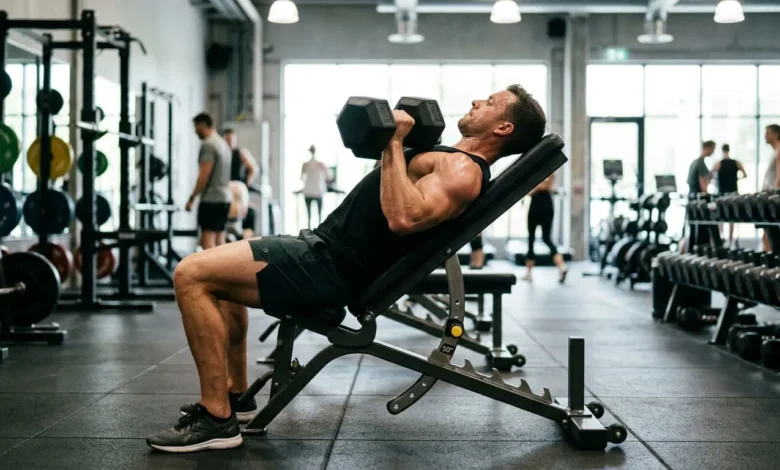
The incline bench press angle you choose decides whether you build your upper chest or just do a disguised shoulder press. Set the bench too low and you’re barely different from flat bench. Set it too high and your front delts take over the lift entirely. Most lifters guess at 45 degrees because that’s what their gym’s bench defaults to, then wonder why their upper chest isn’t growing. The truth is narrower than most advice suggests. A specific range works best for most people. The exact angle within that range depends on your goals, your shoulder health, and whether you want raw strength or a visible upper chest shelf.
Why bench angle changes what you’re training
Your chest is not one muscle. The pectoralis major has two main sections. The sternal head covers the lower and middle chest, while the clavicular head sits near your collarbone and forms what most lifters call the upper chest. Flat bench pressing biases the sternal head. Tilt the bench up and the line of pull shifts toward the clavicular fibers, which is why incline pressing feels different from the first few degrees off flat.
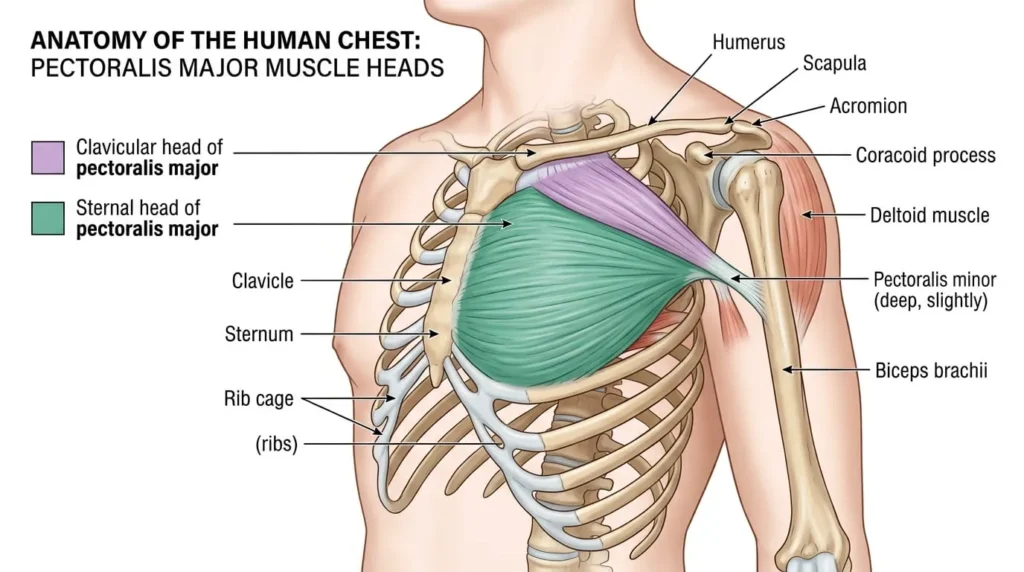
Keep tilting the bench and something else happens. The front deltoid, which already assists on every pressing movement, starts to take over the lift. Past a certain point the exercise stops training your chest at all and becomes a supported overhead press. The incline bench press angle works like a dial between two muscle groups, not a single fixed exercise with one correct setting.
The best incline bench press angle range
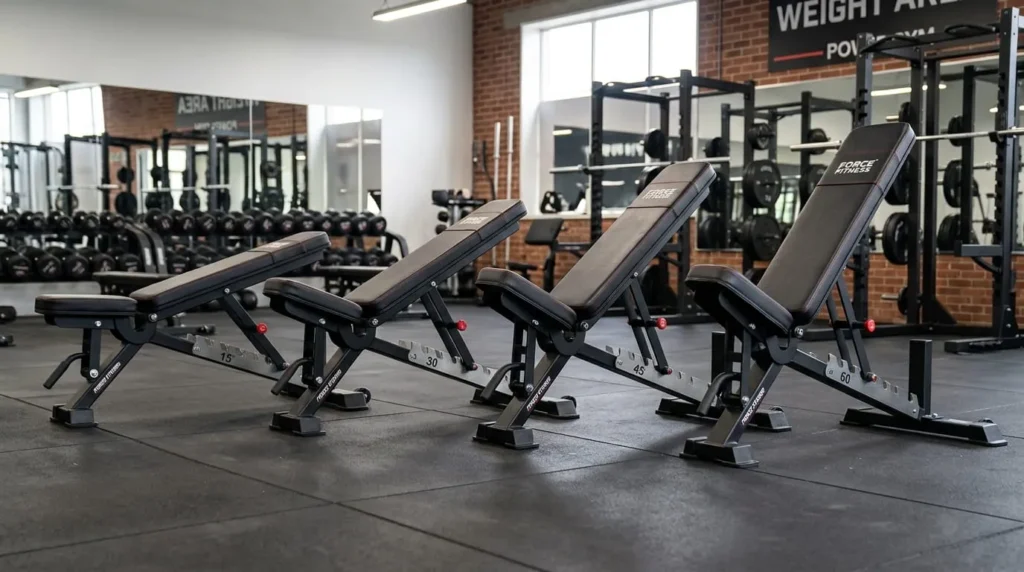
Most of what matters happens between 15 and 45 degrees. Below 15 degrees you’re essentially flat pressing. Past 45 degrees you lose chest involvement quickly to your shoulders. Here’s how each common angle actually behaves.
1: 15 degrees: a subtle upper chest bias
A 15 degree incline nudges the pull toward your clavicular fibers without moving far from a flat bench groove. Your sternal chest and triceps still do most of the work. This angle suits powerlifters training upper chest without straying from their competition bench arch, and lifters whose shoulders get irritated at steeper settings. It’s also the angle most adjustable benches label incorrectly, since many “low incline” pins actually sit closer to 20 or 25 degrees. If your bench lacks exact markings, check it with a level before trusting the number on the pin.
2: 30 degrees: the default for most lifters
Thirty degrees is where the clavicular fibers do the most work relative to the front delt. It lets you press meaningful weight, usually 75 to 85 percent of your flat bench load, while keeping the shoulder joint out of the driver’s seat. If you only ever train one incline angle, this is the one to pick. It works with a barbell, dumbbells, a Smith machine, or a chest press station. It’s forgiving enough for beginners while still rewarding advanced lifters who load it heavy. Most upper chest hypertrophy programs, old or new, are built around roughly this setting.
3: 45 degrees: more shoulder involvement by design
At 45 degrees the lift splits closer to evenly between upper chest and front delt. This is a legitimate angle, not a mistake, but it’s a different exercise than 30 degrees. Bodybuilders chasing a visible shoulder to chest tie-in often favor it, and it works well as a second incline angle once you’ve built a base at 30 degrees. The tradeoff is that your shoulders fatigue faster here than your chest does, so it rewards lifters who already have healthy, well prepared shoulder joints.
4: 60 degrees and steeper: an overhead press in disguise
Once the bench pad approaches 60 degrees, the front deltoid becomes the prime mover and the upper chest is a minor contributor at best. That’s not automatically wrong. Supported seated pressing has real value for lifters who can’t tolerate standing overhead work. Just don’t program it expecting upper chest growth, because you’ll be disappointed. Label it what it is in your training log, a seated shoulder press, and keep your actual incline chest work at 45 degrees or lower.
What the research actually shows
A frequently cited study measured muscle activation across several bench inclines and found upper chest activity peaked around 30 degrees, higher than at 0, 15, 45, or 60 degrees. That’s why 30 degrees shows up so often in coaching advice. Treat it as a strong starting point rather than a universal law. The study measured electrical activity in the muscle, not actual growth over months of training, and the sample size was small enough that individual results will vary. Your own shoulder mobility, arm length, and injury history all affect which angle feels strongest and grows your chest fastest. Use 30 degrees as your default, then adjust based on how your body responds over several weeks of consistent training.
Common incline bench press mistakes that limit chest growth
1: Setting the angle too steep
The most common error is defaulting to 45 or 60 degrees because that’s where the bench pin happens to sit. This shifts the load onto your front delts before you’ve done a single rep of real upper chest work. If your shoulders feel more fatigued than your chest after a set, the angle is probably too steep. Drop it back toward 30 degrees and reassess.
2: Arching your back to fake the angle
Setting up for any bench press requires a slight arch, but overdoing it on incline changes the effective angle of your torso relative to the bench. A big arch flattens the lift. It pulls the emphasis back toward the mid-chest, quietly undoing the reason you picked incline in the first place. Keep your hips on the bench and your arch modest.
3: Pressing toward your face instead of your upper chest
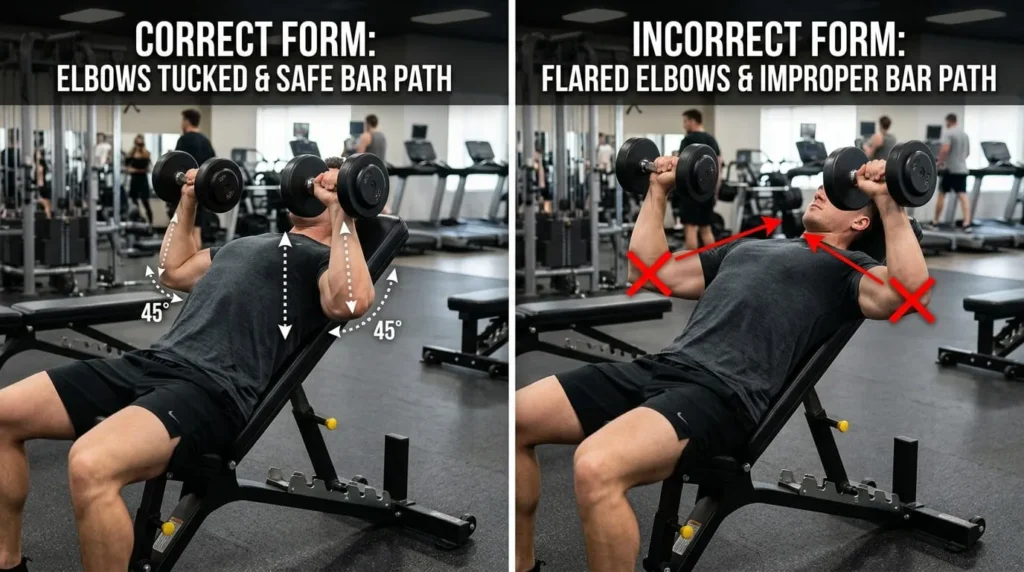
At a correct incline angle, the bar or dumbbells should travel down to the top of your sternum, just below your collarbones, not up toward your chin. Pressing too high recruits more front delt, regardless of what the bench angle says. That quietly turns a 30 degree incline into something closer to 45 degrees in terms of actual muscle demand.
Barbell or dumbbells at your chosen angle
Both work, and the angle matters more than the implement. A barbell lets you load more total weight, which builds raw pressing strength at your chosen incline. Dumbbells allow your arms to move independently and travel through a slightly deeper stretch at the bottom, since there’s no bar to stop your range of motion. That extra stretch is valuable for hypertrophy, and it also exposes side to side strength imbalances a barbell can hide. A practical approach is barbell incline on a strength day and dumbbell incline on a hypertrophy day. Set both to the same angle so you’re comparing apples to apples across the week.
How to program your incline angle
Angle hopping every session is the quiet reason a lot of incline programs stall. Pick one primary angle, most lifters should start at 30 degrees, and run it as a real lift for 8 to 12 weeks before switching. Track the exact angle in your log next to the weight and reps, since “incline press, 4×8” tells you nothing if the angle drifted between sessions. Once you’ve built a strength base, add a second angle as an accessory rather than replacing your main lift. A lifter running 30 degrees as the main lift might add 15 or 45 degrees later in the session. This adds extra volume from a different muscle emphasis while keeping the primary progression consistent.