
If your hip aches after a run, or you notice your pelvis dipping when you stand on one leg, a weak gluteus minimus is often the reason. This deep hip muscle rarely gets attention until it starts causing problems, but it does most of the quiet work of keeping your pelvis level with every step.
The exercises below target the gluteus minimus directly, starting with simple bodyweight moves and building toward exercises that use resistance bands, cables, and dumbbells. Each one includes the setup, the execution, and the cue that separates a rep that works the muscle from one that just moves the leg.
What the Gluteus Minimus Actually Does
The gluteus minimus sits underneath the gluteus medius, on the outer side of the hip. It’s the smallest of the three glute muscles, but it has a specific job: hip abduction, meaning it moves your leg away from the midline of your body. It also assists with internal rotation of the hip and, most importantly, it stabilizes your pelvis every time you stand on one leg.
That last function is why this muscle matters so much for walking, running, and stairs. Every step is a single-leg stance for a split second, and the gluteus minimus on the standing side has to fire to stop your opposite hip from dropping. When it’s weak, you get a visible hip drop called a Trendelenburg gait, and the compensation pattern often shows up as knee pain, IT band irritation, or lower back tightness instead of hip pain itself.
Signs This Muscle Needs More Work
A few patterns point directly to a weak or underused gluteus minimus. You feel wobbly balancing on one leg, especially with your eyes closed. Your knee tends to cave inward during squats or lunges. You get lateral hip pain after sitting for long periods or lying on one side in bed. Or you simply never train hip abduction and your routine is built entirely around squats, deadlifts, and forward-plane movement.
None of these are diagnoses, and persistent or sharp hip pain is worth getting checked by a physical therapist before you load the area further. But general weakness, poor balance, and workout gaps respond well to the exercises below.
Warming Up Before You Train It
The gluteus minimus is a small stabilizer, and it doesn’t respond well to going straight into heavy loaded work. Spend two to three minutes on hip circles, standing marches, and a few bodyweight clamshells to wake the muscle up before you add resistance. This matters more here than for larger muscle groups, because the gluteus minimus is easy for your body to bypass in favor of the hip flexors or the outer thigh (tensor fasciae latae) if it hasn’t been activated first.
The Best Gluteus Minimus Exercises
1: Side-Lying Leg Raise
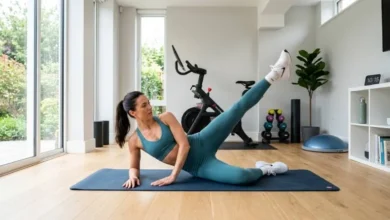
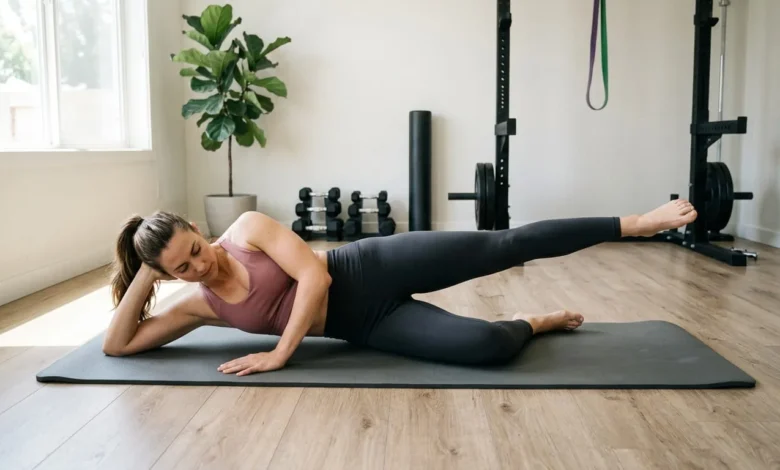
Lie on your side with your bottom leg bent for stability and your top leg straight. Keeping your hips stacked and your top foot flexed, lift your top leg toward the ceiling without rotating your hip forward or back. Lower slowly. This is the clearest isolation exercise for the muscle because there’s nowhere for other muscles to compensate. Do 12 to 15 reps per side.
2: Clamshell
Lie on your side with your knees bent at roughly 45 degrees and your feet stacked together. Keeping your feet touching, rotate your top knee open like a clamshell, then close it slowly. Add a mini resistance band above your knees once bodyweight feels easy. Avoid rocking your pelvis backward to fake the range of motion.
3: Standing Band Hip Abduction
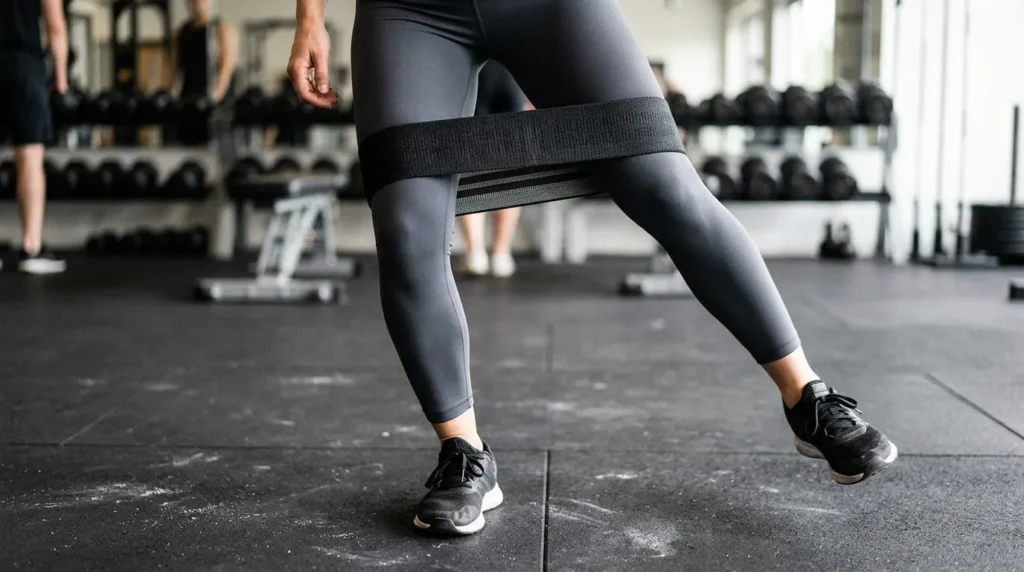
Loop a resistance band around your ankles and stand tall, holding a wall or chair for balance if needed. Keeping your standing leg stable and your torso upright, lift the working leg straight out to the side. Control the return instead of letting the band snap your leg back. This move trains the gluteus minimus in the position it actually works in during real life: standing.
4: Lateral Band Walk
Place a loop band around your thighs, just above the knees, and drop into a quarter-squat stance. Step sideways with control, keeping tension on the band the entire time and your knees tracking over your toes. Ten steps in each direction is a solid starting range. This one builds endurance in the muscle, not just peak strength.
5: Single-Leg Glute Bridge
Lie on your back with both knees bent. Extend one leg straight out, then drive through the heel of your grounded foot to lift your hips until your body forms a straight line from shoulder to knee. The gluteus minimus works hard here to stop your hips from rotating toward the lifted leg. Keep your pelvis square throughout.
6: Fire Hydrant
Start on all fours with your hands under your shoulders and your knees under your hips. Keeping your knee bent at 90 degrees, lift one leg out to the side to hip height, then lower with control. This targets a slightly different fiber angle than the clamshell, so it’s worth including both rather than picking one over the other.
7: Curtsy Lunge
Stand tall, then step one leg diagonally behind the other, lowering into a lunge as if you’re curtsying. Push back to standing through the front heel. The gluteus minimus fires eccentrically here to control the hip as it crosses the midline, which most exercises never ask it to do.
8: Bulgarian Split Squat
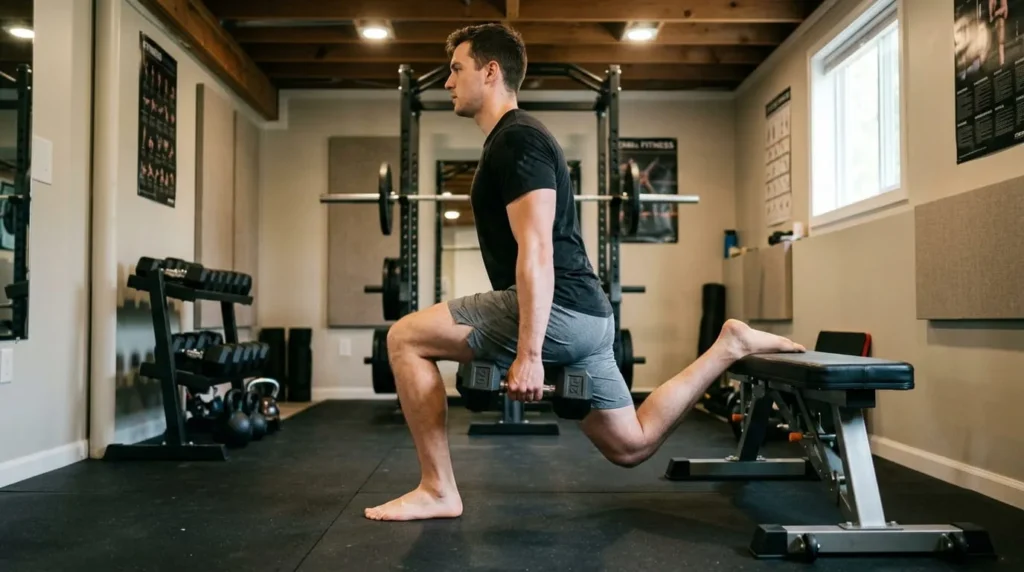
Stand a couple of feet in front of a bench, rest your back foot on it, and lower your body until your front thigh is roughly parallel to the floor. This is a compound movement, not an isolation exercise, but the single-leg stance forces continuous pelvic stabilization from the gluteus minimus on the working side. Add dumbbells once your balance is solid.
9: Cable Standing Hip Abduction
Attach an ankle cuff to a low cable pulley and stand sideways to the machine. Keeping your leg straight and your torso still, pull your leg away from the machine against the resistance. Cables give constant tension through the entire range, which bands can lose near the end of the movement. This is a strong option once bodyweight and band variations feel too easy.
10: Single-Leg Balance with Reach
Stand on one leg with a slight bend in your knee. Reach your opposite hand toward your standing foot, then return to tall. This isn’t a strength exercise in the traditional sense, but it trains the gluteus minimus to fire reflexively under changing balance demands, which is exactly what it has to do outside the gym.
Sets, Reps, and Loading
For isolation moves like the side-lying leg raise, clamshell, and fire hydrant, two to three sets of 12 to 15 reps per side works well most of the time. These are endurance-oriented exercises, and the muscle responds better to higher reps with strict form than to heavy loads with sloppy movement.
For compound single-leg exercises like the Bulgarian split squat and curtsy lunge, three sets of 8 to 12 reps per side is a reasonable range, progressing the load as your balance and control improve. Train this muscle two to three times per week, either as a dedicated 15-minute session or worked into the warm-up before lower body training days.
Training Around a Gluteus Minimus Tear or Tendinopathy
Gluteus minimus tears and tendinopathy are more common than most people realize, especially in runners and people over 40. The hallmark symptom is pain on the outer hip that worsens when lying on that side, climbing stairs, or after long periods of sitting.
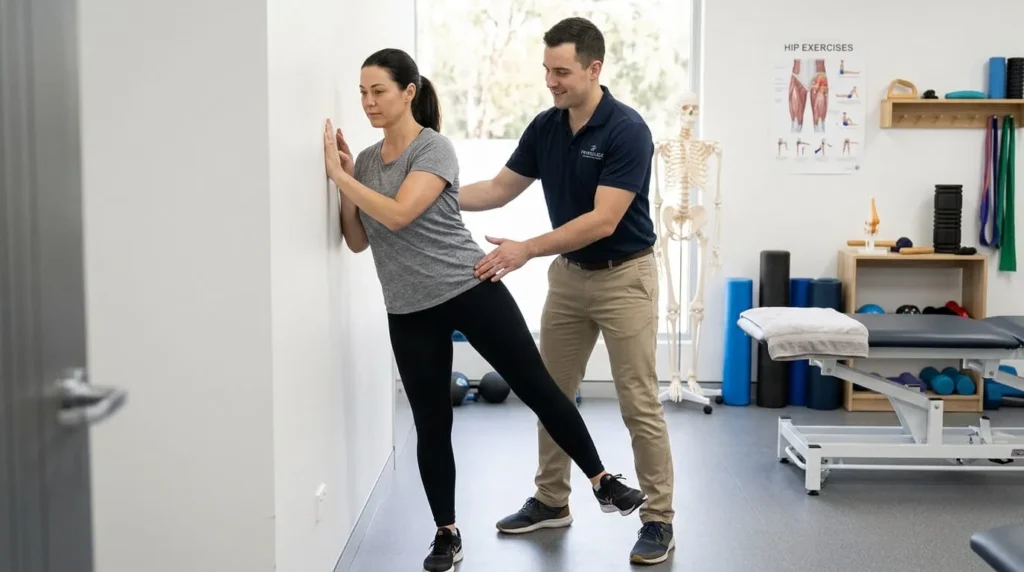
If that description matches what you’re feeling, skip the loaded compound movements above until you’ve been assessed. Early-stage rehab for tendinopathy usually starts with isometric holds, such as pressing your leg into a wall in slight abduction and holding for 30 to 45 seconds, before progressing to the isotonic exercises in this list. Loading a tendinopathic tendon too aggressively, too soon, tends to flare symptoms rather than resolve them. A physical therapist can confirm whether you’re dealing with tendinopathy, a partial tear, or referred pain from somewhere else in the hip, and build a progression around the actual diagnosis.
Common Mistakes That Stall Progress
The most frequent error is letting the hip flexor take over during leg raises, which shows up as the working leg drifting forward instead of staying in line with the torso. Keep the movement strictly in the side plane.
The second is rushing the tempo. Fast, momentum-driven reps let the band or gravity do the work instead of the muscle. Slow the eccentric phase down to two full seconds on every exercise in this list.
The third is skipping the standing exercises entirely. Floor-based moves like the clamshell are a good starting point, but the gluteus minimus needs to be trained standing, since that’s the position it works in during daily movement and sport.
Pairing It With the Rest of Your Hip Routine
The gluteus minimus rarely needs to be trained in complete isolation forever. Once the basics feel solid, pair two isolation exercises from this list with one compound single-leg movement in the same session, and rotate which ones you use every few weeks. That keeps the muscle challenged without turning your routine into an endless list of tiny exercises, and it carries over directly into the balance and stability you need for running, hiking, and everyday movement on uneven ground.