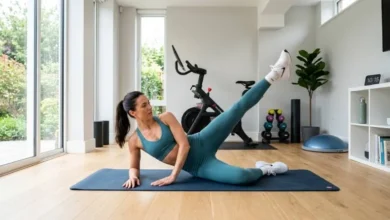


The McGill Big 3 are three core exercises: the curl-up, the side plank, and the bird dog, developed by spine biomechanist Dr. Stuart McGill to build core stability without putting the spine through repeated flexion or rotation. Physical therapists, strength coaches, and people managing lower back pain use them because they train the muscles that keep the spine stiff and protected during everyday movement, rather than chasing a burn or a big range of motion.
What Are the McGill Big 3 Exercises
Dr. Stuart McGill spent decades studying spine mechanics as a professor at the University of Waterloo, working with athletes, injured workers, and patients referred after other treatments failed. Out of that research came a simple observation: most people do not need a stronger core; they need a core that can hold a stable position while the arms and legs move around it. He calls this “spine-sparing” training, and the Big 3 are the exercises he settled on as the safest, most effective way to build that kind of stability.
The three movements are the curl-up, the side plank, and the bird dog. Each one targets a different section of the trunk- the front, the sides, and the back- so together they train the whole cylinder of muscle that surrounds the spine. McGill outlined the routine in his book “Back Mechanic,” written for general readers dealing with back pain, and the same exercises show up in his more technical work for clinicians and coaches.
Why the McGill Big 3 Work
Traditional core training often asks the spine to flex and extend under load; think sit-ups or Russian twists. McGill’s research found that repeated spine flexion under compression is a common driver of disc injury, especially in people who already have some wear and tear. The Big 3 avoid that pattern entirely. Instead of moving the spine, they keep it locked in a neutral position while the limbs do the work.
This is an endurance approach, not a strength approach. McGill’s research links spine stability to how long the trunk muscles can hold a contraction, not how much weight they can move in one rep. That is why the Big 3 are performed as short isometric holds rather than fast repeated crunches, and why the goal is control and duration, not fatigue or a burning sensation.
Curl-Up
The curl-up looks similar to a sit-up, but the range of motion is much smaller. The point is not to lift the torso off the floor; it is to brace the abdominal wall while keeping the spine still.
How to Do the McGill Curl-Up
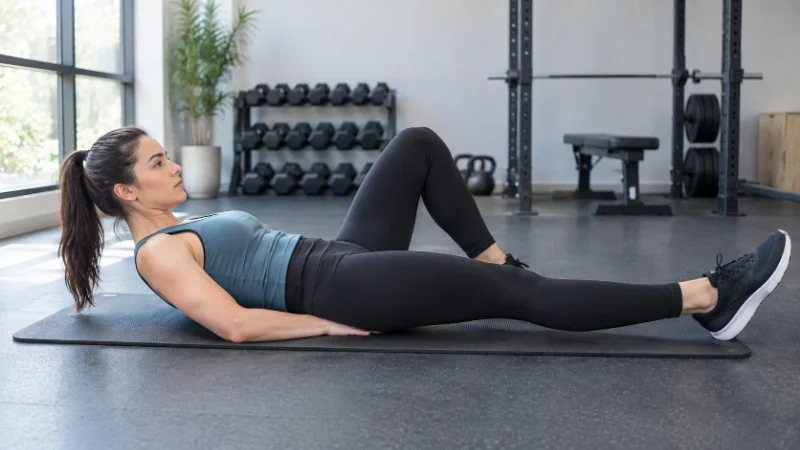
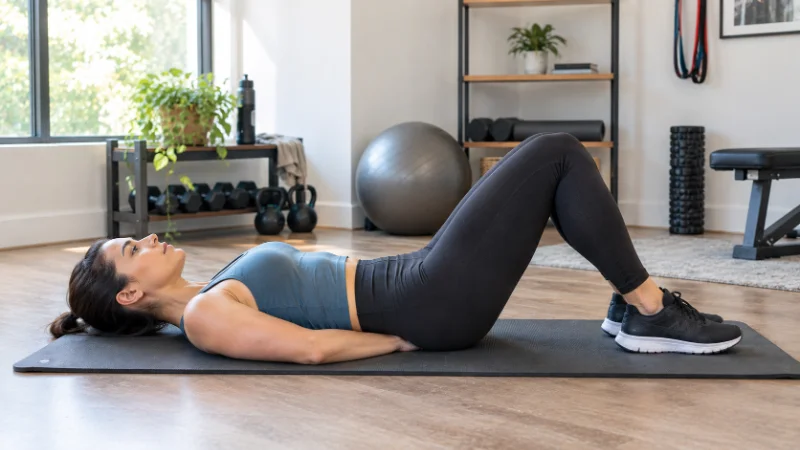
Lie on your back with one leg bent and the other straight. Place your hands under the small of your back to maintain its natural arch. Keep your elbows on the floor, tuck your chin slightly, and lift your head and shoulders just an inch or two off the ground, bracing your abs as if about to take a light punch to the stomach.
Hold the position for about 7 to 8 seconds, then lower back down with control. Rest a few seconds and repeat, switching which leg is bent halfway through the set. Most people do 5 to 8 reps per side.
Common mistakes include yanking the head up with the neck, flexing the lower back instead of staying neutral, and lifting too high in an attempt to mimic a full sit-up. None of that is the goal here. A small, controlled lift with a solid brace does more for spine stability than a bigger movement done sloppily.
Side Plank
The side plank targets the obliques and the muscles along the side of the trunk, the quadratus lumborum in particular, which plays a large role in resisting the kind of side-bending and shear forces that contribute to lower back strain.
How to Do the McGill Side Plank
Lie on your side with your knees bent and your top elbow resting on your hip, propped on your forearm. Lift your hips off the ground so your body forms a straight line from shoulder to knee, keeping your bottom knee on the floor for support. Hold for 7 to 8 seconds, lower, and repeat for the prescribed reps, then switch sides.
Once the bent-knee version feels manageable, progress to the full side plank, supported on the feet instead of the knees, with the body in a straight line from shoulders to ankles. Beginners and anyone easing back into training after a back injury should start with the bent-knee version and only progress once it can be held with good form.
Watch for hips sagging toward the floor or rotating forward, both of which take tension off the target muscles and put more strain on the shoulder and lower back instead.
Bird Dog
The bird dog trains the muscles along the back of the spine, along with the glutes and shoulders, while challenging balance and coordination at the same time.
How to Do the McGill Bird Dog
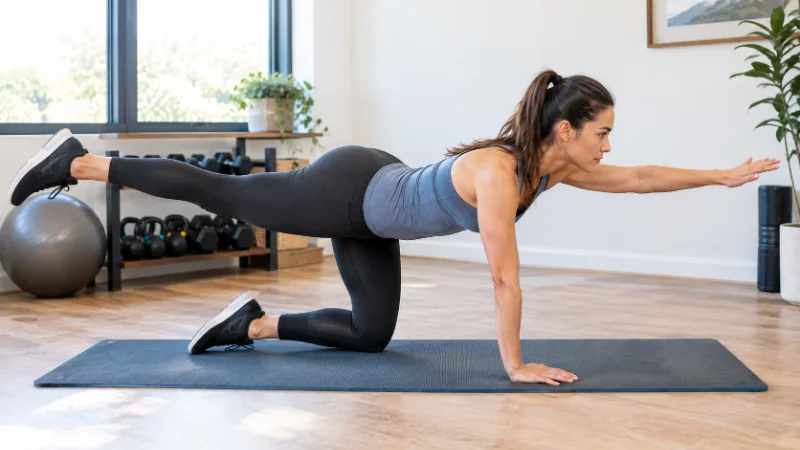
Start on your hands and knees, hands under your shoulders and knees under your hips. Brace your abs, then extend your right arm forward and your left leg back at the same time, keeping both roughly level with your spine rather than lifting them high. Hold for 7 to 8 seconds without letting your hips or shoulders rotate, then return to the start and switch sides.
Keep your neck in a neutral position, looking down at the floor rather than craning your head up. Move slowly, and if you notice your lower back arching or your hips twisting, shorten the reach of the arm and leg until you can keep the spine still.
How to Program the McGill Big 3
McGill’s usual prescription is low volume and short holds rather than a long, fatiguing workout. A typical session covers all three exercises, 5 to 8 reps per side, with each rep held for about 7 to 8 seconds and full rest between reps. The whole routine usually takes 10 to 15 minutes.
He recommends doing the Big 3 at the start of a workout, before heavier lifting, so the trunk muscles are already primed to stabilize the spine during the rest of the session. For people managing back pain, many physical therapists have patients do a version of the routine daily, since the goal is to reinforce good movement patterns rather than build muscle size.
Progression comes from holding better form for longer, or moving to a harder variation, such as the full side plank instead of the bent-knee version, rather than from adding weight. Once the basic holds feel easy, some coaches add small, controlled movement, like slowly extending the top leg during a side plank, but the core principle stays the same: keep the spine still while the limbs move.
Who Should Use the McGill Big 3
The routine is common in physical therapy clinics for people recovering from non-specific lower back pain, and it shows up in the training programs of many strength coaches as a low-risk way to build trunk endurance in athletes. It also works for people with no back pain at all who want a foundation of core stability before starting heavier training.
Anyone dealing with an existing back injury, a diagnosed disc condition, or pain that gets worse during these exercises should check with a doctor or physical therapist before starting. This article is not medical advice, and a professional can confirm whether these specific exercises fit your situation or whether a modified version is more appropriate.
Common Mistakes to Avoid
The most frequent error across all three exercises is losing the neutral spine position, whether that means the lower back flattening during the curl-up, the hips sagging during the side plank, or the pelvis rotating during the bird dog. Filming yourself from the side for a few reps is a quick way to catch these issues that are hard to feel from the inside.
Holding the breath is another common problem. Breathe normally during each hold instead of bracing so hard that you stop breathing, since a stable brace and steady breathing can happen at the same time with practice.
Rushing through reps defeats the purpose as well. These are not exercises to do fast for a pump. Slow, controlled setup, a full 7 to 8 second hold with good form, and a controlled return to the start position matter more than how many reps get done.