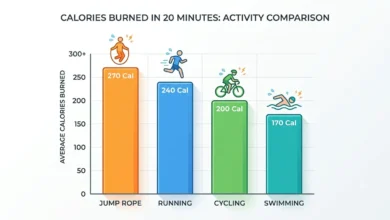


Running burns more calories per hour than almost any other single exercise, typically outpacing cycling, swimming, and strength training when compared minute for minute. Jump rope, rowing, and high intensity interval training come close behind it. But the honest answer is more layered than one word.
How many calories you burn depends on your body weight, the intensity you sustain, and how long you keep moving. A 130-pound person and a 220-pound person doing the same 30-minute workout will burn noticeably different totals, and a slow jog burns far less than an all-out sprint interval. This guide breaks down the exercises that burn the most calories, explains why intensity often matters more than the activity itself, and helps you pick a routine that fits your body and your goals.
What Actually Determines Your Calorie Burn
Before ranking exercises, it helps to understand what drives the number on your fitness tracker. Four factors matter more than the label on your workout.
Body weight plays the biggest role. Moving more mass takes more energy, so heavier individuals burn more calories doing the same activity as lighter individuals. This is why calorie charts always list results by weight bracket rather than a single flat number.
Intensity is the second lever, and it’s the one you control most directly. Walking at a stroll burns modestly, while sprinting the same distance can burn two to three times as much in a fraction of the time. Heart rate is a reasonable proxy for intensity if you want to track it.
Duration multiplies whatever intensity you’re working at. A 20-minute HIIT session might burn less in total than a 60-minute steady jog, even though the HIIT session burns more per minute.
Muscle mass changes your baseline. More lean muscle raises your resting metabolic rate, meaning you burn slightly more calories even when you’re not exercising. This is one reason strength training earns a place in almost every serious fat loss plan, even though it doesn’t torch calories as fast as cardio during the workout itself.
The Exercises That Burn the Most Calories
1: Running
Running is consistently the highest calorie burner among common cardio exercises. A person weighing around 155 pounds can burn roughly 600 to 900 calories per hour at a moderate to fast pace, and considerably more when sprinting. Running engages your legs, core, and arms simultaneously, and it requires no equipment beyond a good pair of shoes. The tradeoff is impact. Running is a high-impact activity that stresses your knees, hips, and ankles more than most alternatives, which matters if you have joint pain or are new to exercise.
2: Jump Rope
Jump rope rivals running for calorie burn per minute and takes up almost no space. A steady session can burn 600 to 800 calories per hour for a 155-pound person, with short bursts burning even faster. It also builds coordination and calf strength that running alone doesn’t develop. Because it’s high-impact and demands sustained ankle stability, it’s better suited to people without existing lower-leg issues.
3: Swimming
Swimming burns calories at a rate close to running while putting almost no stress on your joints. A 155-pound swimmer doing continuous laps can burn 500 to 700 calories per hour depending on stroke and pace. The water’s resistance works your entire body at once, and the buoyancy makes it one of the few high-calorie-burn options genuinely appropriate for people recovering from injury or managing arthritis.
5: Rowing
Rowing combines a cardio and strength stimulus in a single low-impact movement. A vigorous rowing session burns approximately 500 to 700 calories per hour for a 155-pound person, and it works your back, legs, and core more evenly than running or cycling do. It’s a strong option if you want a full-body burn without pounding your joints.
6: Cycling
Cycling, whether outdoors or on a stationary bike, burns 500 to 750 calories per hour at a vigorous pace, and considerably less at a leisurely one. It’s low-impact and easy on the joints, which makes it sustainable for longer sessions than running allows for many people. Indoor cycling classes often push intensity higher than most people manage on their own, which is part of why they’ve become popular for calorie burning specifically.
7: High Intensity Interval Training
HIIT circuits, alternating short bursts of maximum effort with brief recovery, can burn 500 to 900 calories per hour depending on the exercises used and how hard you push during the work intervals. The real advantage isn’t the number during the workout. It’s what happens afterward, covered in the next section.
8: Stair Climbing
Stair climbing, whether on a machine or an actual staircase, burns 500 to 700 calories per hour for a 155-pound person. Every step requires lifting your full body weight against gravity, which makes it deceptively demanding. It’s high-impact but easier to modulate than running, since you can control speed and step height.

Why HIIT Burns More Than the Clock Suggests
When you train at very high intensity, your body needs extra oxygen afterward to return to its resting state, repair muscle tissue, and clear metabolic byproducts. This is called excess post-exercise oxygen consumption, or EPOC, and it means your metabolism stays slightly elevated for several hours after a hard interval session ends.

This afterburn effect explains why a 20-minute HIIT workout can end up burning a similar total to a much longer moderate cardio session once you account for the hours that follow. It doesn’t mean HIIT is automatically the best choice for everyone. The intensity required to trigger a meaningful EPOC effect is genuinely hard, and it’s not appropriate for beginners, people with cardiovascular conditions, or anyone returning from injury without medical clearance.
Cardio vs Strength Training for Calorie Burn
Cardio wins the calorie count during the workout itself. Minute for minute, running, cycling, and jump rope will always outburn a strength training session at the same intensity level, because sustained cardiovascular effort demands more continuous energy.
Strength training wins over time. Building muscle raises your resting metabolic rate, so a person with more lean mass burns more calories throughout the day, even while sitting still. Strength training also protects the muscle you have during a calorie deficit, which pure cardio does not do as effectively.
The two aren’t competing strategies. A routine that combines both, cardio sessions for the immediate burn and resistance training for the long-term metabolic benefit, outperforms either one alone for most people trying to lose fat or improve body composition.
Impact, Joints, and Choosing the Right Exercise for You
The exercises at the top of the calorie-burning list, running, jump rope, and stair climbing, share one trait: they’re all high-impact. That’s part of why they burn so much. Repeatedly absorbing your body weight takes energy, but it also accumulates stress on your joints over time.
If you have knee, hip, or ankle issues, or you’re returning to exercise after a long break, swimming, cycling, and rowing deliver comparable calorie burn with a fraction of the joint stress. The best exercise for calorie burning is ultimately the one you can do consistently without pain or injury, since a lower-impact activity you sustain for months beats a high-impact one you quit after two weeks.
How to Build a Weekly Routine Around Calorie Burn
A sustainable approach mixes intensity and modality rather than repeating the single highest-burning exercise every day. Aim for two to three cardio sessions per week at a pace you can sustain for 30 to 45 minutes, one or two shorter HIIT sessions for the afterburn effect, and two strength training sessions to build the muscle that raises your baseline burn.

Rotating activities also protects against overuse injuries and keeps the routine mentally sustainable. Someone who alternates running, swimming, and strength training tends to stick with their program far longer than someone doing the same high-impact workout daily. Consistency, more than any single exercise choice, is what determines your calorie burn over months rather than one session.