
A glute ham raise builds hamstring and glute strength by working the muscles through knee flexion and hip extension at the same time, and the best substitutes copy that combination instead of just training one half of it. Most home gyms and even a lot of commercial gyms don’t have a glute ham developer bench, so this list sticks to moves you can load with a barbell, a stability ball, a sliding towel, resistance bands, or your own bodyweight.
What the Glute Ham Raise Actually Trains
The exercise anchors your ankles and lowers your torso under control, then pulls you back up using the hamstrings and glutes together. That dual action, hip extension paired with knee flexion, is what separates it from a standard leg curl machine, which only bends the knee. Any real substitute needs to hit both movements, or at least pair two exercises that split the work between them.
The hamstrings cross both the hip and knee joints, so they get short at one end while lengthening at the other during a glute ham raise. That’s part of why it’s known for building hamstring strength that carries over to sprinting and deadlifting, and it’s the standard a good alternative should be measured against.
Coaches also lean on the glute ham raise because the lowering portion is almost entirely eccentric, meaning the hamstring lengthens while it’s still under tension. Eccentric hamstring strength is one of the stronger predictors of hamstring strain resistance in field sport athletes, which is why several of the substitutes below lean on that same slow, controlled lowering phase rather than a quick, bouncy rep.
Best Glute Ham Raise Alternatives
1. Nordic Hamstring Curl
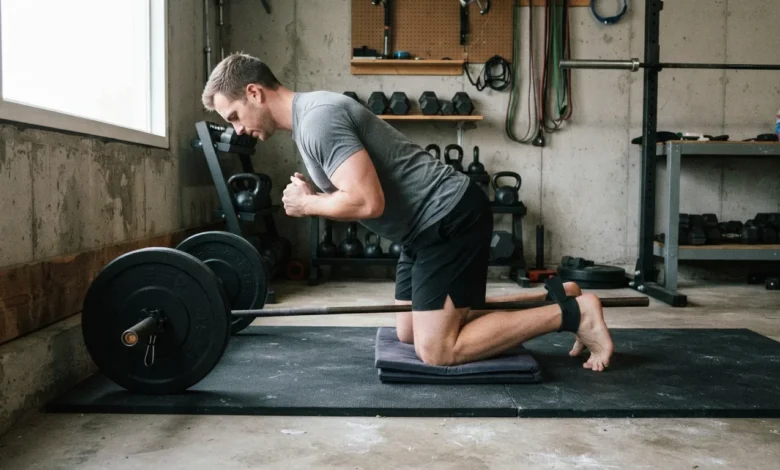
This is the closest match to a glute ham raise in terms of muscle demand. Kneel on a pad with your ankles locked under a barbell, a partner’s hands, or a Nordic curl attachment, then lower your torso toward the floor as slowly as you can before catching yourself and pushing back up.
Start with just three or four reps. The eccentric, or lowering, portion is intense on the hamstrings, and soreness the next day is common for anyone new to the move. Bend at the hips slightly as you descend so your body stays close to a straight line instead of folding at the waist.
If you can’t control the descent for even one rep, use a resistance band looped around a rack for assistance, or have a partner press lightly on your upper back as you lower. Removing some of the load lets you build the movement pattern before adding the full bodyweight challenge.
2. Stability Ball Hamstring Curl
Lie on your back with your heels on a stability ball, arms flat on the floor for support, and lift your hips until your body forms a straight line from shoulders to knees. From there, roll the ball toward your glutes by bending your knees, then extend your legs back out without letting your hips drop.
This version isolates the knee-flexion side of the movement more than the hip-extension side, so it works best paired with a hip-dominant exercise like a Romanian deadlift or hip thrust on the same training day.
For a harder version, perform the curl one leg at a time while the other leg stays extended in the air. The single-leg variation roughly doubles the demand on each hamstring and forces the hips to stay level, which adds a stability component closer to what the glute-ham raise trains through the lower back and core.
3. Romanian Deadlift
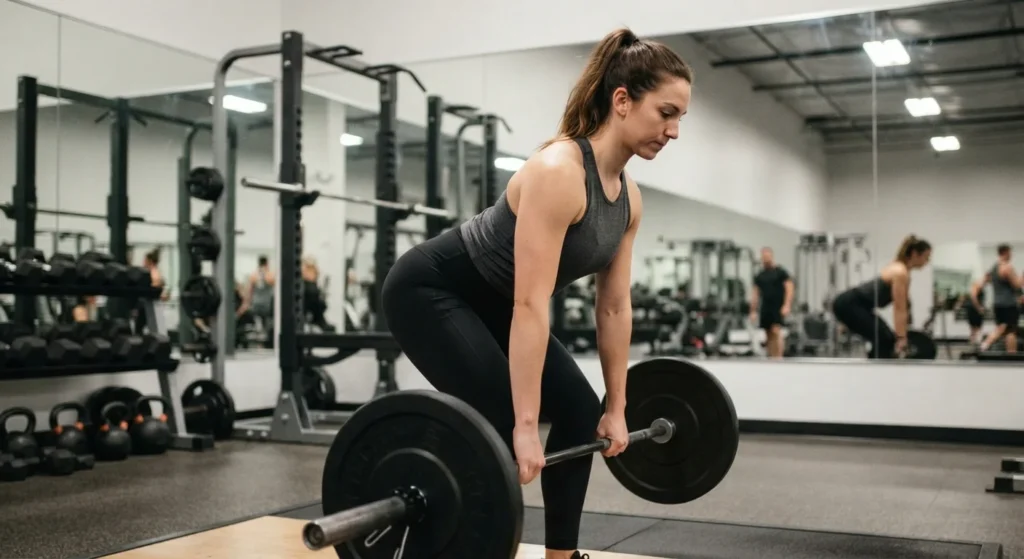
The Romanian deadlift trains hip extension under load, which covers the half of the glute-ham raise that bodyweight knee-flexion moves miss. Hold a barbell or a pair of dumbbells at your thighs, push your hips back while keeping a soft bend in your knees, and lower the weight until you feel a firm stretch in your hamstrings, usually around mid-shin height.
Keep the bar or dumbbells close to your legs the entire way down. Drifting the weight forward shifts load onto your lower back instead of your hamstrings and glutes.
Most lifters can load a Romanian deadlift heavier than they could ever manage on a glute-ham raise, which makes it a useful strength-building complement rather than a direct substitute on its own. Pairing it with a knee-flexion move in the same session, rather than relying on the Romanian deadlift alone, keeps the full hamstring function trained.
4. Single-Leg Romanian Deadlift
The single-leg version adds a balance and hip-stability demand that the standard glute ham raise also trains, since it forces one leg to control the descent while the other extends behind you. Hold a dumbbell in the hand opposite your standing leg, hinge forward while your rear leg lifts for counterbalance, then squeeze your glute to return upright.
Go light at first. Balance usually breaks down before strength does, and a wobbly rep teaches poor movement patterns instead of building hamstring strength. Once the balance component feels stable, the single-leg version tends to expose left-to-right strength differences that a barbell Romanian deadlift can hide, since a stronger leg can compensate for a weaker one when both feet share the load.
5. Reverse Hyperextension
A reverse hyperextension trains hip extension through a longer range of motion than a Romanian deadlift, using a bench, a stability ball, or a dedicated reverse hyper machine. Lie face down with your hips at the edge of the surface and your legs hanging off, then squeeze your glutes and hamstrings to raise your legs until they’re in line with your torso.
This move also decompresses the lower back a little as your legs swing, which some lifters use as active recovery between heavier hamstring sets. Because there’s no spinal loading from a bar on your back, it’s often a comfortable option on days when the lower back is fatigued, but the hamstrings and glutes still need direct work.
6. Sliding Leg Curl
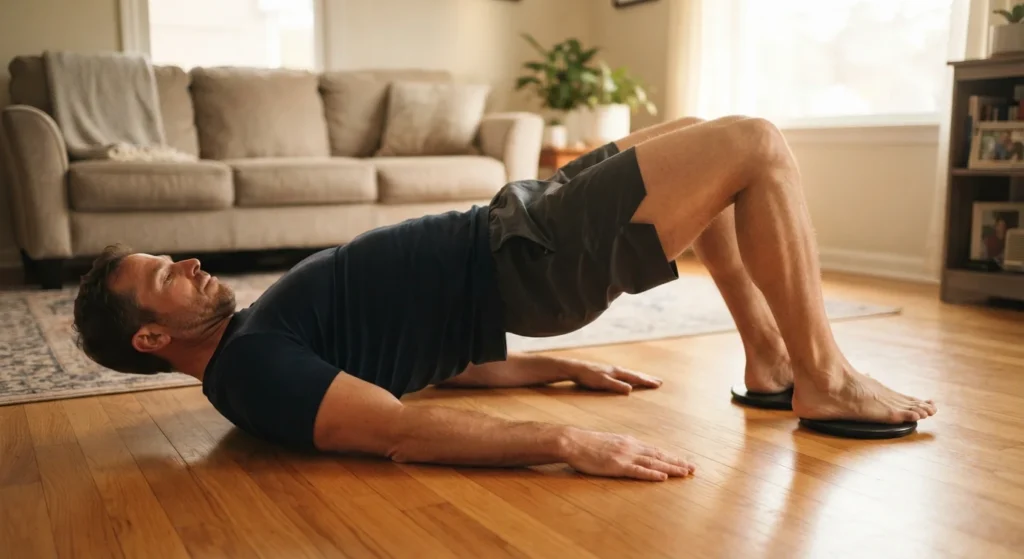
Furniture sliders, a towel on a hardwood or tile floor, or gliding discs let you mimic the knee-flexion part of a glute ham raise without any equipment. Lie on your back, heels on the sliders, hips lifted into a bridge position, then bend your knees to pull your heels toward your glutes and slide back out with control.
This is one of the more accessible options for a hotel room or a small apartment, since it needs nothing beyond a smooth floor and something for your heels to glide on. Carpet won’t let the sliders move properly, so this variation works best on hardwood, tile, or laminate flooring.
7. Cable Pull-Through
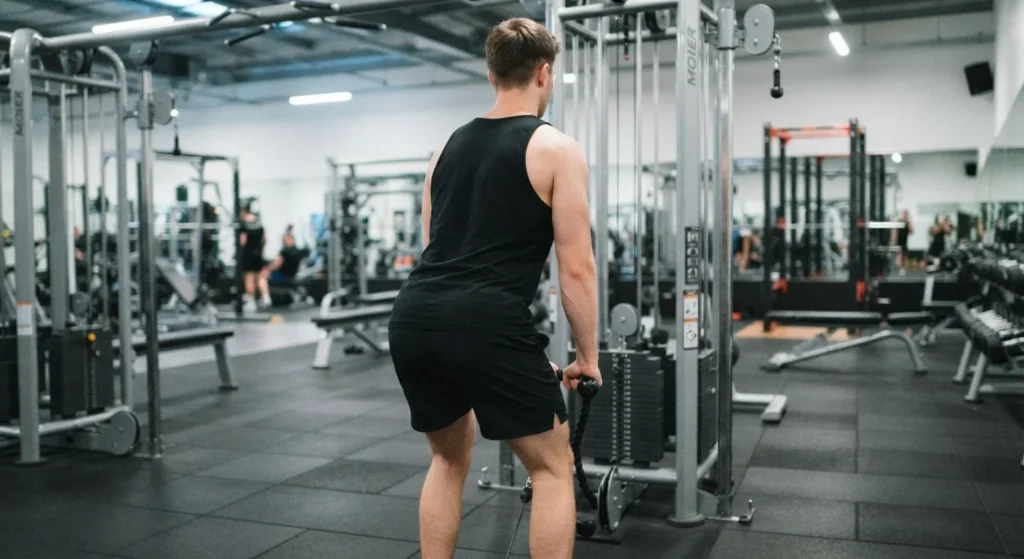
A cable pull-through trains the hip hinge with constant tension, which many lifters find easier on the lower back than a barbell Romanian deadlift while still building the same hip-extension strength. Face away from a low cable pulley with a rope attachment between your legs, hinge forward until you feel a stretch in your hamstrings, then drive your hips forward to standing.
Because the cable pulls you into the stretch instead of gravity alone, this version tends to keep tension on the hamstrings and glutes through the entire rep rather than just at the bottom. It also removes most of the grip and lower back fatigue that comes with a heavy barbell hinge, which makes it a solid choice on a day dedicated to higher-rep, higher-volume hamstring work.
8. Band-Resisted Good Morning
A good morning trains the hip hinge from a standing position with the load across your upper back instead of your hands, which changes how your core has to stabilize the movement. Loop a resistance band under both feet and over your shoulders, or use a light barbell, then hinge forward at the hips with a soft knee bend until your torso is close to parallel with the floor.
This variation is worth including for lifters who already do a lot of Romanian deadlifts and cable pull-throughs, since it trains the same hip-extension pattern through a slightly different loading angle and keeps the hamstrings adapting to more than one stimulus.
How to Choose the Right Alternative for Your Goal
If a GHD bench simply isn’t available, the Nordic hamstring curl gets closest to matching what a glute-ham raise trains, since it combines hip and knee movement in one exercise. If the goal is building raw hamstring and glute strength for deadlifting or sprinting, pairing a Romanian deadlift with a stability ball or sliding leg curl on the same day covers both halves of the movement.
Anyone dealing with lower back sensitivity may find the reverse hyperextension or cable pull-through more comfortable, since both keep the spine in a more neutral, supported position than a heavy barbell hinge. Athletes training specifically to reduce hamstring strain risk should prioritize the Nordic hamstring curl above the other options, since its heavy eccentric emphasis is what most of the supporting research on strain prevention is built around.
Beginners with no history of hamstring or lower back issues can rotate through the list based on available equipment rather than sticking to one fixed substitute. The variety itself has a benefit, since training the same muscles through slightly different joint angles and loading patterns tends to build more complete strength than repeating one exercise indefinitely.
Progress on any of these moves the same way you’d progress a glute ham raise: add reps before adding load, and only increase weight or difficulty once you can complete the target rep range with a controlled tempo. Rushing the load on a hip-hinge movement is one of the more common ways lifters end up with lower back soreness instead of the hamstring and glute gains they were after.
Sample Substitution for a GHD-Free Workout
A simple swap looks like three sets of Nordic hamstring curls for as many controlled reps as possible, followed by three sets of Romanian deadlifts at a moderate weight for 8 to 10 reps, then finished with two or three sets of sliding leg curls for 12 to 15 reps. That sequence trains the hip-extension and knee-flexion sides of the glute ham raise in a single session without needing specialized equipment.
Rotating which exercise leads the workout from week to week, so the most fatiguing move isn’t always first, helps keep progress steady across all three. For lifters training at home with limited equipment, swapping the Romanian deadlift for a band-resisted good morning and the sliding leg curl for a stability ball curl covers the same movement patterns with gear that fits in a closet.