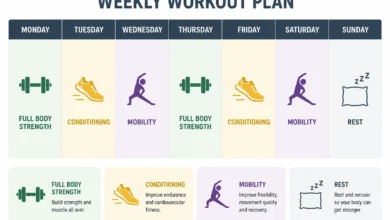


The best gym workouts for beginners combine full body training three days a week, compound lifts like squats and rows, and short rest periods you actually stick to. Start with a program you can repeat for six weeks before changing anything. Consistency matters more than finding the “perfect” routine on day one.
How To Start Gym Workouts As A Complete Beginner
Walking into a gym for the first time feels overwhelming. Rows of machines, free weight racks, and people who clearly know what they’re doing can make anyone hesitate at the door. The fix isn’t more research, it’s a smaller first step.
Pick one program and run it for at least four weeks before judging whether it works. A simple full body routine, done three times a week, gives your joints and nervous system time to adapt without burning you out. Most beginners quit not because the plan was wrong, but because they switched plans every ten days looking for faster results.
Before your first session, learn five movements: the squat, the deadlift, the bench press, the row, and the overhead press. You don’t need to load heavy weight on day one. A twenty-minute session with an empty barbell or light dumbbells, focused on getting the movement pattern right, will save you from injuries later.
If you’re new to strength training, or you have a joint issue, heart condition, or any concern about starting an exercise program, talk to a doctor first. This guide covers general fitness information, not medical advice for your specific situation.
Choosing The Right Gym Workout Split For Your Goal
A workout “split” is just how you divide muscle groups across the week. Beginners usually do best with a full body split. Once you’ve trained consistently for two to three months, a push pull legs split lets you add more volume per muscle group without adding more days than your schedule allows.
Full Body Workouts For Beginners
A full body session trains your whole body in one workout, usually built around one push exercise, one pull exercise, one squat pattern, and one hinge pattern like a deadlift or hip thrust. Three sets of eight to twelve reps per exercise is a reasonable starting point.
Doing this three times a week, with a rest day between sessions, gives you six total workouts every two weeks. That’s enough volume to build noticeable strength in the first two months without wrecking your recovery.
Push Pull Legs Split For Intermediate Lifters
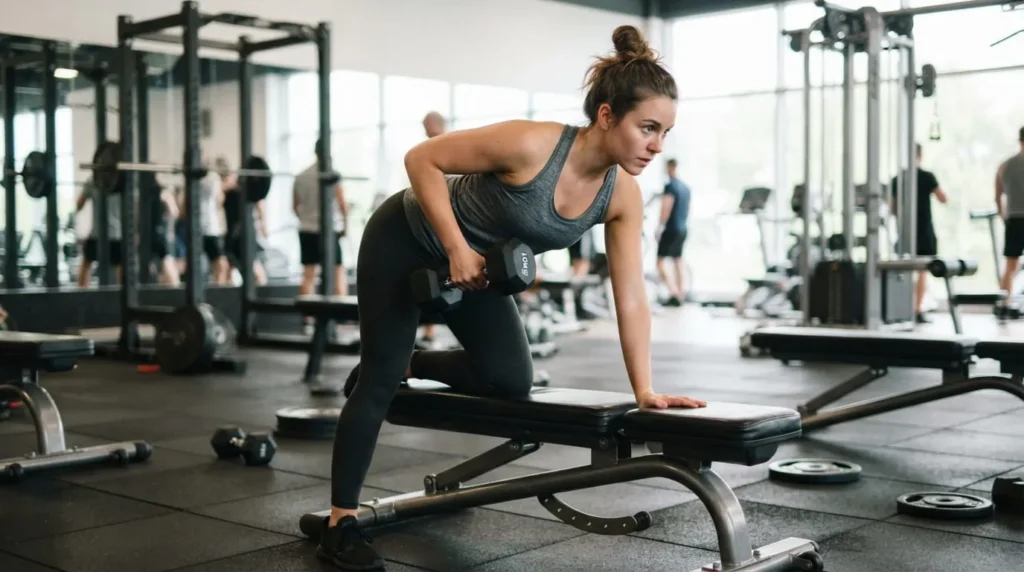
Once full body workouts start to feel easy, a push pull legs split spreads the same muscle groups across six shorter sessions instead of three longer ones. Push day covers chest, shoulders, and triceps. Pull day covers back and biceps. Leg day covers quads, hamstrings, and glutes.
This split works because each muscle group gets more focused attention per session, which lets you add more sets over time. It does ask for more days in the gym, so it fits people training four to six times a week rather than someone who can only make it in twice.
Gym Equipment You’ll Actually Use Every Session
Most gyms are bigger than they need to be for a beginner. You don’t need to understand every machine on the floor. A handful of tools cover almost everything.
Barbells and a squat rack handle your main compound lifts: squats, deadlifts, bench press, and overhead press. Dumbbells fill in the gaps for single-arm rows, lunges, and shoulder work. A cable machine or resistance bands are useful for exercises like face pulls and tricep pushdowns that keep tension on the muscle through the full range of motion.
Machines like the leg press or lat pulldown are worth using too, especially early on, because they guide the movement path and let you focus on effort instead of balance. There’s a common idea that machines are “less effective” than free weights. For a beginner still learning body control, a machine that keeps you safe while you build strength is doing its job.
How Many Days A Week You Should Train
Three sessions a week is enough to see real progress if you’re new to gym workouts. That’s roughly 150 to 200 minutes of training time, which is in the same range as general physical activity guidance for adults.
More isn’t automatically better. Training five or six days a week without enough sleep or food to recover usually shows up as stalled lifts, nagging soreness that won’t go away, or losing motivation to show up at all. If you’re short on time, two well-planned full body sessions a week still beat five rushed ones.
Rest days aren’t wasted days. Muscle doesn’t grow during the workout, it grows during the 48 hours after, when your body repairs the muscle fibers you broke down.
Common Gym Workout Mistakes That Slow Down Progress
Skipping a warm-up is the fastest way to get hurt on a heavy lift. Five minutes on a bike or rower, followed by a couple of light warm-up sets on your first exercise, wakes up the joints you’re about to load.
Chasing weight on the bar before the movement is solid is another common mistake. A squat with poor depth or a deadlift with a rounded back will eventually cause an injury, even if it lets you lift more today.
Copying someone else’s program without checking if it fits your schedule causes just as many people to quit as bad form does. A six-day bodybuilder split looks great online, but if you can only get to the gym three times a week, a full body routine built for three days will get you further.
Skipping protein and sleep is the last piece people overlook. Workouts break muscle down. Food and rest are what rebuild it stronger. Without both, the workout alone won’t move the needle much.
Tracking Progress So Your Gym Workouts Keep Working
Write down what you lift. A phone note, a small notebook, or a spreadsheet all work, the format matters less than actually doing it. Record the exercise, the weight, the sets, and the reps every session.
After four to six weeks, look back at your first entries. If the weight, reps, or sets have gone up on your main lifts, the program is working. If nothing has moved, that’s your signal to adjust, not to switch programs entirely.

Progress in the first year of consistent gym workouts is usually the fastest you’ll ever see. Small numbers on paper, an extra rep here, five more pounds there, add up to real strength faster than most people expect.
The Fastest Way To See Results From Gym Workouts
Pick a program, run it for at least a month, and write down every session. That’s the whole system. Beginners who stick to three full body workouts a week, focus on the five main lifts, and eat and sleep enough to recover will out-progress anyone chasing a “perfect” routine that changes every week. Add a push pull legs split once full body training feels easy, and adjust the plan every few weeks based on what your workout log actually shows, not on what looks good online.
FAQ’S
1:How many gym workouts should a beginner do per week?
Three sessions a week is a solid starting point for most beginners. It gives you enough training volume to build strength while leaving rest days between most sessions for recovery. You can add a fourth day once your body has adapted, usually after four to six weeks.
2:Are gym workouts better than home workouts?
Neither is automatically better, they depend on what equipment and space you have access to. A gym gives you barbells, machines, and heavier weight ranges that are harder to replicate at home. Home workouts can still build strength with dumbbells, bands, or bodyweight exercises if you’re consistent with progressive overload.
3:How long should a gym workout session last?
Forty five to sixty minutes is typical for a full body or push pull legs session, including a warm-up. Sessions that regularly run past 90 minutes usually mean too much rest between sets or too many exercises for one day. Quality of effort matters more than total time spent in the gym
4:Can I do gym workouts every day?
You can train every day, but hitting the same muscle group with heavy lifts on back-to-back days usually slows recovery rather than speeding up progress. Splitting muscle groups across different days, like a push pull legs split, makes daily training more sustainable. Beginners are generally better off with three or four sessions and full rest days in between.
5:What should I eat before and after gym workouts?
A meal with carbohydrates and some protein one to two hours before training gives you energy for the session. After training, protein helps repair the muscle you just broke down, with a general target of 20 to 30 grams in the post-workout meal. Exact needs vary by body size and training intensity, so treat this as general guidance rather than a personalized plan.