
Most people need three to six exercises per workout. The right number depends on your experience level, your goal, and whether you train full body or on a split. Beginners do well with three to four moves, intermediates with four to six, and advanced lifters with five to seven.
The Quick Answer
If you only remember one number, remember this: four to six exercises per session covers most training goals without burning you out. Kyle Krupa, a doctor of physical therapy and founder of KRU PT + Performance Lab, points to this range as a baseline because it hits every major movement pattern without overloading a single session. Below that range, you risk missing a muscle group. Above it, fatigue usually shows up before you finish, and your last two or three exercises get sloppy.
That said, the exercise count is a symptom, not the goal. What matters more is total training volume, meaning the number of hard sets you rack up per muscle group across the week.
How Many Exercises Per Workout By Experience Level
1. Beginners
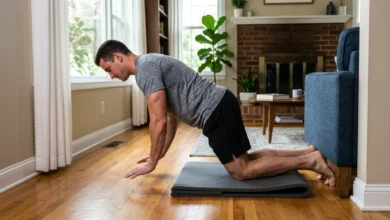
New lifters should stick to three or four exercises per session, built around one movement from each major pattern: a squat, a hinge or pull, a push, and a core move. A first full body day might look like goblet squats, dumbbell rows, push-ups, and a plank. Three sets of ten to twelve reps per exercise is plenty while you learn form. Trying to cram in eight or nine moves at this stage usually means every one of them gets rushed.
2. Intermediate Lifters
Once you have six months or more of consistent training behind you, four to six exercises per session works better. You have the base strength to add accessory work, such as pairing a barbell bench press with incline dumbbell presses and cable flyes on a push day. Three to four sets of eight to twelve reps per exercise is a common setup here.
3. Advanced Lifters
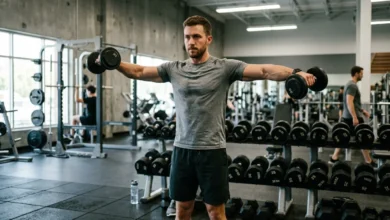
Advanced trainees, meaning those training four or more times a week for over a year with solid form, can handle five to seven exercises, especially on split routines where only one or two muscle groups get hit per day. The extra exercises let you attack a muscle from different angles, for example a flat bench press, an incline dumbbell press, dips, and cable flyes on the same chest day.
How Many Exercises Per Muscle Group
Total workout count matters less than how many moves each muscle group gets, because that’s what decides recovery and growth. As a rule:
Large muscle groups (chest, back, quads, hamstrings, glutes) do well with two to three exercises per session, usually one compound lift plus one or two accessory moves. Smaller muscle groups (biceps, triceps, calves, side delts) need only one or two, since they already get indirect work from your compound lifts.
On a chest and triceps day, for example, a lifter might do flat bench press and incline dumbbell press for chest, then triceps pushdowns and overhead extensions for triceps. That’s four exercises total, and it covers both muscle groups without stacking on fatigue for no added benefit.
How Many Exercises Per Workout By Goal
1. Building Muscle
For hypertrophy, aim for three to five sets of eight to twelve reps per exercise, spread across four to six exercises per session. The Gym Group’s training guidance recommends starting with two to three compound lifts per muscle group as a beginner and building toward four to five as an advanced lifter, layering in isolation work like curls and raises once the basic lifts feel solid.
2. Losing Fat
Fat loss workouts often use more exercises in a shorter window, four to six moves done as circuits or supersets with short rest periods, to keep your heart rate up. A typical circuit might run through kettlebell swings, push-ups, mountain climbers, and goblet squats for three to five rounds with thirty to sixty seconds of rest between rounds.
3. Building Strength
Strength-focused sessions go the other way: fewer exercises, heavier weight. Three or four compound lifts (squat, deadlift, bench press, overhead press) done for four to six sets of three to six reps builds more raw strength than a dozen light accessory moves, because you’re putting your energy into the lifts that move the most weight.
4. Full Body Vs Split Routines
Full body workouts, which hit every major muscle group in one session, typically use fewer exercises per muscle group but more total exercises overall, often five to seven moves per session. Split routines, where you train one or two muscle groups per day, let you narrow in with three to four exercises per group but require more gym days each week to cover your whole body.
Exercises Vs Sets: What Actually Drives Results
It’s easy to assume more exercises means more progress, but muscle growth responds to total hard sets per week, not the number of different movements you try. A lifter doing four focused sets of bench press plus four sets of incline dumbbell press is stacking real, comparable volume on the chest. Someone doing three sets each of six different chest exercises is spreading that same effort thin and adding fatigue without adding proportional stimulus.
As a rough weekly target, most lifters do well with ten to twenty hard sets per large muscle group and eight to sixteen for smaller ones, spread across two or three training days.
Common Mistakes When Choosing How Many Exercises To Do
Doing too much is the most common one. Endless sets, a dozen movements, and marathon sessions don’t translate into faster results, they usually just add fatigue and cut into recovery. A second mistake is skipping the basics for fancier isolation moves. Squats, push-ups, rows, and presses build more overall strength than any machine, so they should form the backbone of most sessions. A third mistake is swapping exercises every single workout. Sticking with the same core lifts for six to ten weeks makes it far easier to track progress and apply progressive overload, meaning gradually adding weight, reps, or sets over time.
A Sample Workout Using The Right Number Of Exercises
Here’s what a balanced, five-exercise full body session looks like for an intermediate lifter:
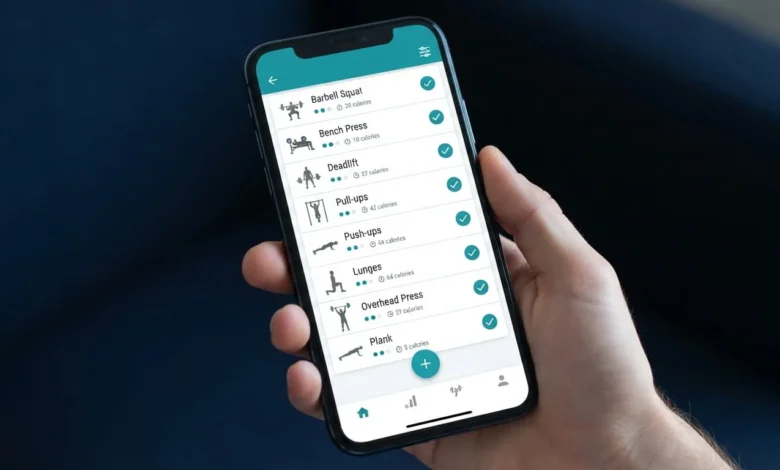
Barbell back squat, three sets of eight reps. Dumbbell bench press, three sets of ten reps. Bent-over barbell row, three sets of ten reps. Romanian deadlift, three sets of ten reps. Plank, three sets of forty-five seconds.
That’s five exercises, roughly forty-five minutes including warm-up, and it covers every major movement pattern in one session.
Putting It Together
The number of exercises per workout is a starting point, not a rulebook. Match it to your experience, pick exercises that cover real movement patterns, and let your weekly set volume, not your exercise count, be the number you actually track over time.
Frequently Asked Questions
1. Is it bad to do too many exercises in one workout?
Yes, past a point. More than six to eight exercises in a single session often means less focus, weaker form, and less effective sets on the exercises that matter most, especially your first two or three compound lifts.
2. How many exercises should a beginner do per workout?
Three to four exercises per session is enough for most beginners. This keeps the focus on learning proper form on a squat, a push, a pull, and a core movement before adding volume.
3. Should I do the same exercises every workout?
Mostly yes. Sticking with the same core lifts for six to ten weeks makes it easier to track progress and add weight or reps over time. You can still rotate one or two accessory exercises for variety.
4. How many exercises per muscle group is ideal?
Two to three exercises for large muscle groups like chest, back, and legs, and one to two for smaller ones like biceps, triceps, and calves, usually covers what’s needed without adding unnecessary fatigue.
5. Does the number of exercises matter more than sets?
No. Total hard sets per muscle group per week drives most of your progress. Exercise count is really just how you divide those sets across different movements.