

A pre workout drink is a supplement, usually mixed with water, taken 20 to 30 minutes before training to raise energy, focus, and endurance. Most rely on caffeine plus a handful of supporting ingredients that work together rather than any single “magic” compound
What Is A Pre Workout Drink
A pre workout drink is a powder or liquid formula built around a stimulant, usually caffeine, combined with amino acids and other compounds meant to delay fatigue or improve blood flow to muscles. Some are single-ingredient (just caffeine), while others stack five or six active compounds into one scoop.
The category grew out of bodybuilding supplement lines in the 1990s and early 2000s, when companies started bundling caffeine with creatine and amino acids instead of selling them separately. Today it’s one of the most common products in a gym bag, next to protein powder.
Powder Vs Ready-To-Drink Formats
Powders are the most common format because they’re cheaper per serving and let manufacturers pack in higher doses of active ingredients. Ready-to-drink cans are more convenient for travel or the office gym, but they often use lower doses to keep the drink palatable and shelf-stable.
Common Ingredients And What They Actually Do
Most formulas repeat the same core ingredients, just in different ratios.
Caffeine
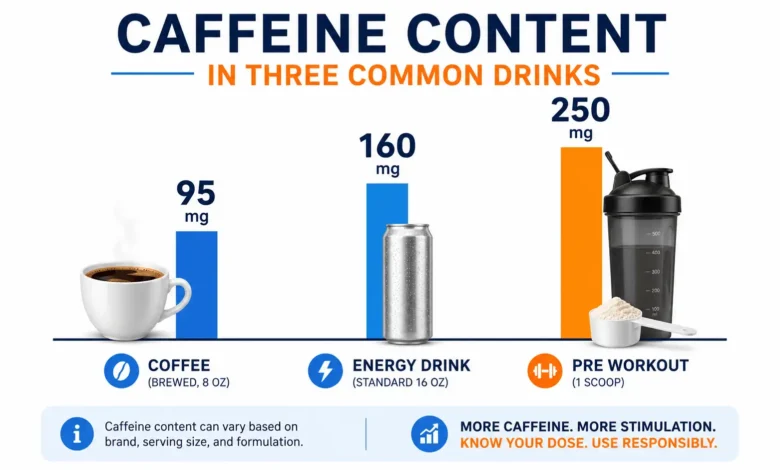
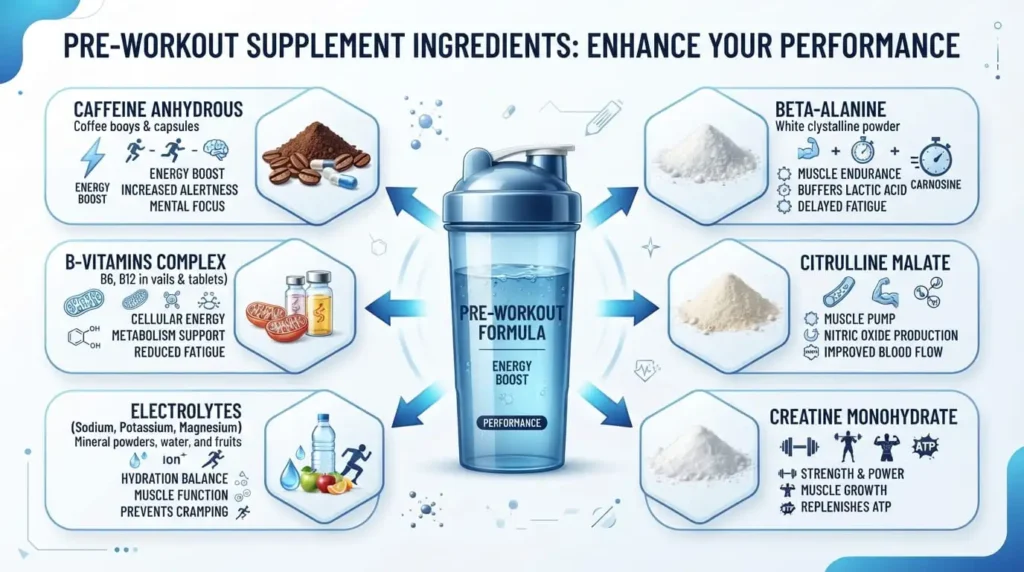
Caffeine is the main driver of the “kick” people feel. It blocks adenosine receptors in the brain, which is what makes you feel less tired and more alert. Doses in commercial pre workouts commonly range from 150mg to over 300mg per serving, compared to about 95mg in an average cup of coffee.
Beta-Alanine
Beta-alanine is an amino acid that buffers acid buildup in muscles during high-rep or high-intensity work, which can delay the burning sensation that makes you want to stop a set. It’s also the ingredient behind the tingling, itchy skin feeling (paresthesia) that some people notice 10 to 15 minutes after taking a pre workout. That sensation is harmless but can catch first-time users off guard.
Citrulline Malate
Citrulline malate raises nitric oxide levels, which widens blood vessels and increases blood flow to working muscles. This is the ingredient responsible for the “pump,” the tight, full feeling in muscles during a lifting session.
Creatine Monohydrate
Creatine helps regenerate ATP, the molecule muscles use for short bursts of power, which is why it’s linked to strength and power output gains. Unlike caffeine or beta-alanine, creatine doesn’t need to be taken right before a workout to work. It builds up in muscle tissue over days of consistent use, so timing relative to training doesn’t matter much.
B Vitamins And Electrolytes
B vitamins support energy metabolism, and electrolytes like sodium and potassium help with hydration and muscle contraction during longer or sweatier sessions. These are usually minor additions rather than the main draw of a formula.
How A Pre Workout Drink Affects Training
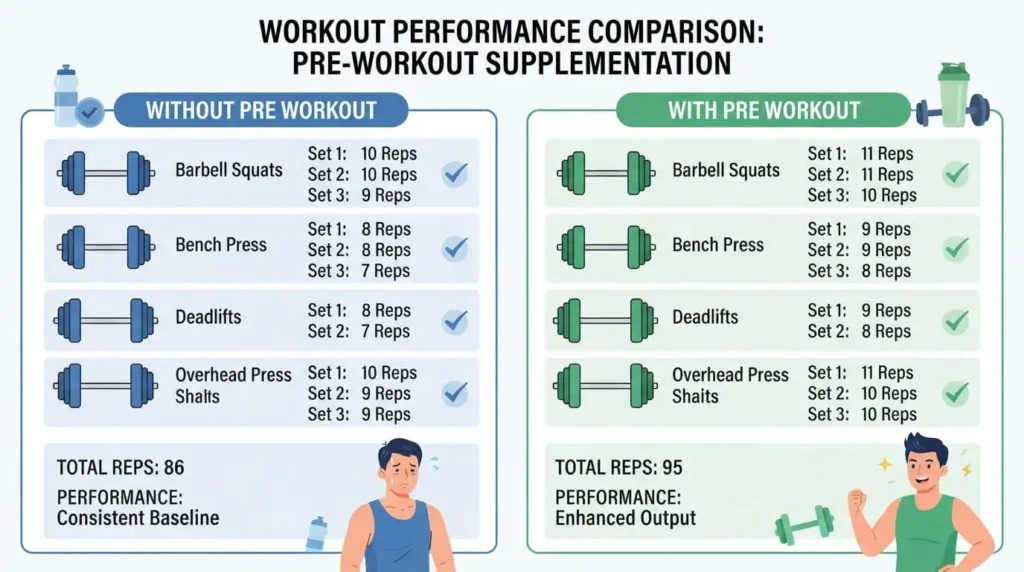
The combined effect of these ingredients is meant to let you train harder for longer before fatigue sets in. In practice, this can look like being able to add one or two extra reps to a set, keeping intensity up through the last exercises of a session, or simply feeling mentally ready to train on a low-energy day.
Timing
Take it 20 to 30 minutes before training so the caffeine has time to reach peak blood levels. Taking it too close to bedtime, even for an evening workout, can interfere with sleep since caffeine has a half-life of roughly 5 hours in most adults.
Dosage
Start with half a scoop if you’re new to pre workout, especially with formulas over 200mg of caffeine. Tolerance builds quickly, and jumping straight to a full dose is the most common reason people report jitters, a racing heart, or nausea.
Who Should Be Cautious
People with heart conditions, high blood pressure, anxiety disorders, or caffeine sensitivity should talk to a doctor before using a stimulant-based pre workout. Pregnant or breastfeeding individuals are generally advised to avoid high-caffeine supplements altogether.
This is a YMYL-adjacent area (health and safety), and this article is not a substitute for medical advice. Anyone with an existing health condition should check with a doctor or pharmacist before adding a new supplement.
Pre Workout Drink Side Effects
The most commonly reported side effects are jitters, a skin-tingling sensation from beta-alanine, trouble sleeping if taken too late in the day, and mild stomach discomfort. Most of these fade as the body adjusts, or they disappear entirely if the dose is lowered.
Natural Alternatives To A Pre Workout Drink
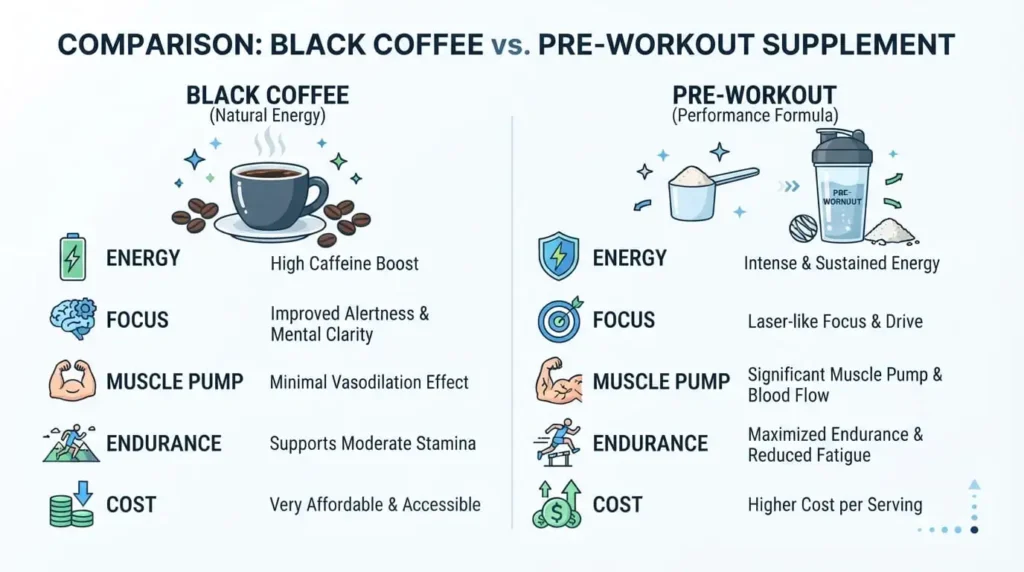
Black coffee, green tea, or a banana with a small coffee are common lower-cost substitutes for a commercial pre workout. They won’t replicate the pump effect from citrulline or the endurance boost from beta-alanine, but they can cover the energy and focus piece for someone who trains at a lower intensity or just wants to avoid a supplement blend.
How To Choose A Pre Workout Drink
Check the label for the actual dose of each ingredient rather than relying on marketing claims. Some brands hide behind a “proprietary blend,” which lists ingredients without disclosing amounts, making it hard to know if you’re getting a dose that actually does anything. Look for informed-sport or third-party tested labels if you compete in a regulated sport, since some formulas have been flagged for contaminated batches in the past.
Pre workout drinks work best as a tool for specific sessions; heavy leg days, competition prep, or early morning training when energy is naturally low, rather than something used before every single workout. Rotating in caffeine-free days or an off week without any pre workout can help keep tolerance from creeping up over time.
FAQ’S
Is a pre workout drink safe to take every day?
Daily use is common, but it raises the risk of building a caffeine tolerance, which means needing more to get the same effect over time. Cycling off for a week every month or two helps reset sensitivity.
Can I take a pre workout drink on an empty stomach?
Yes, and many people prefer it that way since food can slow caffeine absorption. It can also increase the chance of stomach upset for some people, so it comes down to personal tolerance.
Does a pre workout drink burn fat?
Caffeine can slightly raise metabolic rate and help you train harder, which indirectly supports fat loss, but no pre workout ingredient burns fat on its own. Diet and total training volume matter far more.
What happens if I take too much pre workout?
Symptoms can include a racing heart, anxiety, nausea, and trouble sleeping. Doses well above label recommendations have been linked to more serious heart-related issues in case reports, so sticking to the recommended serving matters.
Can beginners use a pre workout drink?
Yes, but starting with a half serving is a safer way to gauge tolerance before working up to a full dose