
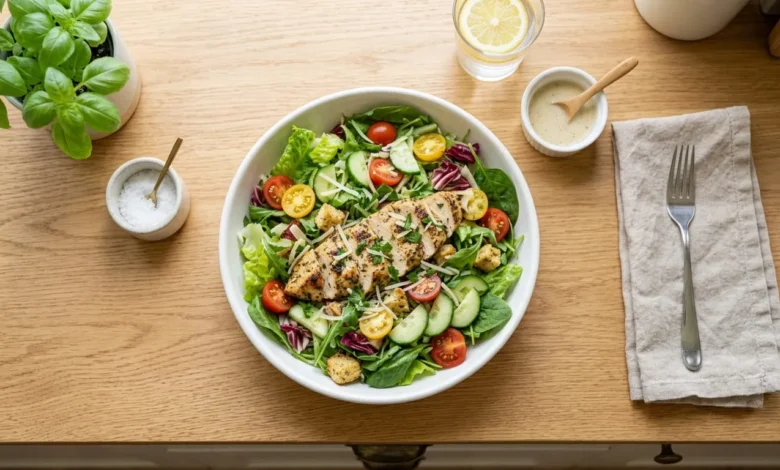
A plain bowl of lettuce might carry 20 calories. The same bowl with a creamy dressing, cheese, croutons, and fried chicken can carry 800 or more. That gap is the entire story of salad calories. The base is almost always light. Everything added on top decides whether the meal supports your goals or quietly works against them.
This guide breaks down what actually drives the calorie count in a salad, how common salad types compare, where restaurant versions differ from homemade ones, and how to adjust a salad without losing flavor.
How Many Calories Are in a Salad
There is no single answer, and any source giving you one flat number is oversimplifying. A basic garden salad made only from leafy greens and raw vegetables typically falls between 20 and 60 calories per serving. Add a protein, some cheese, nuts, or dried fruit, and that number climbs into the 200 to 400 range. Add a large portion of dressing, croutons, bacon, and a fried or breaded protein, and a single salad can easily exceed 600 to 900 calories.
The word “salad” describes a format, not a fixed nutritional profile. A dish built around vegetables can be one of the lightest meals on a menu, or one of the heaviest, depending entirely on what surrounds the greens. This is why two people can each eat “a salad” for lunch and take in completely different amounts of energy.
Calories by Common Salad Type
These figures represent typical ranges for a standard entree-sized portion, not an exact fixed value, since recipes and restaurant preparations vary.
Garden salad with a light vinaigrette: 100 to 180 calories Greek salad with feta and olives: 250 to 400 calories Cobb salad with egg, bacon, cheese, and dressing: 500 to 700 calories Caesar salad with dressing and croutons: 300 to 470 calories Caesar salad with grilled chicken added: 450 to 600 calories Chicken salad made with mayonnaise: 350 to 500 calories Tuna salad made with mayonnaise: 300 to 450 calories Waldorf salad with walnuts, grapes, and mayonnaise dressing: 300 to 400 calories Taco salad with fried shell, cheese, and sour cream: 600 to 850 calories
Notice the pattern. Salads built around raw vegetables and a light dressing stay well under 200 calories. Salads built around a mayonnaise base, fried components, or a full serving of cheese and bacon behave more like a burger than a vegetable dish. The name of a salad tells you almost nothing about where it falls on that range.
What Actually Drives the Calorie Count
Base Greens
Lettuce, spinach, arugula, and kale are all close to negligible in calories. Two cups of most raw leafy greens land somewhere between 10 and 20 calories total. This part of the salad is never where the calories come from, no matter how large the portion looks on the plate.
Vegetables and Fruit
Cucumber, tomato, bell pepper, and onion add flavor and volume for almost no caloric cost, usually under 25 calories per half cup. Fruit additions like grapes, apple, or dried cranberries add more sugar and calories than raw vegetables, though still modestly compared to protein and dressing. A small handful of dried fruit can quietly add 60 to 80 calories, more than most people expect from something marketed as a healthy topping.
Protein
This is where a salad starts to carry real weight. Grilled chicken breast adds roughly 140 calories per 3-ounce serving. Fried or breaded chicken can double that. Hard-boiled eggs run about 70 calories each. Chickpeas or beans add close to 100 calories per half cup, along with fiber that supports fullness. Shrimp is one of the lighter protein choices, usually under 100 calories for a 3-ounce serving, while salmon runs higher due to its fat content but brings useful omega-3s along with it.
Cheese, Nuts, and Seeds
A quarter cup of shredded cheese adds 100 to 115 calories. Two tablespoons of most nuts or seeds add 90 to 100 calories. These ingredients are calorie dense but nutritionally useful in small amounts, since they slow digestion and improve satiety. The mistake most people make is treating these as garnish rather than measuring them, since a heavy-handed sprinkle of cheese and nuts together can add 250 calories before the dressing is even poured.
Dressing
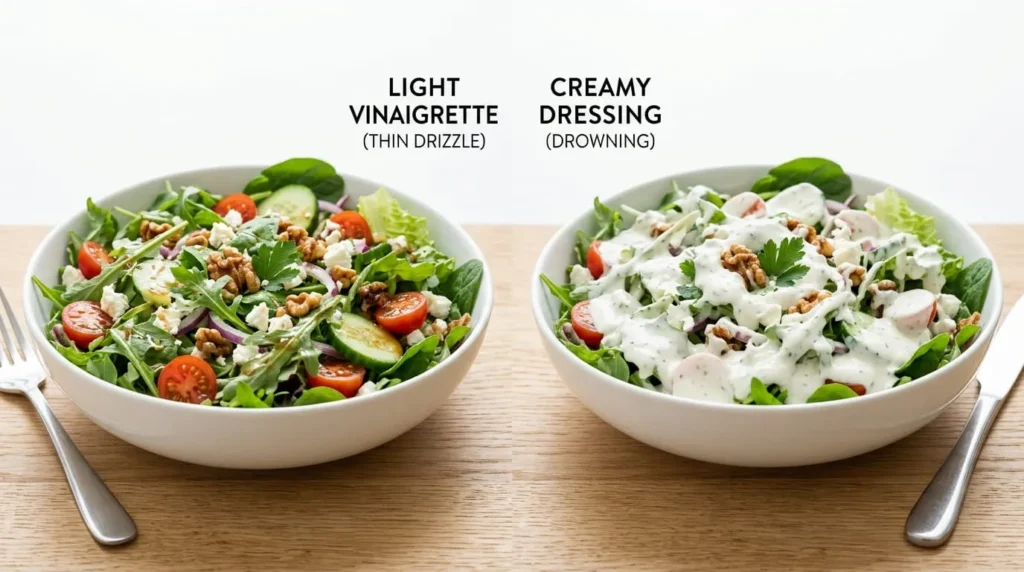
is the single most common place people underestimate a salad’s calorie count. A standard two-tablespoon serving of ranch, Caesar, or blue cheese dressing runs 140 to 180 calories. Restaurants frequently pour far more than two tablespoons, sometimes three to four times that amount. Oil and vinegar, balsamic vinaigrette, and lemon-based dressings sit lower, usually 60 to 90 calories for the same serving size, though oil still carries calories per tablespoon that add up quickly if poured heavily.
Why Restaurant Salads Run Higher Than Homemade Ones
Restaurant salads are consistently higher in calories than a version made at home, and the gap is rarely small. Portion sizes for cheese, bacon, croutons, and dressing are usually larger than what a person would add themselves. Fried protein is common on menus where a home cook would more often grill or bake. A Cobb salad or Caesar salad ordered at a restaurant can easily land 150 to 300 calories above a homemade version built with the same name.
Fast food salads deserve particular attention here, since some crispy chicken salad options with full dressing packets can approach or exceed the calories in a regular hamburger from the same menu. The vegetable base creates an impression of lightness that the actual ingredient list does not support.
If calorie tracking matters to you, ask for dressing on the side and request grilled rather than fried or breaded protein. Both changes alone can cut several hundred calories without changing the actual dish you ordered. Asking for half the usual cheese portion is another easy adjustment most kitchens can accommodate without hesitation.
How to Build a Lower Calorie Salad Without Losing Flavor
Start with a large base of raw vegetables rather than a small handful. Volume from vegetables fills the bowl and the stomach for almost no calorie cost. Choose one protein source and stick to a standard portion, roughly 3 to 4 ounces of grilled meat, fish, or tofu, or half a cup of beans. Pick one calorie-dense topping rather than several. Cheese and nuts together, on top of bacon and croutons, is where a salad’s calorie count runs away.
Dressing deserves the most attention. Measure it rather than pouring freely, and lean toward vinaigrette-style dressings over creamy ones when calories matter. A squeeze of lemon with a small amount of olive oil delivers flavor and healthy fat for a fraction of the calories in a bottled creamy dressing. Tossing the salad with dressing in a separate bowl before serving, rather than pouring it directly over the top, also helps you use noticeably less while still coating every piece.
Herbs, spices, vinegar, and citrus zest are worth leaning on more than people realize. They add real flavor for close to zero calories, which makes it easier to cut back on dressing and cheese without the salad tasting plain.
Are Salads Actually Good for Weight Loss
Salads can support weight loss, but only when the version you build stays lower in calories than the meal it replaces. A salad loaded with fried chicken, full-fat cheese, bacon, and several tablespoons of creamy dressing can carry more calories than a sandwich or a plate of pasta. This is where the reputation of salads as automatically healthy runs into trouble.
Where salads genuinely help is volume and fiber. A large bowl of vegetables and lean protein fills you up on fewer calories than most other meal formats, which makes it easier to maintain a calorie deficit without feeling deprived. This advantage disappears once the toppings and dressing turn the dish calorie dense. If you have specific health conditions such as diabetes or are following a medically guided nutrition plan, talk to a registered dietitian or your doctor about how salad ingredients fit your individual needs, since portion and ingredient advice here is general rather than personalized.

FQA’S
1: How many calories should a salad have for weight loss?
There is no fixed number, but an entree salad in the 350 to 500 calorie range, built with a lean protein, a measured dressing portion, and mostly vegetables, works well as a full meal for most adults aiming to lose weight.
2: Is a salad always lower calorie than a burger or sandwich?
No. A loaded Cobb salad or a Caesar salad with a large dressing pour can match or exceed the calories in a standard burger. The format does not guarantee the outcome, and menu names can be misleading on their own.
3: What is the lowest calorie salad option?
A garden salad built from raw leafy greens, vegetables, and a light vinaigrette on the side, without cheese, croutons, or a heavy protein portion, is typically the lowest calorie option, often under 150 calories.
4: Does salad dressing really matter that much?
Yes. Dressing is frequently the single largest calorie contributor in an otherwise light salad, particularly with creamy or restaurant-style dressings poured in large amounts.