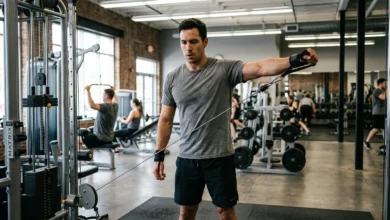

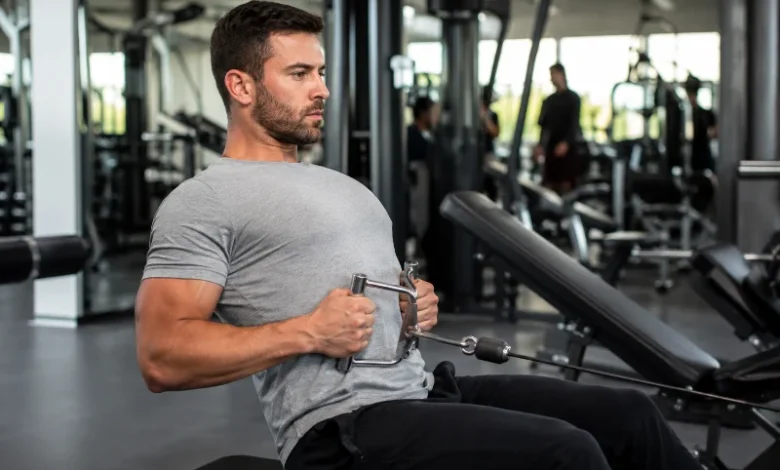
Cable back exercises work the lats, traps, and rhomboids with constant tension through the entire range of motion, something a barbell or dumbbell can’t fully match once the weight loses momentum at the top or bottom of a rep. The best cable back exercises for muscle mass are the wide-grip lat pulldown, seated cable row, and single-arm cable row, and they work best when paired with the right sets, reps, and rest based on your training experience.
Why Train Your Back With Cables
Cables keep tension on the target muscle from the first inch of the movement to the last, which matters for a muscle group as large as the back. A barbell row loses tension at lockout, but a cable row keeps the lats and rhomboids under load the whole time.
Cables also let you change the angle of pull in seconds. Raise the pulley for a straight-arm pulldown, lower it for an upright row, or switch to a single handle for unilateral work, all on the same machine. This makes cables useful for lifters recovering from a shoulder or lower back issue, since the resistance stays smooth instead of jerking through a range of motion the way a loaded barbell can.
How to Structure a Cable Back Workout
A well-rounded cable back session covers three categories: horizontal pulls for thickness, vertical pulls for width, and rear delt or trap work for posture and shoulder health. A simple template is two horizontal pulls, two vertical pulls, and one accessory move for the traps or rear delts.
Sets and reps depend on where you are in your training. Beginners in the first year of structured lifting respond well to 3 sets of 10 to 12 reps per exercise, focusing on form before load. Intermediate lifters can push to 3 or 4 sets of 8 to 12 reps with heavier loads and shorter rest, around 60 to 90 seconds between sets. Advanced lifters chasing hypertrophy often add drop sets or partial reps at the end of a set to extend time under tension past the usual 30- to 60-second window.
The Best Cable Back Exercises
1. Wide-Grip Lat Pulldown
The wide-grip lat pulldown is the closest cable substitute for a pull-up and the best starting point for building back width. Sit under the bar, grip it wider than shoulder-width, and pull it down to your upper chest while driving your elbows toward your hips. Keep your torso upright instead of leaning back to swing the weight down.
2. Seated Cable Row
The seated cable row hits the rhomboids, lats, and mid traps and builds the thickness that makes a back look wide from the front too. Sit with a slight bend in your knees, keep your spine tall, and pull the handle to your stomach while squeezing your shoulder blades together at the end of the movement. Avoid rocking your torso to generate momentum.
3. Single-Arm Cable Row
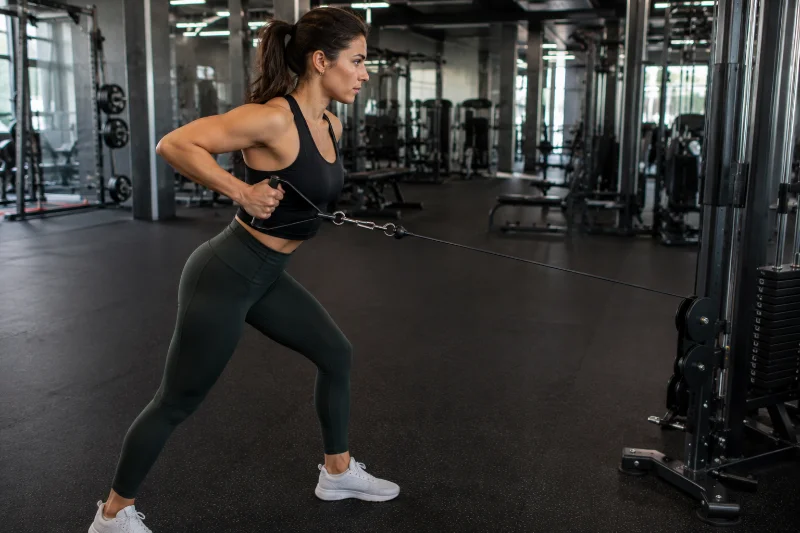
Training one side at a time exposes strength imbalances that a two-handed row can hide. Set a D-handle at chest height, brace your free hand on the machine or your knee, and pull with your elbow tracking close to your body. This variation also builds a stronger mind-muscle connection since all your focus goes to one side of the back.
4. Straight-Arm Pulldown
The straight arm pulldown isolates the lats without bringing the biceps into the movement much, which makes it useful on a day when your arms are already fatigued. Set the pulley high, grab a straight bar or rope, and pull down in an arc until your hands reach your thighs, keeping your elbows nearly locked the entire time.
5. Face Pull
Face pulls target the rear delts, rhomboids, and rotator cuff, muscles that get neglected during heavier pressing and pulling work. Set the pulley to roughly face height, pull the rope toward your face while flaring your elbows out, and finish with your hands near your ears. This move pays off in shoulder health more than raw back size, but a stable shoulder lets you lift heavier on every other pull.
6. Cable Shrug
The cable shrug builds the upper traps with a smoother resistance curve than a barbell shrug, since the cable stays in line with your body instead of drifting forward. Stand facing the machine or with your back to it, hold the handle at your sides, and shrug straight up without rolling your shoulders.
7. High Cable Row
Setting the pulley higher than a standard seated row shifts more work onto the rear delts and upper back, which helps with posture for anyone who sits at a desk most of the day. Kneel or stand facing the machine, pull the handle toward your upper chest, and keep your elbows high throughout the movement.
8. Kneeling Single Arm Pulldown
This variation removes the fixed bar path of a standard pulldown, letting your shoulder move through a more natural arc. Kneel below the pulley, grab a single handle, and pull down and slightly back while keeping your torso still. It is a strong finisher for the lats after heavier compound work earlier in the session.
Sample Cable Back Workout
This routine covers all three pulling categories in roughly 40 minutes and works for most intermediate lifters.
| Exercise | Sets | Reps |
| Wide Grip Lat Pulldown | 4 | 10-12 |
| Seated Cable Row | 3 | 8-12 |
| Single Arm Cable Row | 3 | 10-12 per side |
| Straight Arm Pulldown | 3 | 12-15 |
| Face Pull | 3 | 15-20 |
| Cable Shrug | 3 | 12-15 |
Rest 60 to 90 seconds between sets on the compound moves and closer to 45 seconds on the lighter accessory work like face pulls and shrugs.
Common Mistakes to Avoid
Leaning too far back on a row or pulldown shortens the range of motion and shifts work away from the back and onto momentum. Keep your torso close to upright and let your arms and shoulder blades do the pulling.
Stopping short of a full stretch at the top of a pulldown is another common issue. Let the weight pull your arms up until you feel a stretch through your lats before starting the next rep, rather than cutting the range of motion short to move more weight.
Cables vs Free Weights for Back Training
Free weights like barbell rows and pull-ups build more raw strength because they demand stabilization from smaller supporting muscles, which cables largely remove from the equation. Cables make up for this with safety and consistency, since the resistance never changes direction unpredictably the way a barbell can if your grip slips.

Most lifters get the best results mixing both. A barbell row or pull-up early in a session for strength, followed by two or three cable exercises to finish off the back with controlled, joint-friendly volume, covers both goals in one workout.