
A military calisthenics workout uses bodyweight movements like push-ups, pull-ups, sit-ups, and squats to build the kind of strength and endurance that carries over to real physical tasks, not just gym numbers. It is the same style of training used in basic training programs across the US Army, Navy, Marine Corps, and Air Force, and it works just as well for anyone training at home or outdoors with no equipment.
What Is a Military Calisthenics Workout
Military calisthenics is a style of training built around a small set of compound bodyweight exercises performed in high volume, often in circuits or timed sets. Recruits do not have access to barbells or machines during basic training, so the military relies on movements the body can already perform: pushing, pulling, squatting, and holding weight against gravity.
The goal is not to build the biggest muscles in a room. It is to build a body that can carry a pack for miles, climb over an obstacle, and still have enough left in the tank to finish the job. That practical, no-excuses approach is why calisthenics has stayed at the center of military fitness testing for decades, including the Army Combat Fitness Test and the Marine Corps Physical Fitness Test.
Why the Military Relies on Bodyweight Training
Bodyweight training scales to any fitness level with no equipment changes, which matters when thousands of recruits with different starting points need to train together. A push-up can be modified from the knees, a pull-up can start as a dead hang, and a squat needs nothing but floor space. That flexibility lets a single program serve a whole platoon.
There is also a durability argument. Barbells and machines build strength in a single plane of motion. Bodyweight movements ask the whole body to stabilize itself while moving, which builds the kind of full-body control that shows up when someone is scaling a wall, dragging a sandbag, or getting up off the ground under a loaded pack. That carryover is the real reason this style of training has outlasted every passing gym trend.
Core Exercises in a Military Calisthenics Routine
Every military fitness test is built around a short list of movements. Get comfortable with these four, and the rest of the program falls into place.
1. Push-Ups and Variations
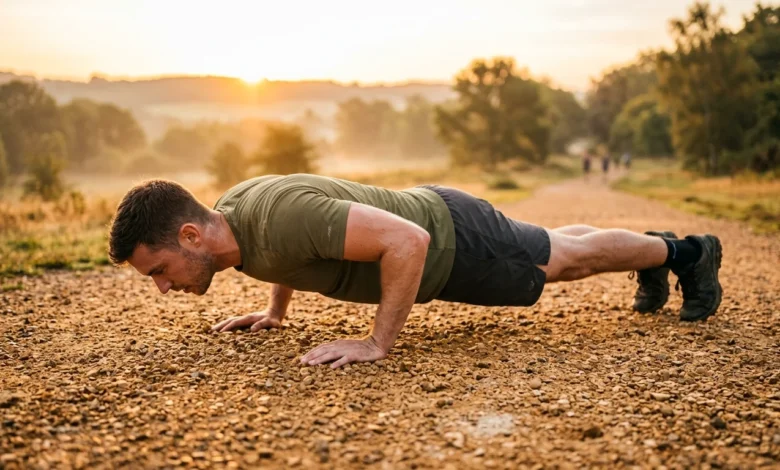
The standard push-up trains the chest, shoulders, and triceps while forcing the core to stay rigid from head to heel. Recruits are often tested on strict form: chest to the ground, full lockout at the top, no sagging hips.
Once the standard push-up feels easy, variations raise the difficulty without changing the setup. Diamond push-ups shift more load to the triceps. Wide-grip push-ups emphasize the chest. Decline push-ups, with the feet raised on a bench or step, add shoulder demand. Rotating through these keeps the movement pattern useful long after the basic version stops being a challenge.
2. Pull-Ups and Pull-Up Progressions
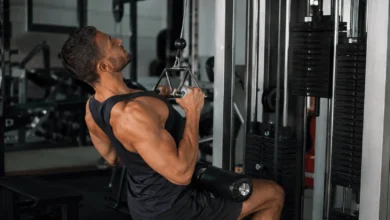
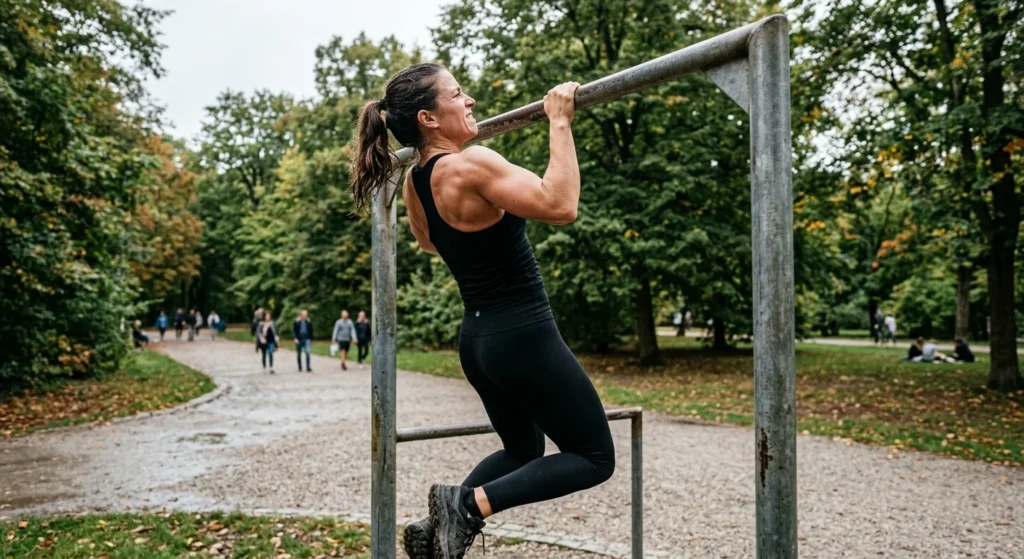
Pull-ups are usually the hardest test event for recruits, and for good reason. They demand grip strength, back strength, and enough body control to move the entire body weight through a full range of motion. Someone who cannot yet do a full pull-up should not skip the movement; they should regress it.
Dead hangs build grip and shoulder stability. Negative pull-ups, where the person jumps to the top position and lowers slowly, build strength through the full range. Banded pull-ups take some bodyweight out of the equation while keeping the same motor pattern. Progressing through these stages over several weeks turns a zero-pull-up starting point into a reliable set of five or more.
3. Sit-Ups and Core Work
Military fitness tests still lean heavily on sit-ups or their modern replacement, the plank, because a strong core keeps the spine stable under load. A weak midsection shows up fast when someone is carrying a rucksack or lifting an awkward object off the ground.
Standard sit-ups, flutter kicks, leg raises, and planks together cover the front, sides, and deep stabilizers of the core. Rotating between them prevents the overuse issues that come from doing thousands of the same repetitions week after week.
4. Squats and Lower Body Movements
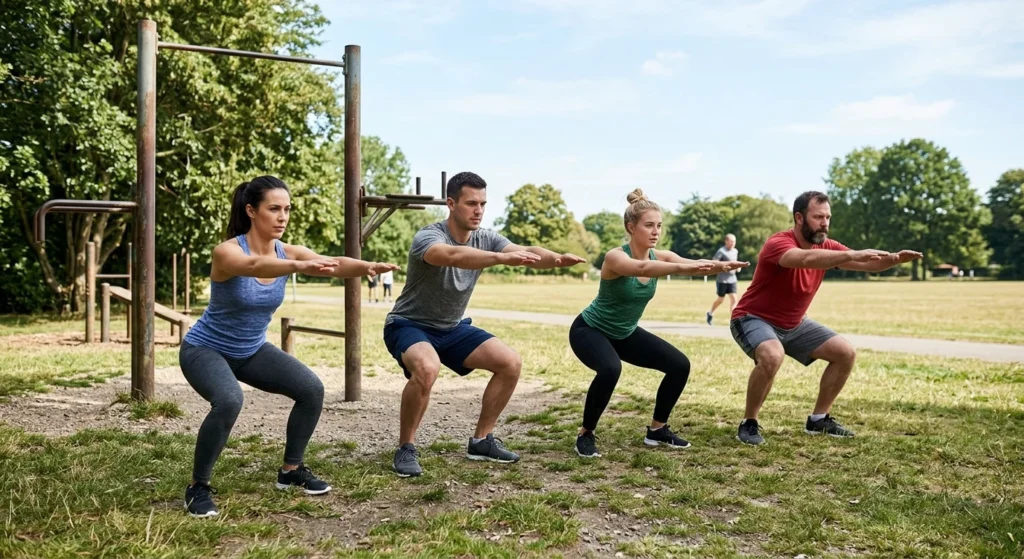
Bodyweight squats, lunges, and step-ups build the leg strength and hip mobility needed for marching, climbing, and carrying loads over uneven ground. Jump squats add a power component that pure strength training misses. None of these need a rack or a bench, just enough floor space to move through a full range of motion.
Sample Military Calisthenics Workout Plan
A basic recruit-style session can be run three to four times a week with rest or light cardio in between. One simple structure looks like this:
Warm up with five minutes of jogging or jumping jacks, then move through three rounds of twenty push-ups, ten pull-ups (or the appropriate progression), thirty seconds of plank, and twenty bodyweight squats, resting sixty to ninety seconds between rounds. Finish with a two-mile run at a steady pace, which mirrors the run component of most military fitness tests.
As conditioning improves, the rep counts can climb, rest periods can shrink, or an extra round can get added. The structure stays simple on purpose. Consistency with a handful of movements beats a constantly changing routine that never lets any single exercise become second nature.
How to Build Endurance Like a Recruit
Endurance in military training comes from repetition under time pressure, not from long, slow workouts alone. Recruits train with timed circuits, ruck marches under load, and interval runs that push the heart rate up and bring it back down repeatedly over the course of a session.
Anyone building this kind of endurance at home can start with interval running, alternating one minute of hard effort with two minutes of easy pace, and gradually add a weighted backpack for short walks or hikes. Combining that cardio base with the strength circuit above builds the specific kind of stamina that shows up on a fitness test, not just a higher number on a treadmill display.
Common Mistakes to Avoid
Rushing through reps to hit a number is one of the most common mistakes in calisthenics training. A push-up done with a sagging back or a half range of motion builds bad habits faster than it builds strength. Slowing down and holding proper form matters more than the count on the rep tracker.
Skipping the pull-up progression is another frequent error. Many people avoid pull-ups entirely because they cannot do one, which guarantees they never will. Working through dead hangs and negatives closes that gap over a matter of weeks.
Training the same movements every single day without rest is a third mistake that leads to overuse injuries in the shoulders, elbows, and lower back. The military itself builds rest days and active recovery into its programs for exactly that reason.
Who Should Try This Workout
This style of training suits beginners who want to build strength without a gym membership, as well as anyone preparing for a military fitness test or a physically demanding job. It also works well for experienced lifters who want to rebuild movement quality and conditioning after a period of pure strength training.
People recovering from joint issues or managing a medical condition should check with a doctor before starting a high-volume bodyweight program, since movements like pull-ups and full sit-ups place real load on the shoulders and lower back.