

A good chest and shoulder workout combines pressing movements like the bench press and overhead press with isolation work like lateral raises, hitting every angle of the upper body in one session. This pairing works because both muscle groups share overlapping movement patterns, so training them together lets you press, push, and raise without wasting a separate gym day.
If you have ever finished a chest day feeling like your shoulders got nothing out of it, or the other way around, this guide walks through a full routine built specifically to fix that.
Why Train Chest and Shoulders Together
The chest and shoulders share three joints in motion during almost every pressing exercise. When you bench press, your front deltoids do a large share of the work alongside your pecs. When you do an overhead press, your upper chest and triceps assist the shoulders.
Training them on the same day means you are not repeating the same joint stress twice in one week on separate days. It also means better recovery spacing, since your chest and shoulders get to rest together instead of one group getting hit again two days later while still sore.
For most lifters following a push-pull-legs split or an upper/lower split, chest and shoulders end up paired naturally anyway.
Warm-Up Before Your Chest and Shoulder Workout
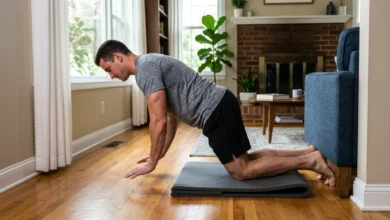
Cold shoulders are one of the fastest ways to end up with a rotator cuff strain. Spend five to seven minutes before your first working set on band pull-aparts, arm circles, and a light set of push-ups.
Follow that with one or two warm-up sets on your first main lift at roughly 40 to 50 percent of your working weight. This is not about building fatigue; it is about getting blood into the joint and grooving the movement pattern before you load it heavy.
The Best Chest and Shoulder Workout Routine
This routine covers six exercises across chest, front delts, side delts, and rear delts so nothing gets left behind. Do it as a standalone workout or split it across two shorter sessions if you prefer higher frequency.
1. Barbell Bench Press
The barbell bench press stays the foundation of most chest and shoulder workouts because it lets you move the most total weight and recruits the chest, front delts, and triceps together. Set up with your shoulder blades pulled back and down, feet flat on the floor, and a grip slightly wider than shoulder width.
Lower the bar to your mid-chest under control, then drive it back up without letting your elbows flare out to 90 degrees. Aim for 4 sets of 6 to 8 reps, resting 2 to 3 minutes between sets since this is your heaviest compound lift of the day.
2. Incline Dumbbell Press
Setting the bench to a 30 to 45 degree incline shifts more of the workload onto the upper chest and front shoulders, an area flat pressing tends to undertrain. Dumbbells also let each arm move independently, which evens out any strength imbalance between your left and right side.
Press the dumbbells up and slightly inward without locking your elbows out hard at the top. Do 3 sets of 8 to 10 reps.
3. Overhead Shoulder Press
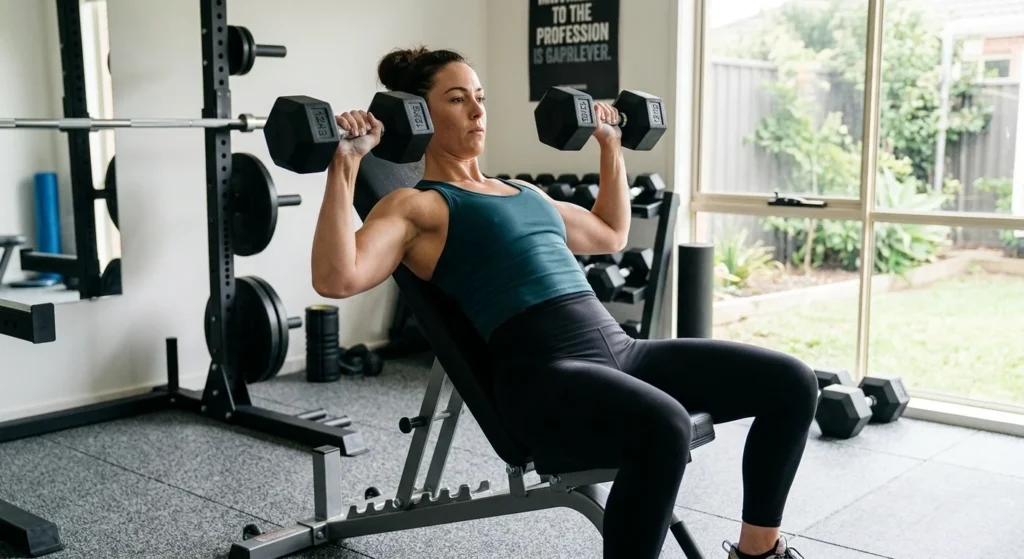
The overhead press builds raw shoulder strength and stability better than any isolation move can. Standing or seated, press a barbell or a pair of dumbbells straight overhead from shoulder height, keeping your core tight so your lower back does not arch excessively.
Lower with control back to shoulder level before the next rep. Aim for 3 to 4 sets of 6 to 8 reps.
4. Lateral Raises
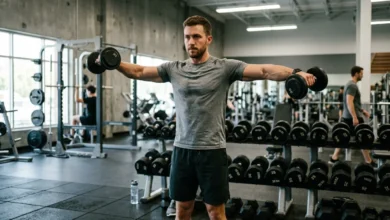
Side delts are what give shoulders their width, and lateral raises isolate them directly. Hold a light to moderate pair of dumbbells at your sides, then raise them out to shoulder height with a slight bend in the elbow, leading with your elbows rather than your hands.
Lower slowly rather than dropping the weight, since the eccentric portion is where most of the growth stimulus happens. Do 3 sets of 12 to 15 reps.
5. Cable Chest Fly
Where pressing movements build overall mass, the cable fly stretches and squeezes the chest through a longer range of motion, whereas presses build well only in the middle portion of the lift. Stand between two cable stacks, arms slightly bent, and bring the handles together in front of your chest in a hugging motion.
Squeeze at the peak for a full second before returning to the stretch position. Do 3 sets of 12 reps.
6. Rear Delt Fly
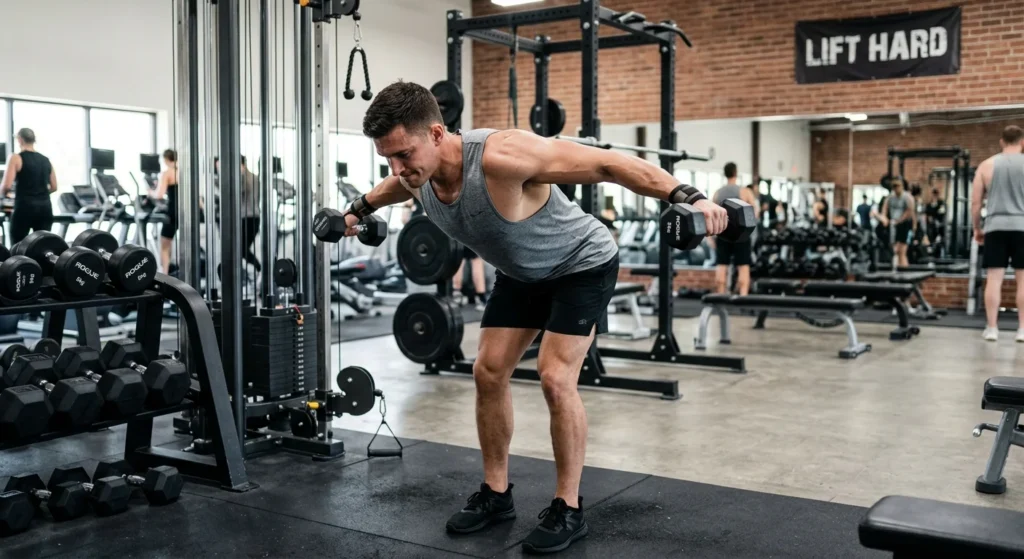
Rear delts get skipped constantly, which is exactly why so many lifters end up with rounded shoulders and chest-dominant posture. Bend forward at the hips holding light dumbbells, then raise your arms out to the sides while keeping a slight elbow bend, squeezing your shoulder blades together at the top.
Do 3 sets of 15 reps, prioritizing control over the amount of weight moved.
Sample Chest and Shoulder Workout Split for Beginners vs Advanced Lifters
Beginners should stick to the six exercises above once per week, focusing on learning the movement patterns before adding volume. Three sets per exercise with two to three minutes of rest is enough stimulus while your joints and connective tissue adapt.
Advanced lifters training chest and shoulders twice a week can split the session, hitting heavier compound presses on day one and higher-rep isolation work such as lateral raises and rear delt flies on day two.
Common Mistakes to Avoid
Flaring your elbows out too wide on bench press puts unnecessary strain on the shoulder joint and reduces how much chest actually gets worked. Keep elbows at roughly a 45 to 75 degree angle from your torso instead of straight out to the sides.
Using momentum on lateral raises, where the weight swings up from the hips rather than being lifted by the shoulder, is another common issue. If you cannot control the weight through a full, slow rep, the weight is too heavy.
Skipping rear delts entirely is a mistake that shows up over months, not days, as rounded posture and shoulder impingement risk. Treat rear delt work as a non-negotiable part of every chest and shoulder session, not an optional add-on.
How Often Should You Train Chest and Shoulders
Most lifters get the best results training chest and shoulders once or twice per week, depending on total training days available and recovery capacity. Once a week works well inside a push, pull, legs split, while twice a week fits an upper/lower split better.
What matters more than exact frequency is total weekly volume for each muscle group, generally 10 to 20 hard sets per week for continued growth. Someone taking a pre-workout supplement may also find they can push closer to that upper volume range without excessive fatigue.
Recovery and Nutrition Tips
Chest and shoulder muscles need 48 to 72 hours to recover fully after a hard training session, so back-to-back days targeting the same muscles usually backfire. Sleep is where most actual muscle repair happens, so aim for seven to nine hours consistently rather than trying to make up for short sleep with extra protein.
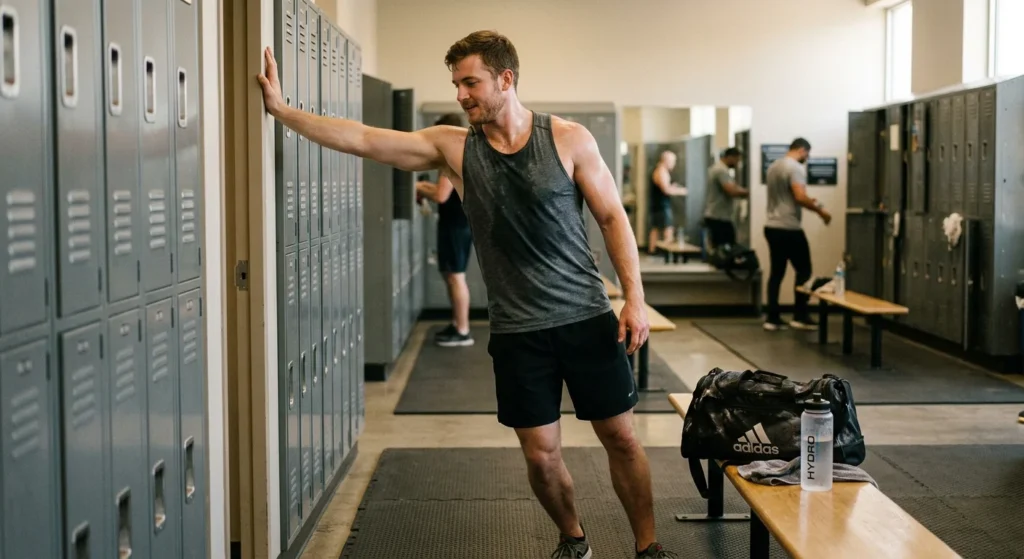
Protein intake around 0.7 to 1 gram per pound of bodyweight daily supports recovery for most lifters, spread across three to four meals rather than one large serving. Staying hydrated also matters more than most people expect, since even mild dehydration reduces strength output in pressing movements.