
A good inner thigh workout does more than shape your legs. It trains a group of muscles most people never isolate on purpose, and that neglect is exactly why the inner thighs tend to feel weak, tight, or unstable compared to the rest of the lower body. This guide breaks down what these muscles actually do, which exercises train them properly, and how to build them into a routine that fits your current fitness level.
What Muscles Does an Inner Thigh Workout Target
The inner thigh is made up of five muscles collectively known as the hip adductors: the adductor longus, adductor brevis, adductor magnus, gracilis, and pectineus. Their main job is pulling the leg toward the midline of the body, but they also help control rotation at the hip and knee.
These muscles work every time you change direction, step sideways, or plant a foot to stop momentum. Runners, skiers, soccer players, and dancers rely on strong adductors to avoid groin strains, which is one of the more common soft tissue injuries in sports that involve cutting or lateral movement. Outside of sport, weak adductors show up as knee wobble during squats, poor balance on uneven ground, and hips that feel unstable during single-leg movements like stairs or lunges.
Why Train The Inner Thighs Specifically
Most lower body programs load the quads, hamstrings, and glutes hard, then leave the adductors to get whatever indirect work spills over from squats and lunges. That is usually not enough to build real strength in this muscle group, because the adductors only get heavily recruited when a movement asks the leg to work in the frontal plane, meaning side to side rather than forward and back.
A dedicated inner thigh workout closes that gap. Over several weeks of consistent training, most people notice better hip stability during single-leg work, less knee cave under load, and stronger performance in any activity that involves lateral movement. Some people also want the aesthetic result of firmer, more toned inner thighs, and strength training the adductors will contribute to that, though it will not spot reduce fat from that area specifically. Fat loss in any one location depends on overall calorie balance, not which muscles you train.
How to Warm Up Before an Inner Thigh Workout
Cold adductors are more prone to strain, so spend three to five minutes warming up before loading them. Bodyweight lateral lunges, hip circles, and a slow adductor rock back (kneeling with one leg extended to the side, shifting weight gently between hips) all raise blood flow to the groin without pushing into a deep stretch, which is not what you want before strength work.
8 Inner Thigh Workout Exercises
Work through these in order for a full session, or pick four or five if you are short on time. Each exercise lists a bodyweight version and a way to add resistance once the basic movement feels controlled.
1. Side-Lying Leg Lift
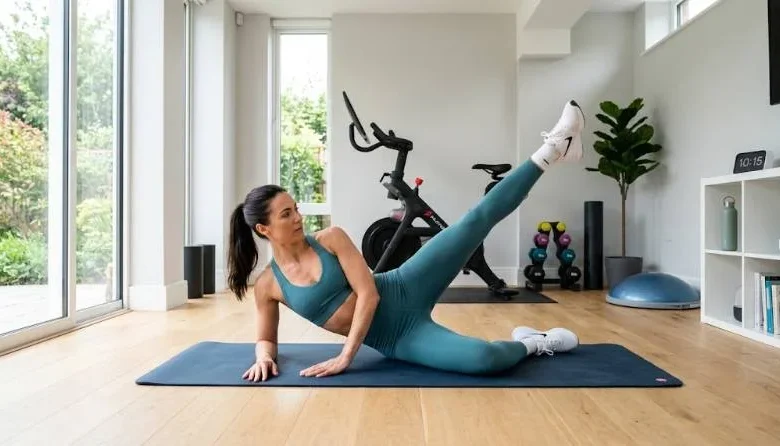
Lie on your side with your legs stacked and straight. Lift your top leg toward the ceiling, then lower it slowly without letting it drop. This trains the abductors on top, but the real work happens in the bottom leg, which has to stay pressed into the floor using the adductors to hold your body stable. Do 12 to 15 reps per side. Add a light ankle weight once bodyweight feels easy.
2. Sumo Squat
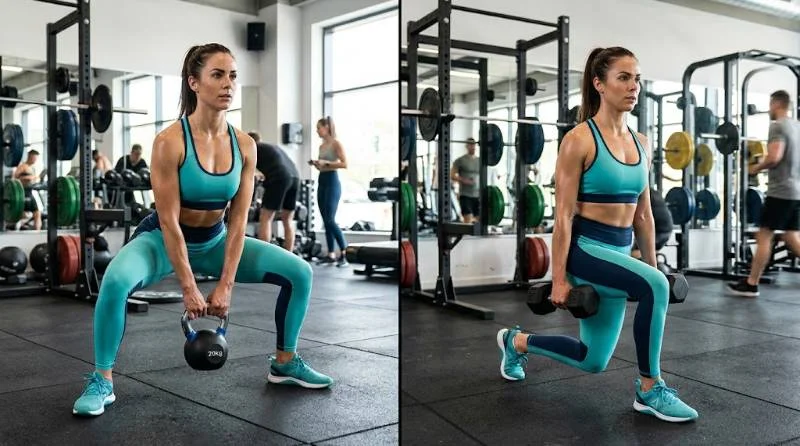
Stand with your feet wider than shoulder width, toes turned out about 30 degrees. Lower your hips until your thighs are close to parallel with the floor, then drive back up through your heels while actively squeezing your inner thighs together at the top. This is one of the few compound lifts that loads the adductors directly through a full range of motion. Do 3 sets of 12 reps. A dumbbell or kettlebell held at the chest adds resistance quickly.
3. Copenhagen Plank
This one is more advanced and rarely shows up in beginner guides, but it is one of the most effective adductor exercises used in sports physiotherapy for preventing groin injuries. Rest your top foot on a bench or chair with your body in a side plank position, bottom leg lifted off the ground. Hold, or lower and raise the bottom leg for reps. Start with a bent-knee version resting your shin on the bench if the full plank is too demanding. Aim for 3 sets of 20 to 30 seconds per side.
4. Standing Cable or Band Hip Adduction
Attach a resistance band or cable low to your ankle, standing side-on to the anchor point. Pull your leg across your body against the resistance, then return slowly. This isolates the adductors without involving the hips or knees much at all, which makes it useful for rebuilding strength after an injury. Do 12 to 15 reps per side.
5. Plié Squat Pulse
Set up in the same wide stance as a sumo squat, but instead of standing all the way up, hold the bottom position and pulse a few inches up and down. The constant tension keeps the adductors working through the entire set. Do 3 sets of 15 to 20 small pulses.
6. Curtsy Lunge
Step one leg diagonally behind the other, crossing it like a curtsy, and bend both knees until your front thigh is close to parallel with the floor. This trains the adductors alongside the glutes and challenges balance more than a standard lunge. Do 10 to 12 reps per side.
7. Seated Adductor Squeeze
Sit on the edge of a chair or bench with a soft ball, folded towel, or light dumbbell between your knees. Squeeze inward and hold for 3 to 5 seconds before releasing. This low-impact option works well as a finisher or on days when your knees need a break from standing exercises. Do 15 to 20 squeezes.
8. Lateral Step-Down
Stand on a low step or platform with one foot, and lower the other foot toward the floor with control before pushing back up. This builds single-leg adductor strength in a way that carries over directly to walking on uneven terrain and going down stairs. Do 8 to 10 reps per side.
A Sample Inner Thigh Workout Routine
Beginners should start with bodyweight versions of the side-lying leg lift, sumo squat, seated adductor squeeze, and bent-knee Copenhagen plank, resting 30 to 45 seconds between sets. This builds the mind-muscle connection before adding load.
Once that feels manageable, move to an intermediate routine that adds resistance bands or light dumbbells to the sumo squat, standing hip adduction, and curtsy lunge, while progressing the Copenhagen plank toward the straight-leg version. Rest 45 to 60 seconds between sets and aim for three rounds through the full list of eight exercises.
Either version works well as a standalone 20 to 30 minute session or as an add-on to an existing leg day, done after your main compound lifts like squats or deadlifts so fatigue does not compromise your form on those heavier movements.
How Often Should You do an Inner Thigh Workout
Two to three sessions per week, with at least one rest day between them, is enough to see measurable strength gains within four to six weeks. The adductors are a smaller muscle group and recover faster than the quads or glutes, but they still need time to adapt, especially if you are adding weighted exercises like the sumo squat or curtsy lunge.
Common Mistakes That Stall Progress
Letting the knees cave inward during squats and lunges shifts load away from the adductors and onto the knee joint, which increases injury risk over time. Keep your knee tracking in line with your toes throughout every exercise on this list.
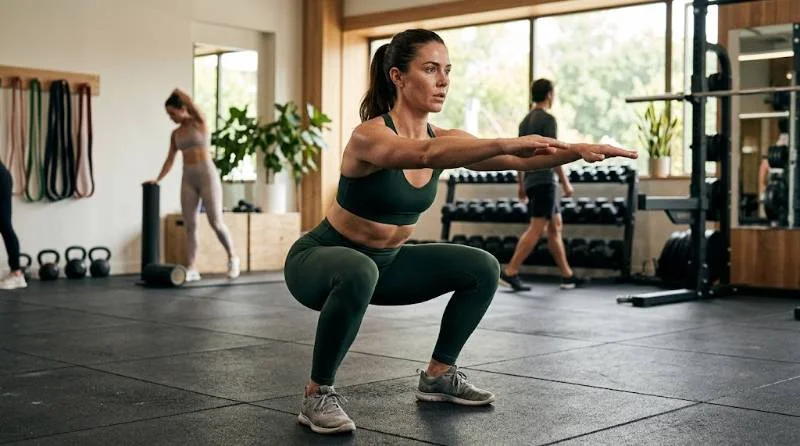
Rushing through reps is another common issue. The adductors respond well to slow, controlled tempo work, particularly on lowering phases like the side-lying leg lift and the Copenhagen plank. A two to three second lowering count builds more strength than fast, momentum-driven reps.
Skipping the warm-up is the fastest way to end up with a strained groin, which can sideline lower body training for weeks. Treat the warm-up as part of the workout, not an optional extra.
When to Modify or Skip These Exercises
Anyone with an existing groin strain, hip labral issue, or recent hip or knee surgery should get clearance from a physical therapist or doctor before starting adductor-focused training, since loading an already irritated muscle can delay healing. Pregnant individuals, especially in the second and third trimester, should avoid deep squats and lunges that increase pelvic instability and stick to supported options like the seated adductor squeeze instead.

If any exercise causes sharp pain in the groin, hip, or knee, stop immediately. Mild muscle fatigue or a burning sensation during the set is normal; joint pain is not.