
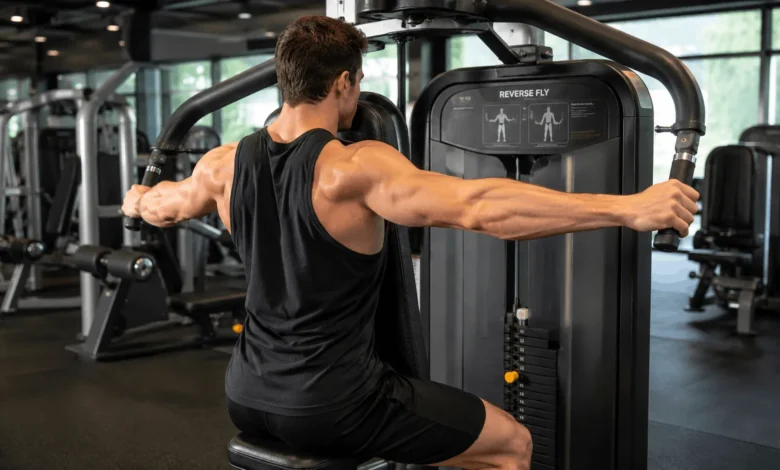
The reverse fly machine is one of the fastest ways to isolate your rear delts without needing a partner to check your form. Also called a reverse pec deck or rear delt fly machine, it flips the pressing motion of a chest fly into a pulling motion that targets the back of your shoulders. Most lifters know roughly how to move on it. Far fewer actually feel their rear delts working by the end of a set. That gap between performing the movement and training the right muscle is the real challenge here. Below is exactly how to set the machine up, execute the motion correctly, and fix the most common reason people finish a set feeling almost nothing.
What Is the Reverse Fly Machine and What Does It Work
The reverse fly machine is a seated, chest-supported machine built to move your arms backward and outward in a wide arc, the reverse of a chest fly path. You face the pad, load the weight stack, grab the handles, and pull them back and around your body. Because the pad locks your torso against the seat, the machine removes any temptation to lean back or use hip drive to move the weight, which is a common cheat on the bent-over dumbbell version. Some gyms use a dedicated rear delt fly machine, while others rely on a pec deck that flips into reverse mode by moving the arm pads or handles further back. The movement pattern stays the same either way.
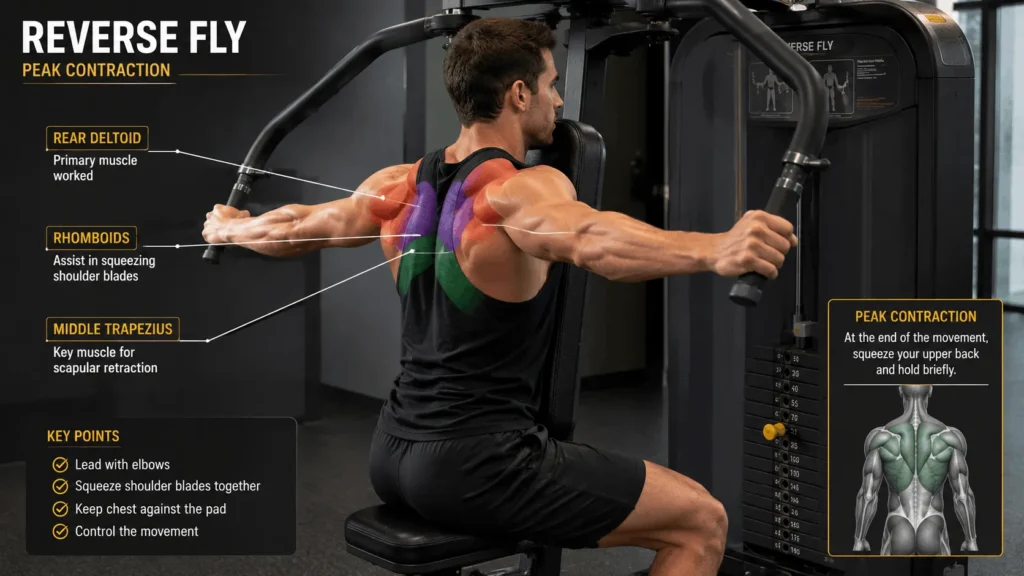
The primary mover is the posterior deltoid, the rear head of your shoulder muscle. The rhomboids and mid and lower trapezius also work hard, since they pull your shoulder blades together as your arms travel back. Your rotator cuff muscles stay active throughout to stabilize the joint. Training this area matters because pressing movements, which make up most training splits, barely touch the rear delts at all.
How to Set Up the Reverse Fly Machine
Adjust the Seat Height First
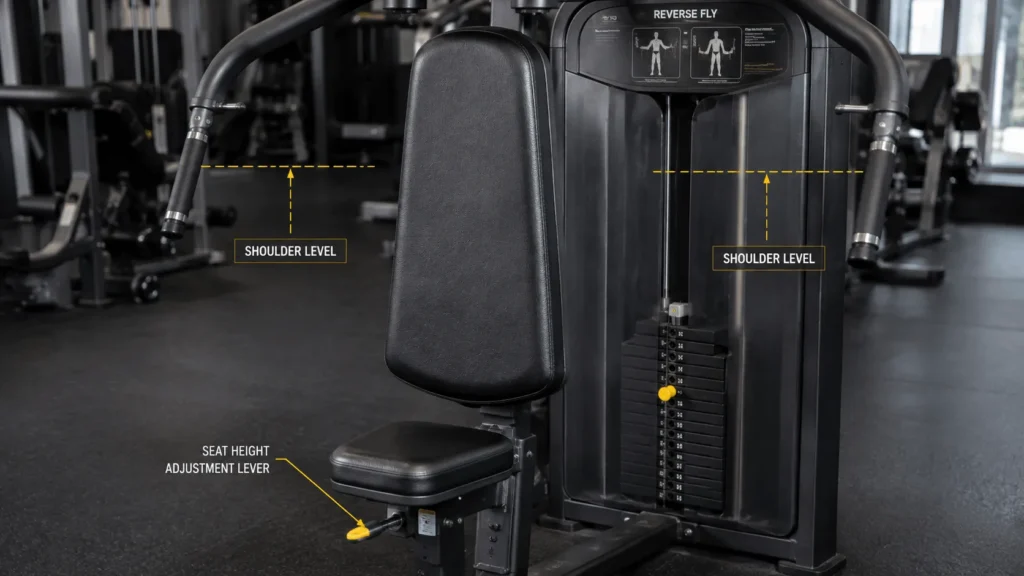
Seat height is the single biggest factor in whether you feel your delts or your traps. Sit down and check where the handles sit relative to your shoulders before adding weight. The handles should line up at shoulder height or just below it. If the seat sits too low, the handles pull from above your shoulders, which shifts the work into your upper traps. If it sits too high, you lose range at the bottom and the delts never get a real stretch.
Set Your Starting Position
Press your chest firmly into the pad and keep your feet flat on the floor. Reach forward and grab the handles with your arms almost straight and a slight bend at the elbow. Your torso should stay still against the pad for the entire set. If your back lifts off the pad as you pull, the weight is too heavy for this exercise.
Reverse Fly Machine Form, Step by Step
Once you are set up, initiate the movement by drawing your shoulder blades together, not by yanking with your arms. Pull the handles out and back in a wide arc until your arms are roughly in line with your torso. Keep the same slight bend in your elbows throughout, rather than locking them out or bending them further as you pull. Squeeze your shoulder blades for a full second at the back of the movement before reversing direction. Lower the handles slowly, resisting the weight stack rather than letting it drop. A controlled three to four second lowering phase does more for rear delt growth than the pulling phase itself, since the muscle stays under tension the entire way down.
Neutral Grip vs Overhand Grip: Which Should You Use
Most reverse fly machines let you choose between a neutral grip, palms facing each other, and an overhand grip, palms facing down. Neutral grip is the better default for most lifters. It keeps the shoulder in a more natural rotational position and makes it easier to lead the movement with your rear delts instead of your hands.
Overhand grip shifts more tension into your upper back and traps, since it changes the angle your arm travels through. It can be useful as a variation once you have built a strong mind muscle connection with your rear delts on the neutral grip version, or if your gym’s machine only offers one grip option. If you are new to the exercise, start neutral. Save overhand grip for later, once you can already feel the target muscle working reliably.
Why You Can’t Feel Your Rear Delts on This Machine
This is the most common complaint about the reverse fly machine, and it almost always comes down to one of a few fixable issues rather than bad genetics or a stubborn muscle.
The weight is too heavy. Rear delts are a small muscle group. The moment the load exceeds what they can move on their own, your traps, lats, and momentum take over, and the rear delts become passengers rather than the driver.
The seat height is off. As covered above, a seat set too low turns this into a trap exercise. This is the single most overlooked fix.
The range of motion is too shallow. Stopping the movement halfway, either because the weight feels heavy or out of habit, skips the part of the arc where the rear delts do the most work.
There is no pause at contraction. Rushing straight from the pull into the release removes the moment where the rear delts are under the highest tension.
Fixing all four usually happens within a session or two. Drop the weight by twenty to thirty percent, reset your seat height, and pause for a full second with your shoulder blades squeezed at the back of each rep. Most lifters feel a completely different exercise by their second set.
Common Reverse Fly Machine Mistakes
Beyond the issues above, a few other habits quietly limit results on this exercise. Shrugging your shoulders up toward your ears during the pull shifts tension into the upper traps and neck instead of the rear delts. Leaning your chest away from the pad to generate extra momentum defeats the purpose of a chest-supported machine. Locking your elbows completely straight increases strain on the elbow joint without adding any benefit to the rear delts. Rushing through reps to hit a rep count, rather than controlling the tempo, is usually the fastest way to turn this into a momentum exercise instead of an isolation one. Gripping the handles too tightly can also pull tension into your forearms and away from your shoulders, so keep your grip relaxed enough to focus on the pulling muscles.
How Much Weight and How Many Reps to Use
The reverse fly machine responds best to moderate to high rep ranges, generally twelve to twenty reps per set, done with a weight you could probably push for a few more reps but choose not to. Because the rear delts are small and easily overtaken by larger muscles, chasing heavy loads on this exercise usually backfires. Two to three sets per session, performed with strict form and a real pause at the back of each rep, will do more for rear delt development than one heavy, sloppy set ever will. Add weight only once you can complete every rep with a controlled tempo and a full squeeze, not before.
Reverse Fly Machine Alternatives
1: Cable Reverse Fly
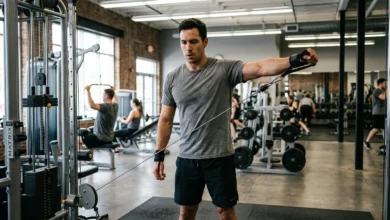
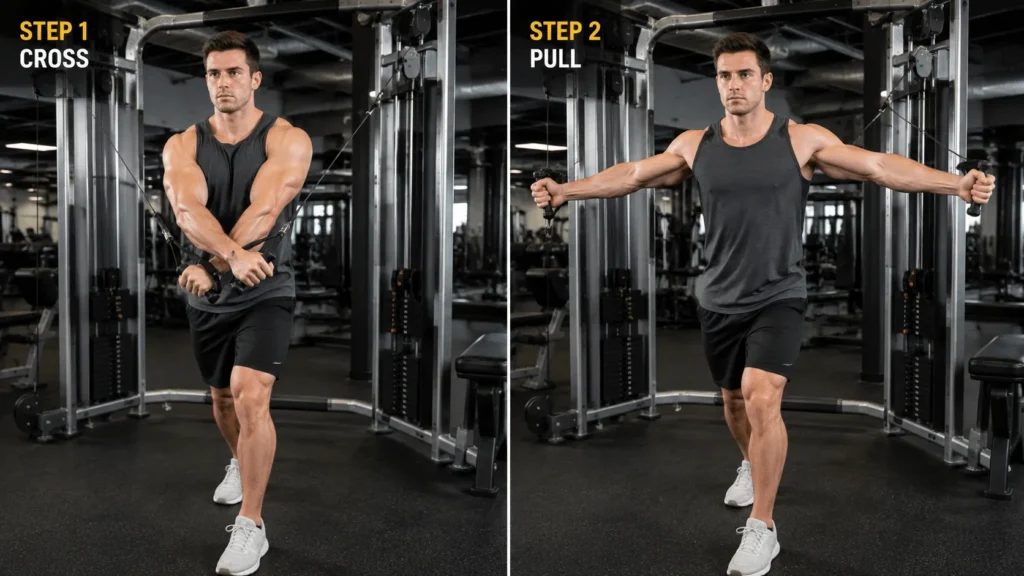
The cable reverse fly keeps constant tension on the rear delts throughout the entire range, unlike the machine, which can unload slightly at the very start of the pull. It is a strong option if your gym does not have a dedicated reverse fly machine, though it requires more setup and balance than sitting down at a machine.
2: Dumbbell Reverse Fly
Performed bent over at the hips, the dumbbell version demands more core and lower back stability than the machine. It is a useful test of whether you can maintain proper form without a chest pad locking your torso in place, but it is easier to cheat with momentum than the machine version.
3: Band Pull-Apart or Face Pull
Both are lighter, higher-rep options that work well as a warm-up before heavier pressing work or as a finisher after the reverse fly machine. Face pulls add more rotator cuff and upper trap involvement, which makes them a solid complement rather than a direct replacement.
Who Should Use It and How to Program It
The reverse fly machine suits nearly every training level, since the seat and pad handle stability for you, letting you focus entirely on the target muscle. It is particularly useful for anyone who presses often and rarely trains the opposing muscle group, which describes most lifters who focus heavily on bench press and shoulder press.
Place it on shoulder day, back day, or pull day, ideally after your main compound lifts when your rear delts are fresh enough to work hard without help from fatigued stabilizers. Training it twice a week, on two separate training days, tends to produce better results than cramming all the volume into a single session, since this muscle group responds well to frequent, moderate stimulus rather than occasional heavy overload. If you have a history of shoulder impingement, keep the range of motion slightly shorter at the back of the pull and check with a physical therapist or doctor before loading it heavily.