

If you have ever finished a set of curls and watched your arms swell up and tighten right in front of you, you already know what a pump feels like. But what is a pump in the gym, exactly, and is it doing anything useful for your muscles? The short answer is that a pump is a temporary buildup of blood and fluid inside a working muscle, and while it feels like progress, it is only loosely connected to actual muscle growth. Below is a full breakdown of what causes a pump, how long it lasts, and how to use it as a training tool instead of a distraction.
What Does “Getting a Pump” Actually Mean
A pump, sometimes called “muscle pump” or “the pump,” is the tight, swollen, engorged feeling a muscle gets after several sets of resistance exercise. It shows up most obviously in muscles that are easy to see and flex, like biceps, calves, and chest, but it happens in every muscle group under load.
Physiologically, a pump is a fluid shift, not muscle tissue growth. During repeated contractions, blood flows into the working muscle faster than it can drain back out through the veins. That blood pools inside the muscle, and plasma fluid also gets pushed out of the capillaries into the spaces between muscle cells. The result is a muscle belly that looks and feels noticeably bigger than it did five minutes earlier, even though nothing has actually grown yet.
The Science Behind Muscle Pumps
Understanding the mechanism makes it obvious why some exercises and rep ranges produce a much stronger pump than others.
1. Why Blood Rushes Into Your Muscles During Exercise
When a muscle contracts repeatedly, it demands more oxygen and glucose than it does at rest. The body responds by widening blood vessels near the working muscle so more blood can reach it. At the same time, the contracting muscle fibers partially compress the veins that carry blood back out, which is much easier to restrict than the deeper arteries feeding blood in. Blood keeps arriving faster than it leaves, and pressure builds inside the muscle.
This pressure forces some plasma out of the capillary walls and into the surrounding tissue, a process called capillary filtration. That extra fluid, sitting between and around the muscle fibers, is a large part of what makes a pumped muscle feel tight and look fuller than usual.
2. The Role of Nitric Oxide and Vasodilation
Nitric oxide is a molecule your body produces during exercise that relaxes the smooth muscle lining your blood vessels, a process called vasodilation. Wider blood vessels allow more blood volume to reach the working muscle per heartbeat, which intensifies the pump. This is why nitric oxide boosting ingredients like citrulline malate and beetroot extract are common in pre-workout supplements marketed around pump performance.

Metabolic byproducts from high-rep training, particularly hydrogen ions and lactate, also contribute. These byproducts accumulate faster than the body can clear them during sets of 10 or more reps, and they trigger additional local vasodilation, which is one reason moderate to high rep ranges tend to produce a stronger pump than very heavy, low rep sets.
Pump vs Muscle Growth: Are They the Same Thing?
A common assumption in gyms is that a bigger pump means a better workout for building muscle. That is only partly true, and treating pump size as the main measure of a good session can actually work against your progress.
Muscle growth, or hypertrophy, mainly comes from mechanical tension placed on muscle fibers over time, along with a smaller contribution from metabolic stress and muscle damage. A pump is a marker of metabolic stress and increased blood flow, so it correlates loosely with one of the three growth pathways, but it is not a direct measurement of tension or of the muscle damage that drives long-term adaptation.
Some research on cell swelling suggests that the fluid pressure inside a pumped muscle may send a mechanical signal that supports protein synthesis, so the pump is not entirely irrelevant to growth. But a huge pump from light, high-rep sets does not automatically build more muscle than a moderate pump from a heavier, more demanding set. Chasing pure fluid swelling instead of progressive overload is a common way lifters plateau while still leaving the gym feeling great.
How Long Does a Gym Pump Last?
For most people, a strong muscle pump peaks within a minute or two after the last set of an exercise and starts fading noticeably within 30 to 60 minutes as excess fluid drains back into circulation. A mild, lingering fullness can sometimes be felt for a few hours after a very high-volume session, but the dramatic, tight swelling seen right after training is almost always gone by the next day.
This is expected. The pump is a short-term circulatory response, not a sign that new muscle tissue has formed. Waking up the next morning without a pump does not mean the workout failed to stimulate growth.
How to Get a Better Pump During Your Workout
If you specifically want a stronger pump, whether for a photo, a competition, or simply because it feels satisfying, certain training choices reliably increase it.
1. Training Techniques That Maximize the Pump
Higher rep ranges, generally 12 to 20 reps per set, keep the muscle under tension long enough for blood and metabolic byproducts to accumulate before you rest. Shorter rest periods of 30 to 60 seconds between sets prevent the muscle from fully draining, so each subsequent set builds on the pump from the last one.
Techniques that extend time under tension without a full lockout, like partial reps, drop sets, and slow controlled negatives, also intensify the pump because they keep the muscle contracted and restrict venous return for longer. Supersetting two exercises for the same muscle group, such as pairing chest presses with flys, is another reliable way to flood a muscle with blood before it gets a chance to recover between movements.
2. Nutrition and Hydration for a Better Pump
Carbohydrates eaten before training are stored in muscle as glycogen, and each gram of glycogen pulls roughly three grams of water into the muscle cell along with it. A carbohydrate-rich meal a few hours before training tends to produce a noticeably fuller pump than training in a low-carb, glycogen-depleted state.
Hydration matters just as directly. Blood plasma is mostly water, so a mildly dehydrated lifter has less fluid volume available to shift into the working muscle, which blunts the pump regardless of how hard the workout is.
3. Supplements That Claim to Boost Pumps
Citrulline malate is the most studied ingredient for this purpose, typically dosed around 6 to 8 grams before training, and it works by raising nitric oxide production and improving blood flow. Beta-alanine does not directly cause a pump but allows more total reps before fatigue, which indirectly increases pump intensity. Many pre-workout blends combine these with beetroot extract, arginine, or glycerol, all aimed at the same underlying goal of moving more blood and fluid into the working muscle.
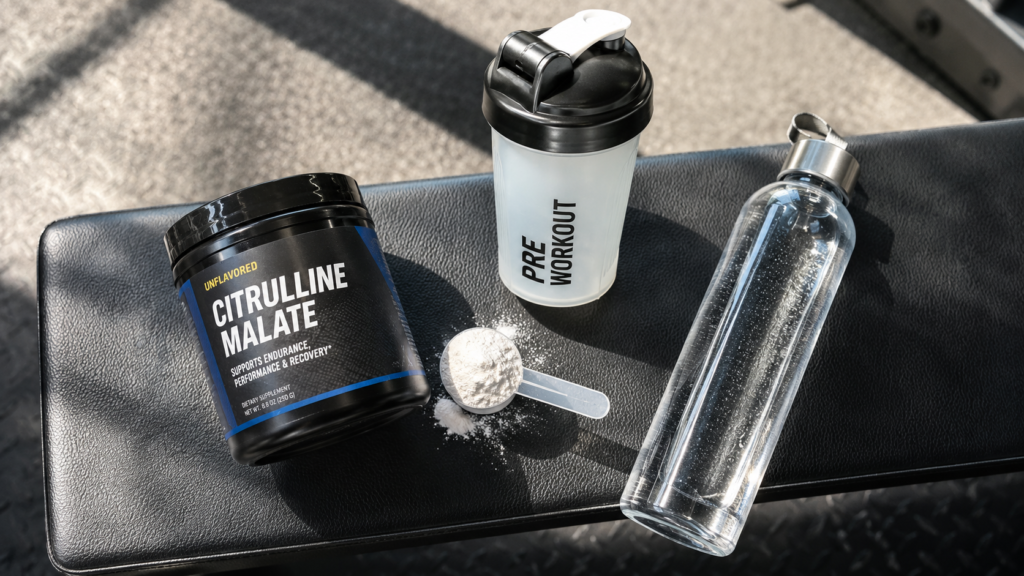
None of these ingredients build muscle by themselves. They influence blood flow and training volume, and any growth benefit comes from the extra reps or sets a lifter can complete because of them, not from the pump itself.
Is Chasing the Pump a Good Training Strategy?
For bodybuilders and physique competitors, training specifically for a pump has a real, practical purpose beyond the workout itself. A strong pump temporarily increases muscle fullness and vascularity, which matters directly for stage presentation and posing.
For someone whose main goal is strength or long-term muscle growth, the pump is better treated as a pleasant side effect rather than the main target. A workout that produces a smaller pump but uses heavier loads, full range of motion, and genuine progressive overload will usually build more muscle over months than one built entirely around high-rep pump-chasing sets.
The most effective approach for most lifters is a mix. Base a program around compound lifts with real progressive overload for strength and tension, then finish a session with a few higher-rep, shorter-rest pump sets for the target muscle. This gets the benefits of both mechanical tension and metabolic stress without sacrificing long-term strength progress.
Common Mistakes People Make Chasing the Pump
The biggest mistake is judging an entire workout by how big the pump feels rather than by whether weight, reps, or control improved over the previous session. A muscle can be well trained with almost no noticeable pump, particularly on heavy, low-rep strength days, and that does not mean the session was wasted.
Another common mistake is relying entirely on isolation exercises for pump work while neglecting compound lifts. Isolation movements are excellent for finishing a muscle group with focused blood flow, but they rarely provide enough total mechanical tension to drive strength or maximum size increases on their own.
Overusing extreme pump techniques like constant drop sets or very short rest periods in every single session can also outpace recovery. Metabolic stress training is demanding on the nervous system and connective tissue, and using it exclusively, workout after workout, tends to increase injury risk and stall progress rather than accelerate it.
Bottom Line on the Gym Pump
A pump is blood and fluid temporarily filling a working muscle, driven by restricted blood outflow, nitric oxide, and metabolic byproducts from training. It feels great; it is a genuine sign that a muscle is working hard, and it plays a small supporting role in long-term growth through cell swelling and increased training volume. It is not, however, a reliable substitute for progressive overload, and a smart training program uses pump-focused techniques as one tool among several rather than the sole goal of every workout.