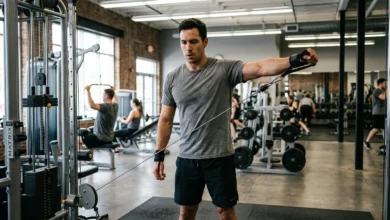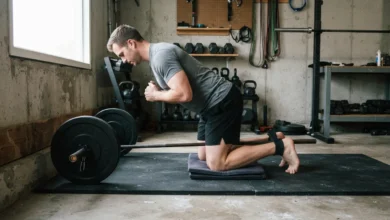

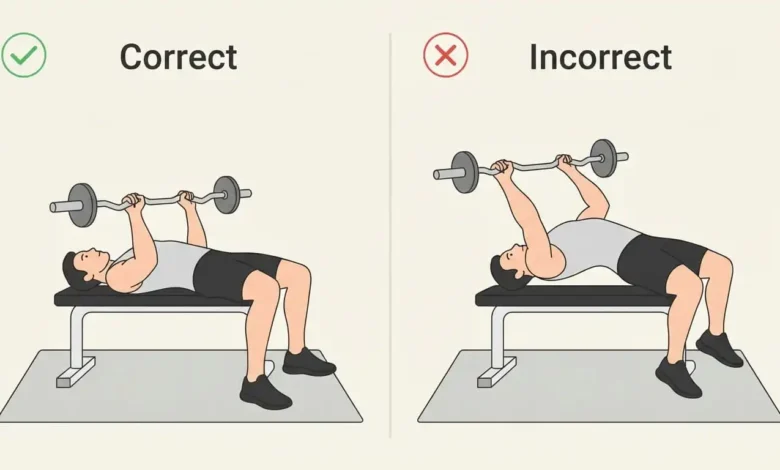
An arm day workout is a training session built entirely around your biceps, triceps, and forearms. It uses a mix of compound pulling and pressing moves plus isolation exercises like curls and extensions, done in a rep range and volume that’s high enough to trigger real muscle growth.
What an Arm Day Workout Actually Is
Arm day is a standalone session, not just a few curls tacked onto the end of another workout. It’s most common in a “bro split,” where you train one or two muscle groups per day across four to five days a week. Chest day and back day usually come first, so by the time arm day rolls around, your biceps and triceps have already helped out on plenty of pressing and pulling. Arm day is where they finally get direct, focused volume.
Keep the focus narrow. It’s tempting to throw in extra shoulder presses or rows, but that turns arm day into a generic upper-body session and dilutes the volume your biceps and triceps actually need.
The Three Muscle Groups an Arm Day Workout Should Hit
1. Biceps
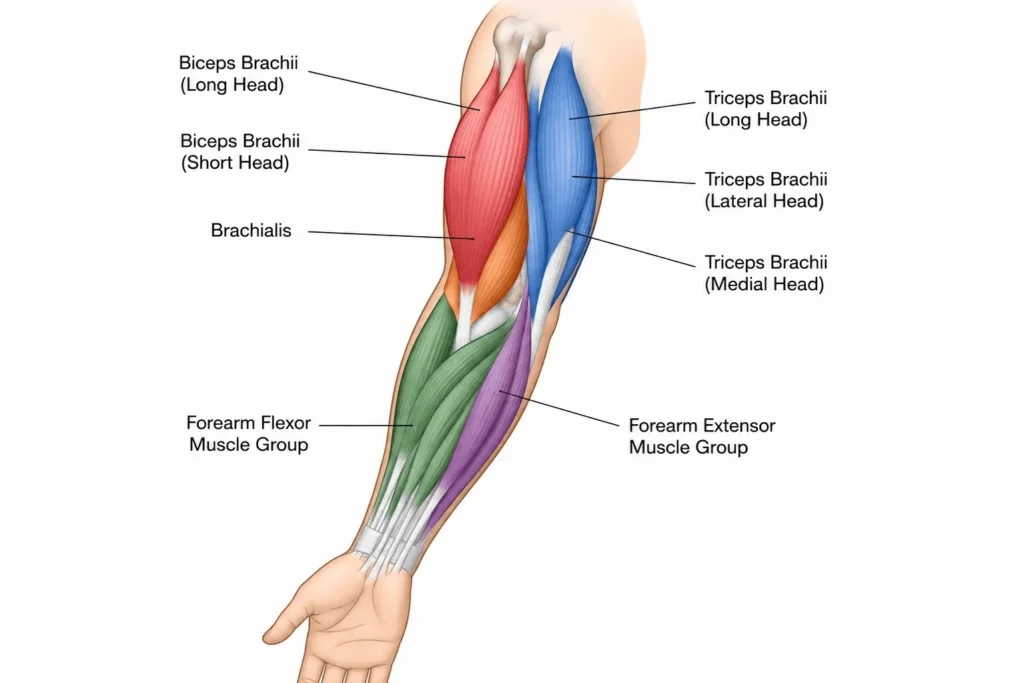
Your biceps sit on the front of your upper arm and are made of two heads, a short head and a long head. They flex your elbow and help rotate your forearm. Most people think of biceps as the whole arm, but they’re actually the smallest of the three major arm muscle groups.
2. Triceps
Your triceps run along the back of the upper arm and make up roughly two-thirds of your total arm mass. They have three heads: long, lateral, and medial. Because the long head crosses the shoulder joint, exercises that stretch your arm overhead, like overhead extensions, tend to recruit it best. Skipping triceps work is the fastest way to end up with arms that look unbalanced.
3. Forearms
Your forearms control grip, wrist movement, and finger flexion. They’re often the most neglected part of arm day, but weak forearms will limit how much weight you can lift on deadlifts, rows, and pull-ups long before your biceps or back give out.
How Often to Train Arms for Growth
Training a muscle once a week is enough to maintain it, but most research points to twice weekly as a better setup for hypertrophy. If arm day is your only direct arm work, doing it twice a week, with at least 48 hours between sessions, tends to produce faster growth than doing it once. Aim for roughly 6 to 12 direct sets per muscle group each week, spread across those sessions, and don’t count the indirect work you get from back or chest day toward that number. A row doesn’t fully load your biceps, and a bench press doesn’t fully load your triceps, so treat direct arm exercises as the real volume driver.
Warming Up Before Arm Day
A short warm-up lowers your injury risk and gets your elbows ready for the pressing and pulling ahead. Spend 3 to 5 minutes on arm circles, band pull-aparts, and a couple of light sets of whichever exercise you’re starting with. Elbow joints take a beating on arm day, especially during skull crushers and heavy curls, so don’t skip this step just to save time.
A Complete Arm Day Workout
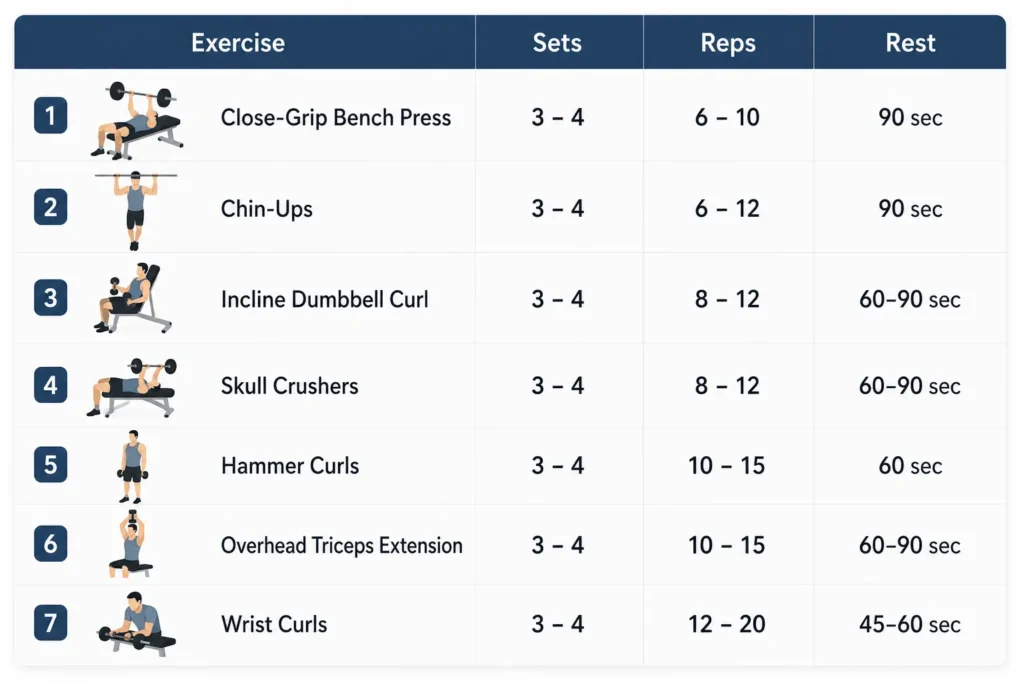
This routine covers all three arm muscle groups in one session. Rest 60 to 90 seconds between sets on isolation moves, and up to 2 minutes on the compound lifts.
1. Close-Grip Bench Press, 3 Sets of 6 to 10 Reps
This compound lift is your triceps’ best friend. Grip the bar just inside shoulder width, keep your elbows tucked close, and lower the bar to your lower chest. It also brings in your front delts and chest, making it a strong way to open the workout while you’re fresh.
2. Chin-Ups, 3 Sets of 6 to 10 Reps
Chin-ups load your biceps, brachialis, and forearms while your grip is still fresh. If you can’t yet do bodyweight chin-ups, use an assisted machine or a resistance band looped under your knee.
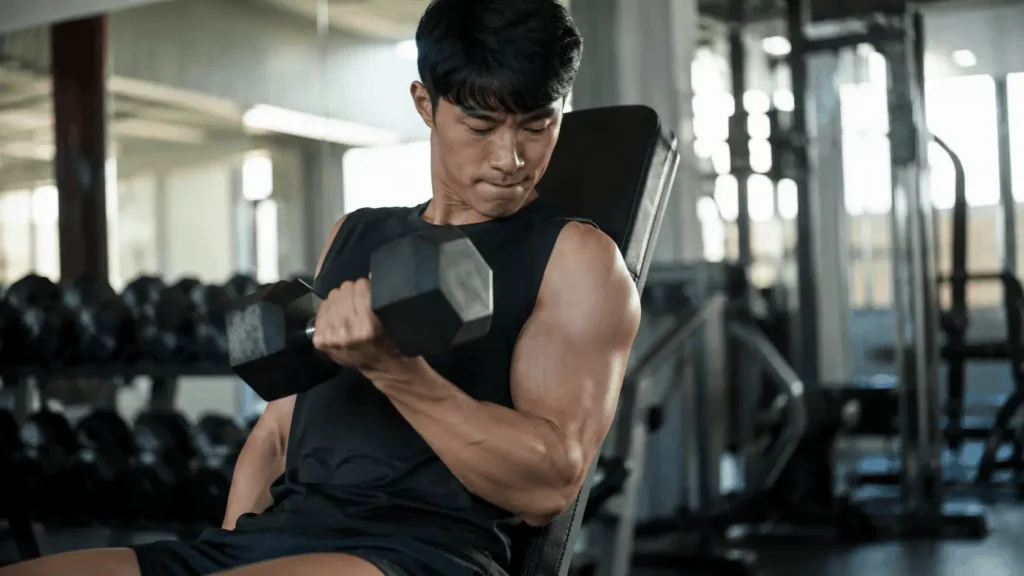
3. Incline Dumbbell Curl, 3 Sets of 10 to 12 Reps
Sit on an incline bench set to about 45 degrees. This stretches your biceps at the bottom of each rep, a reliable way to add tension where it counts. Keep your upper arms still and avoid swinging the weight up.
4. Skull Crushers, 3 Sets of 10 to 12 Reps
Lie on a flat bench holding a dumbbell or EZ-bar over your chest. Bend only at the elbow, lowering the weight toward your forehead, then extend back up. Go slow on the way down, since this move is notorious for elbow strain if you rush it.
5. Hammer Curls, 2 Sets of 12 to 15 Reps
Hold dumbbells with a neutral, palms-facing-in grip. This shifts emphasis onto your brachialis, the muscle underneath your biceps that adds thickness to your upper arm.
6. Overhead Triceps Extension, 2 Sets of 12 to 15 Reps
Hold one dumbbell with both hands and extend it overhead, then lower it behind your head. The overhead position stretches the long head of your triceps more than pushdowns do, making it a good finisher.
7. Wrist Curls and Reverse Wrist Curls, 2 Sets of 15 to 20 Reps Each
Rest your forearm on a bench, palm up for a wrist curl and palm down for a reverse wrist curl. Let the dumbbell roll toward your fingertips before curling it back up, covering both sides of your forearm in under five minutes.
How to Order Your Arm Day Exercises
Start with your biggest compound lift while you’re strongest, then move into isolation work. If one arm muscle lags behind the others, train it first instead of last, when you still have the most energy and focus to give it. This is common practice in specialization programs and tends to produce noticeably better results than always training your weak point last, once your grip and joints are already fatigued.
Mistakes That Stall Arm Growth
Doing too many exercises per muscle without adding real volume is one of the most common errors. Four different curl variations at 2 sets each isn’t better than two curl variations at 4 sets each—it’s just more fatigue for the same stimulus. Locking out your elbows hard on every rep of skull crushers or extensions is another common mistake and a fast route to joint pain. Chasing heavier weight before your form is solid also shows up often, especially on barbell curls, where people start swinging their hips to move the bar.
Getting the Most Out of Arm Day
Pick one compound pull, one compound press, and two or three isolation moves per muscle group, then track your weights and reps so you know when to progress. Arm day works because it gives your biceps, triceps, and forearms focused attention they don’t get on chest or back day. Keep the exercise list tight, keep your form controlled, and give the muscles 48 hours to recover before you hit them again.
Frequently Asked Questions
1. How Many Exercises Should Be in an Arm Day Workout?
Five to eight exercises is usually enough: one or two compound lifts plus isolation work for biceps, triceps, and forearms. More than that adds fatigue without adding meaningful volume.
2. Is Arm Day Better Than Training Arms on Back and Chest Day?
Neither is inherently better. Arm day gives biceps and triceps more direct, undivided attention, while spreading arm work across back and chest day increases frequency. Many lifters combine both approaches.
3. How Long Should an Arm Day Workout Take?
A focused arm day with seven exercises, working sets, and rest periods usually takes 45 to 60 minutes.
4. Can Beginners Do a Dedicated Arm Day?
Yes, though many beginner programs skip it in favor of compound lifts alone. Adding two or three simple exercises, like curls, extensions, and lateral raises, is enough for most beginners.
5. Do Supersets Work Well on Arm Day?
Supersetting a biceps exercise with a triceps exercise is common and time-efficient, since the two muscles aren’t competing for the same recovery.