
Gluteus medius exercises help strengthen the muscles on the outer sides of your hips, improve pelvic stability, and support better movement during walking, running, and everyday activities. You can perform many of these exercises at home using your body weight, a resistance band, or a sturdy chair.
The gluteus medius is one of three major muscles in the buttocks. It helps move your leg away from your body’s center and keeps your pelvis steady when you stand on one leg. Weakness in this muscle can affect how your hips and legs control movement, which makes targeted strengthening useful for general fitness and some rehabilitation programs.
What Is the Gluteus Medius and Why Does It Matter?
The gluteus medius is located on the outer surface of your pelvis, underneath part of the gluteus maximus. It connects your pelvis to the upper part of your thigh bone and works with other hip muscles to control leg movement.
Its main job is hip abduction, which means moving your leg sideways away from your body. It also helps stabilize your pelvis when one foot leaves the ground.
You use this muscle during several everyday activities, including:
- Walking and climbing stairs.
- Running and changing direction.
- Standing on one leg.
- Getting out of a chair.
- Performing squats and lunges.
Strengthening this area can improve hip control and support balanced lower-body movement. However, exercise alone does not guarantee relief from hip or knee pain because these problems can have several different causes.
8 Best Gluteus Medius Exercises
The following movements target the hip abductor muscles at different difficulty levels. Start with controlled exercises and gradually introduce resistance or single-leg movements as your strength improves.
1. Side-Lying Hip Abduction
Beginner friendly
Side-lying hip abduction is one of the most useful movements for targeting the gluteus medius. It isolates the outer hip muscles without requiring gym equipment.
How to perform it:
- Lie on your side with both legs straight.
- Bend your bottom leg slightly for support.
- Keep your upper leg straight and your hips stacked.
- Slowly lift your upper leg toward the ceiling.
- Pause briefly, then lower it with control.
Recommended starting point: 2 sets of 10-12 repetitions per side.
Avoid rotating your toes toward the ceiling or rolling your hips backward. Keep the movement controlled instead of lifting your leg as high as possible.
2. Clamshell Exercise
The clamshell exercise targets the muscles around your outer hips and helps beginners practice controlled hip rotation.
How to perform it:
- Lie on your side with your knees bent.
- Keep your feet together and your hips stacked.
- Slowly lift your upper knee without separating your feet.
- Pause for a moment at the top.
- Lower your knee slowly.
Recommended starting point: 2 sets of 12-15 repetitions per side.
Do not allow your pelvis to roll backward. You can place a light resistance band above your knees when the basic movement becomes easier.
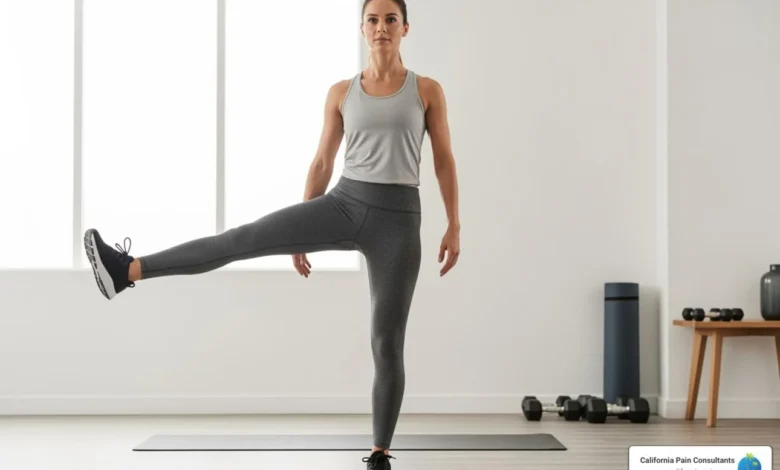
3. Standing Hip Abduction
Standing hip abduction strengthens the outer hip while challenging your balance. It is a practical option for people who prefer standing exercises.
How to perform it:
- Stand upright beside a wall or sturdy chair.
- Place one hand on the support.
- Keep your standing leg slightly relaxed.
- Move your other leg sideways without leaning your body.
- Return slowly to the starting position.
Recommended starting point: 2 sets of 10-12 repetitions per leg.
Keep your toes pointing forward and avoid swinging your leg. Your upper body should remain upright throughout the movement.
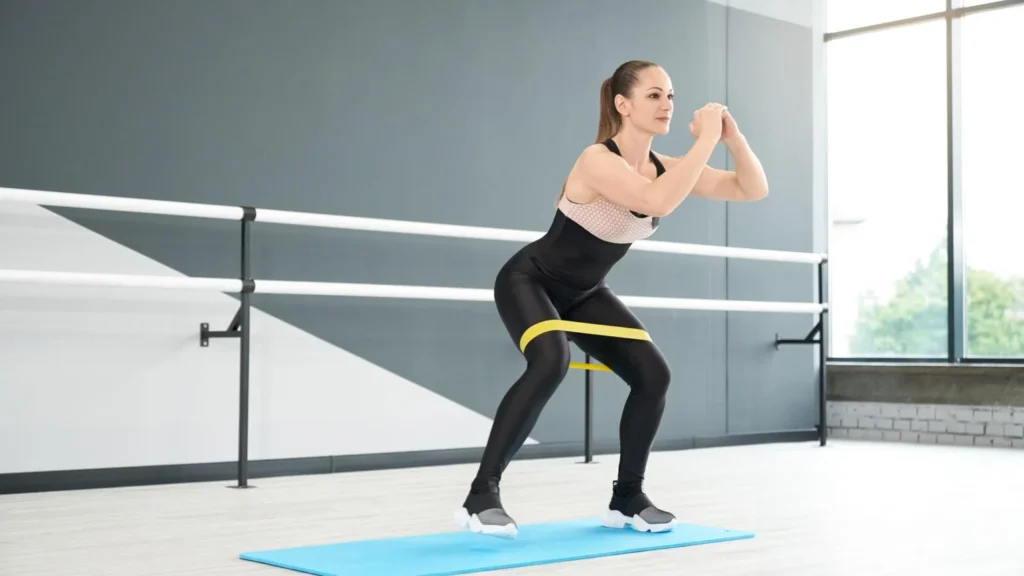
4. Banded Lateral Walks
Banded lateral walks challenge the hip abductors while training your legs to maintain control during sideways movement.
How to perform it:
- Place a resistance band around your thighs or just above your knees.
- Stand with your feet approximately hip-width apart.
- Bend your knees slightly and move into a comfortable quarter-squat.
- Take a controlled step sideways.
- Bring your other foot toward the first without allowing the band to become completely loose.
- Continue in one direction, then return.
Recommended starting point: 2 sets of 8-10 steps in each direction.
Keep consistent tension on the band and avoid dragging your feet. Choose a light band until you can maintain proper form.
5. Hip Hikes
Hip hikes train your gluteus medius to control pelvic movement while standing on one leg. This movement is particularly useful for developing single-leg stability.
How to perform it:
- Stand sideways on a low step with one foot supported.
- Allow your other foot to hang slightly off the edge.
- Keep your standing knee straight but not locked.
- Slowly lower the unsupported side of your pelvis.
- Raise it back toward a level position using your standing hip.
- Repeat without twisting your upper body.
Recommended starting point: 2 sets of 10 repetitions per side.
Use a low step and hold a railing if needed. Avoid dropping your pelvis too far or rushing through the movement.
6. Single-Leg Glute Bridge
A single-leg glute bridge challenges your gluteal muscles and requires your hips to remain level while one leg supports your body.
How to perform it:
- Lie on your back with both knees bent.
- Keep one foot flat on the floor.
- Extend your other leg comfortably.
- Tighten your abdominal muscles and lift your hips.
- Keep your pelvis level at the top.
- Lower slowly and repeat.
Recommended starting point: 2 sets of 8-10 repetitions per side.
If your hips rotate or your lower back takes over, return to a regular two-leg glute bridge before progressing.
7. Lateral Step-Ups
Lateral step-ups strengthen the muscles around your hips and thighs while improving control during sideways movement.
How to perform it:
- Stand beside a low, stable exercise step.
- Place the foot closest to the step on its surface.
- Push through that foot to raise your body.
- Bring your other foot onto the step.
- Step down slowly and repeat.
Recommended starting point: 2 sets of 8-10 repetitions per side.
Keep your knee tracking in line with your toes. Avoid allowing it to collapse inward during the movement.
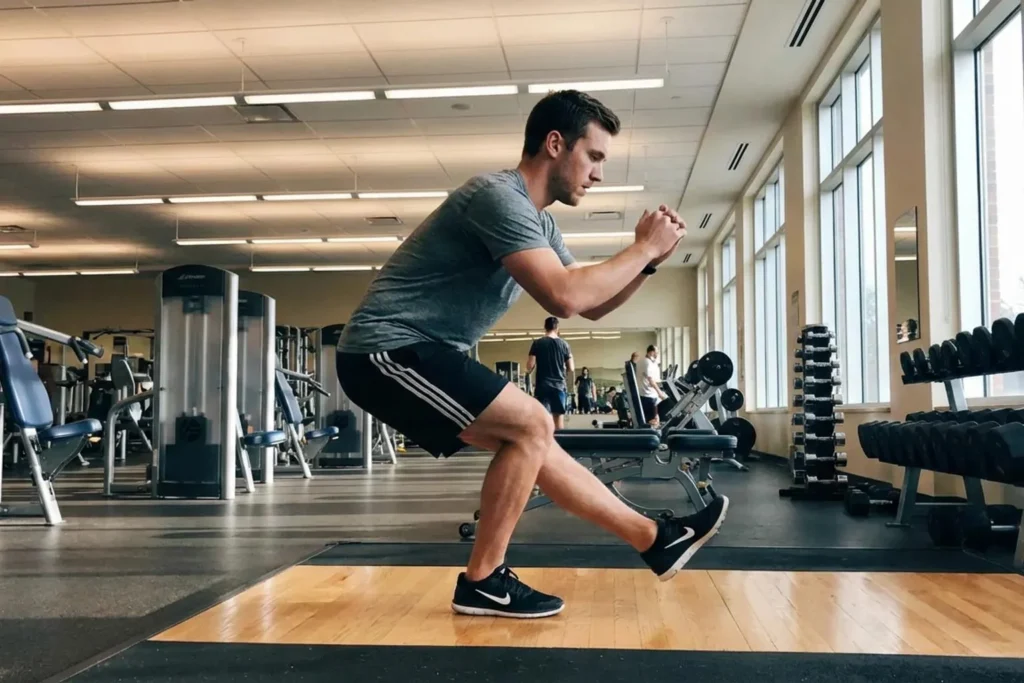
8. Single-Leg Squats
Single-leg squats are a more challenging option because they require strength, balance, and hip control at the same time.
How to perform it:
- Stand on one leg with your other foot slightly raised.
- Extend your arms forward for balance.
- Slowly bend your standing knee and move your hips backward.
- Lower only as far as you can control.
- Push through your standing foot to return upright.
Recommended starting point: 2 sets of 6-8 repetitions per side.
Beginners can perform this exercise while holding a sturdy chair or using a higher target behind them. Avoid deep squats if you cannot maintain control.
How to Build a Simple Gluteus Medius Workout
You do not need to perform all eight exercises in one session. Choose a few movements that match your current fitness level and gradually increase the difficulty.
Here is a simple routine you can use as a starting point:
| Exercise | Sets | Repetitions |
| Side-lying hip abduction | 2 | 10-12 |
| Clamshells | 2 | 12-15 |
| Standing hip abduction | 2 | 10-12 |
| Banded lateral walks | 2 | 8-10 steps each way |
| Hip hikes | 2 | 10 |
Start with two or three exercises if you are new to strength training. You can gradually add more movements as your technique and endurance improve.
For general hip conditioning, the American Academy of Orthopaedic Surgeons recommends performing its strengthening program two to three days per week. Its program also advises warming up with five to ten minutes of low-impact activity.
Common Mistakes to Avoid
Even simple hip exercises can become less effective when your technique is incorrect. Pay attention to these common mistakes:
- Lifting your leg too high: Excessive movement can cause other muscles to take over. Use a comfortable range of motion.
- Rotating your pelvis: Keep your hips stacked during side-lying movements.
- Moving too quickly: Slow repetitions help you maintain control throughout each exercise.
- Using excessive resistance: Start with body weight or a light band before increasing difficulty.
- Ignoring discomfort: Stop an exercise if it causes pain or makes existing symptoms worse.
A systematic review published in the International Journal of Sports Physical Therapy found that different exercises produce different levels of activity in the gluteus medius. Side-lying hip abduction, resisted side-steps, lateral step-ups, and single-leg bridges were among the useful strengthening options.
How to Choose the Right Exercises for Your Fitness Level
Your starting point should depend on your current strength, balance, and movement control.
Beginners: Start with clamshells, side-lying hip abduction, and standing hip abduction. These movements allow you to practice controlled muscle activation without demanding advanced balance.
Intermediate exercisers: Add banded lateral walks, hip hikes, and single-leg glute bridges. These exercises introduce more resistance and stability demands.
Advanced exercisers: Try lateral step-ups and single-leg squats when you can maintain good alignment and control.
Progress gradually. Increase repetitions, resistance, or exercise difficulty one step at a time instead of changing everything in the same workout.
Safety Tips Before Starting
Gluteus medius exercises are commonly used in fitness and rehabilitation programs, but the right movements depend on your individual condition.
If you have persistent outer hip pain, a recent injury, difficulty walking, or pain that interferes with daily activities, consult a qualified healthcare professional or physical therapist before starting a strengthening routine.
Avoid forcing painful movements or increasing resistance too quickly. The AAOS advises stopping exercises that cause pain and asking a healthcare professional about appropriate exercise selection.
This article provides general fitness education, not an individualized treatment plan. A licensed physical therapist should review exercise selection when the goal is rehabilitation.