
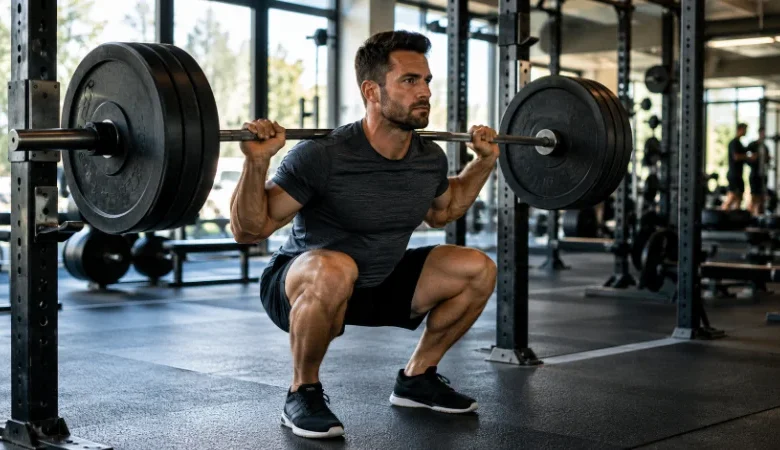
The body has more than 600 skeletal muscles, but they’re typically organized into a handful of major muscle groups: chest, back, shoulders, arms, core, and legs. Each group is made up of several individual muscles that work together to move a specific part of the body. Cleveland Clinic notes that these muscles are the ones you consciously control, whether you’re lifting a grocery bag or standing up from a chair.
Understanding these groups matters beyond the gym. Knowing which muscles support your spine, stabilize your shoulders, or power your stride helps you train more evenly, recover from soreness with the right context, and notice when something feels off. Below is a region by region breakdown of the major muscle groups of the body, what each one does, and how they connect to the movements you make every day.
Why Muscles Are Grouped This Way
Anatomy textbooks can name well over 600 individual skeletal muscles, which is far more than anyone needs to memorize for daily life or training. Fitness professionals condense that list into major groups based on shared location and shared function, so a “leg day” targets the quadriceps, hamstrings, glutes, and calves together instead of listing each muscle separately.
This grouping also mirrors how the body actually moves. Almost no exercise isolates a single muscle completely. A push-up, for example, relies mainly on the chest and triceps but also calls on the shoulders and core to keep the body rigid. Thinking in groups, rather than single muscles, reflects that reality and makes it easier to plan a routine that doesn’t accidentally skip an entire region of the body.
Upper Body Muscle Groups
1. Chest (Pectorals)
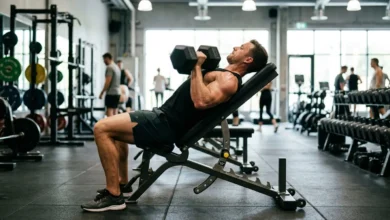
The chest is made up of the pectoralis major and pectoralis minor. Together, these muscles pull the arm across the body and drive pressing movements like a push-up or a bench press. They also help expand the rib cage during deep breathing, which is why chest tightness can sometimes affect how deeply you can inhale.
The pectoralis major is the larger, fan-shaped muscle that most people picture when they think of the chest. It attaches from the collarbone and sternum to the upper arm bone, which is why changing the angle of a press, incline versus flat versus decline, shifts how much work the upper or lower fibers do.
2. Shoulders (Deltoids)
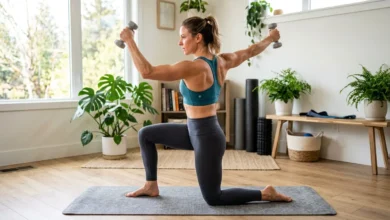
The deltoid wraps around the top of the shoulder joint in three sections: anterior (front), lateral (side), and posterior (back). Each section handles a different direction of arm movement, so a well-rounded shoulder routine touches all three rather than just the front. Because the shoulder is one of the most mobile joints in the body, the deltoid works constantly alongside smaller stabilizers like the rotator cuff.
The rotator cuff itself is made up of four smaller muscles, the supraspinatus, infraspinatus, teres minor, and subscapularis, that hold the upper arm bone in the shoulder socket. These muscles don’t produce much visible size, but they’re what keep the joint stable during overhead reaching, throwing, or carrying a bag on one shoulder.
3. Back (Trapezius, Latissimus Dorsi, Rhomboids)
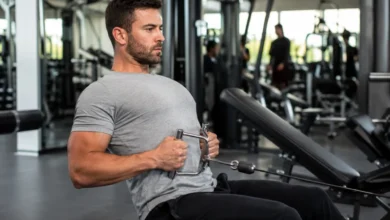
Cleveland Clinic describes the back muscles as woven layers that run from the base of the skull down to just above the hips, supporting the spine and controlling posture. The trapezius spans the upper back and neck, the latissimus dorsi forms the wide muscle beneath the armpits that powers pulling motions like a pull-up, and the rhomboids sit between the shoulder blades to pull them together. Because these muscles bear so much of the body’s weight, back strain is one of the more common muscle injuries.
4. Arms (Biceps and Triceps)
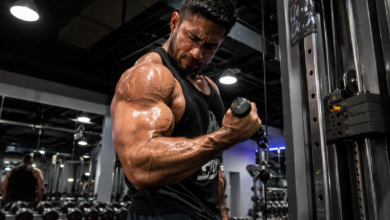
The biceps brachii sits on the front of the upper arm and bends the elbow, while the triceps brachii runs along the back of the arm and straightens it. These two muscles work as an antagonist pair, meaning one relaxes while the other contracts. Grip and forearm muscles support both, which is why arm training often includes wrist and hand work too.
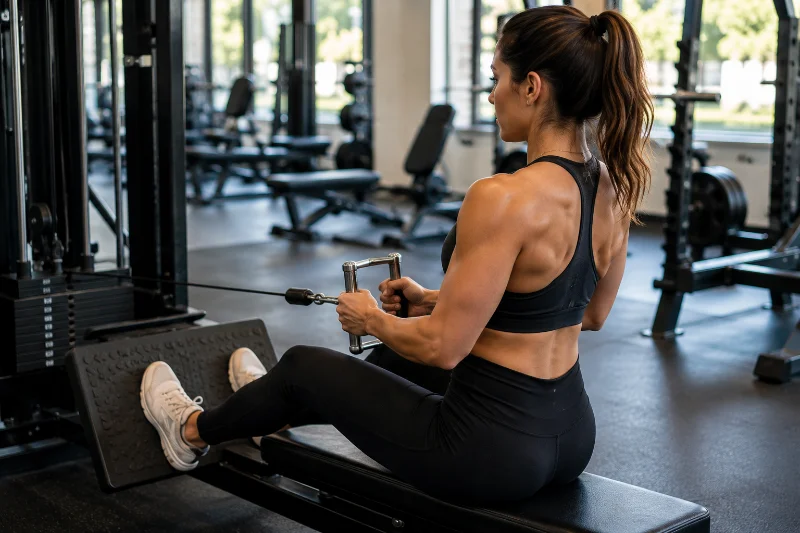
Core Muscle Groups
1. Abdominals and Obliques
Cleveland Clinic lists five main abdominal muscles: the rectus abdominis, pyramidalis, external obliques, internal obliques, and transversus abdominis. Together with the back muscles, these make up what’s commonly called the core. The core does more than shape the midsection; it holds the internal organs in place, supports the spine, and transfers force between the upper and lower body during almost any movement, from a golf swing to carrying a suitcase up stairs.
The obliques, running along the sides of the abdomen, handle twisting and side-bending motions. The transversus abdominis sits underneath the others and acts like a natural weight belt, tightening to stabilize the trunk before you lift or reach.
The erector spinae, a set of muscles running along the length of the spine, works with the abdominals from the opposite side of the torso to keep the trunk upright. A strong core isn’t only about visible abdominal definition. It’s what lets the arms and legs generate force without the spine losing its position, which is why core training shows up in programs for runners, swimmers, and desk workers alike.
Lower Body Muscle Groups
1. Quadriceps and Hamstrings
The quadriceps is a group of four muscles on the front of the thigh, the rectus femoris, vastus lateralis, vastus medialis, and vastus intermedius, that straighten the knee. The hamstrings on the back of the thigh, made up of the biceps femoris, semitendinosus, and semimembranosus, bend the knee and extend the hip. Healthline groups these as core parts of any leg training split, alongside the calves and glutes.
Because the hamstrings cross both the hip and knee joints, they’re involved in nearly every walking, running, and jumping motion. A strength imbalance between the quadriceps and hamstrings is one of the more studied risk factors for knee injuries in sports that involve sudden stops or direction changes, which is part of why coaches often program hamstring-specific exercises rather than relying on squats and lunges alone to cover the back of the thigh.
2. Glutes
The gluteus maximus, medius, and minimus make up the glute group. The largest of the three, the gluteus maximus, drives hip extension, which is the motion behind climbing stairs, standing from a seated position, and sprinting. Weak glutes are frequently linked to lower back and knee discomfort, since other muscles end up compensating for the movement they should be handling.
3. Calves
The calf is formed by the gastrocnemius and soleus. The gastrocnemius is the more visible, rounded muscle that shows up when the knee is straight, while the soleus lies underneath and stays active even when the knee is bent, such as during a seated calf raise. Both muscles point the toes and help absorb impact with each step.
4. Hip Flexors and Adductors
The hip flexors, primarily the iliopsoas, lift the knee toward the chest and are heavily involved in running, kicking, and climbing stairs. The adductors run along the inner thigh and pull the leg back toward the body’s midline, which stabilizes the hip during lateral movements like a side step or a change of direction on a basketball court. Both groups are easy to overlook because they don’t get much attention in a typical leg workout, but tightness or weakness here is a common contributor to hip and groin strains.
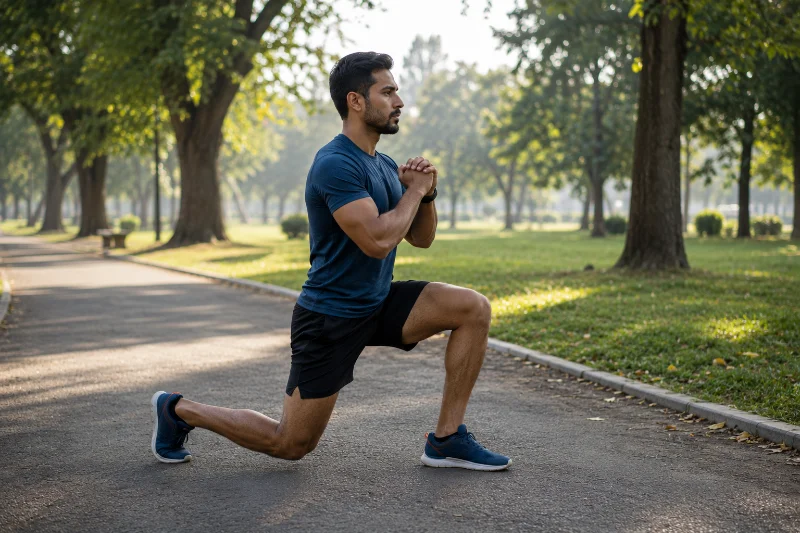
How These Muscle Groups Work Together
Muscles rarely work in isolation. During a squat, the quadriceps and glutes generate most of the force, but the hamstrings, calves, and core all contract to keep the movement controlled and the spine stable. This is why fitness professionals talk about “movement patterns” (push, pull, hinge, squat, carry) rather than training one muscle at a time.
Some tools measure this teamwork directly. BodySpec, which provides DEXA body composition scans, breaks lean muscle mass into regional segments such as arms, legs, and trunk, which lines up closely with how these major muscle groups are organized. Seeing lean mass broken down by region can highlight an imbalance, such as one leg carrying more muscle than the other, that isn’t obvious from the mirror alone.
Simple Ways to Train All the Major Muscle Groups
A routine that touches every major group doesn’t need to be complicated. A basic weekly split might pair chest and triceps one day, back and biceps another, and legs and core on a third, with shoulders worked across all three through pressing and pulling movements. Bodyweight exercises like push-ups, rows, squats, and planks cover most of these groups without any equipment.
Recovery matters just as much as the training itself. Giving a muscle group roughly 48 hours before working it again allows the tissue to repair and adapt, which is part of why split routines rotate through different regions on different days rather than training everything at once.
Sleep and protein intake both play a direct role in that repair process, since muscle tissue rebuilds during rest rather than during the workout itself. Soreness that fades within a day or two is a normal response to new or harder training. Pain that’s sharp, one-sided, or lingers well past a few days is worth mentioning to a healthcare provider rather than working through it.