
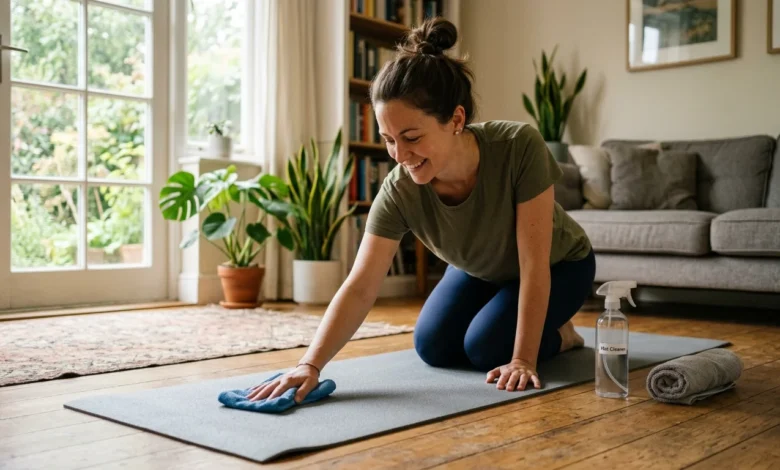
The fastest way to clean a yoga mat is to wipe it with a damp microfiber cloth and a mild soap spray, then let it air dry completely. It takes about five minutes and works on most PVC, TPE, and rubber mats. A deeper soak every month or two handles the sweat, skin oils, and floor grime that a quick wipe leaves behind.
Before you reach for vinegar or a disinfectant wipe, check what your mat is made of. The wrong cleaner can strip the grip, dry out natural rubber, or leave a sticky film that turns downward dog into a slide. This guide covers the right method for each material, a routine you can actually keep up, and the habits that quietly ruin good mats.
A Five-Minute Routine for Cleaning Your Yoga Mat After Class
Use this after any session where the mat got sweaty but still looks and smells fine.
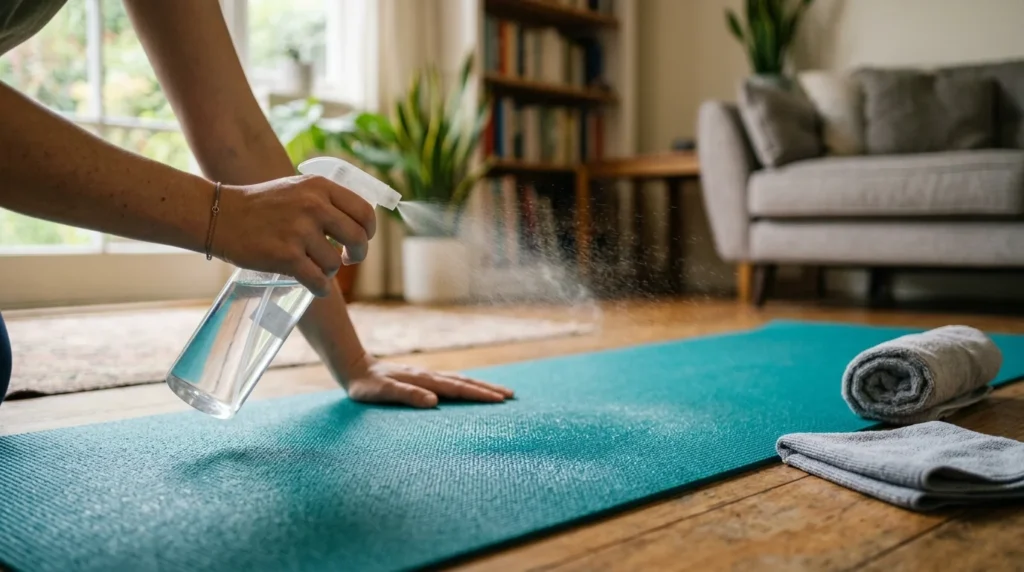
- Fill a clean spray bottle with one cup of water and two or three drops of mild dish soap. Shake gently so it doesn’t foam up.
- Mist both sides of the mat lightly. A damp surface is the goal, not a wet one, because water that pools can seep into the edges.
- Wipe the top in long strokes from one end to the other with a microfiber cloth, then flip the mat and wipe the bottom.
- Go over both sides again with a cloth dampened in plain water to pick up soap residue. Leftover soap is what makes a clean mat feel slick.
- Stand the mat up, hang it over a rail, or lay it flat until it is dry on both sides. Roll it loosely only after that.
Supplies Worth Having on Hand
You need a spray bottle, two microfiber cloths, a mild dish soap without added moisturizers, and a soft-bristled brush for textured surfaces. For a deep clean, add a bathtub or large sink, a bath towel, and a drying rack or shower rod. White vinegar and baking soda are optional extras for specific problems covered below.
Moisturizing soaps are worth avoiding because the added oils can leave a film on the surface, and a film is the fastest way to lose traction.
Check Your Mat Material Before Choosing a Cleaner
Mats look alike on the shelf but react very differently to cleaners. The care label or the brand’s website will name the material, and that tells you which methods are safe.
1. PVC and Vinyl Mats
PVC is the most common material and the most forgiving. The surface is closed-cell, meaning liquid stays on top instead of soaking in, so wipe-down cleaning works well. Mild soap spray and a diluted vinegar spray are both safe here.
2. TPE and Foam Mats
TPE mats are lighter and softer than PVC, and many are marketed as a more eco-friendly option. They tolerate soap and water well but can warp or get tacky when exposed to heat. Skip hot water and solvents, and keep them out of a hot car.
3. Natural Rubber Mats
Natural rubber has an open-cell structure that grips well but absorbs sweat and odors. It also breaks down faster with oils, vinegar, and sunlight. Stick to mild soap and water, wipe quickly, and never leave the mat soaking. Because rubber contains latex, people with a latex allergy should avoid these mats altogether.
4. Cork and Polyurethane Surfaces
Cork tops and polyurethane (PU) coatings look premium, and they react badly to harsh cleaners. Use a lightly damp cloth with a drop of soap, wipe gently, and skip vinegar, alcohol, and scrubbing. Brand care pages vary in detail, so check yours first.
5. The Corner Spot Test
If you can’t find care instructions, test any new cleaner on a bottom corner. Dab it on, wait ten minutes, then check for stickiness, discoloration, or a change in texture. Ten minutes of testing is cheaper than replacing a mat.
Two Homemade Sprays and When to Use Each
Mild Soap Spray for Every Mat Type
Mix one cup of water with two or three drops of mild dish soap. This is the safest option for every material listed above, and it handles routine sweat and dust. Make a fresh batch every week or two so it doesn’t sit in the bottle.
Vinegar Spray for PVC and TPE Only
Combine one part white vinegar with three parts water. Vinegar cuts through body oil and neutralizes odor, which makes it useful for mats that smell stale. Wipe the mat afterward with a water-dampened cloth, and the vinegar scent fades within an hour or so.
Many people add tea tree or lavender oil for scent. If a dog or cat shares your practice space, skip it, since the ASPCA lists tea tree oil as toxic to both. Essential oils can also stain or degrade certain surfaces, so a plain spray is the safer default.
How to Deep Clean a Yoga Mat Every Month or Two
A deep clean resets the surface when a quick wipe stops working. Plan on about twenty minutes of work plus drying time.
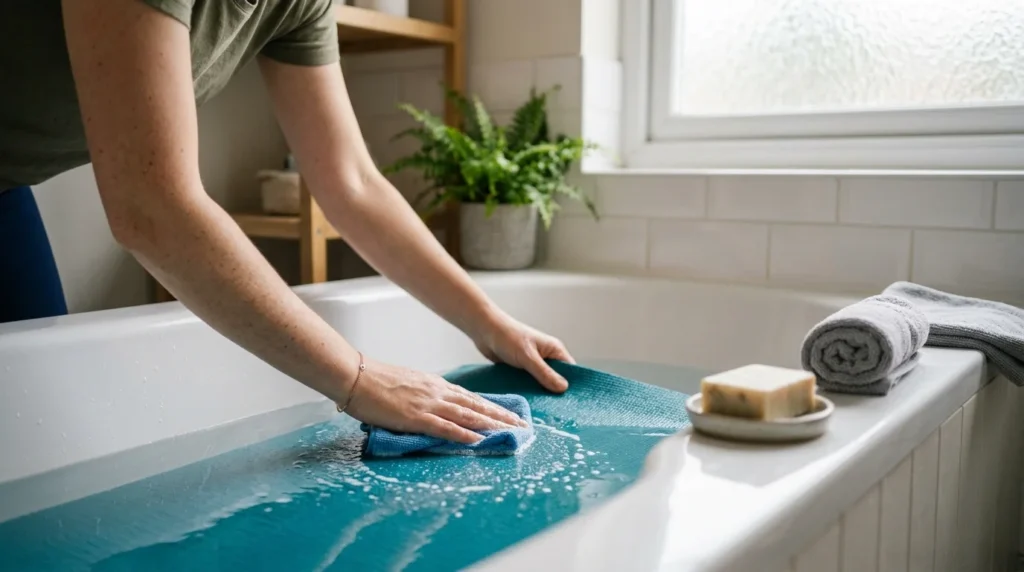
- Fill a bathtub with a few inches of lukewarm water and add a small squirt of mild dish soap.
- Lay the mat in the water, top side up, and scrub the surface gently with a soft cloth or brush, paying extra attention to where your hands and feet land.
- Flip the mat and wipe the underside, which collects floor dust that migrates back to the top.
- Drain the tub and rinse the mat with cool, clean water until no suds remain.
- Lay the mat on a bath towel, roll the two together, and press to squeeze out water. Do not wring or twist it.
- Hang the mat over a shower rod or lay it flat until it is bone dry, which can take several hours.
For natural rubber, keep water contact brief and follow the label if it recommends spot cleaning only.
Getting Rid of Stubborn Odors and Stains
For a lingering smell, make a paste with two tablespoons of baking soda and a little water. Rub it gently over the problem area, let it sit for fifteen minutes, and wipe it off with a damp cloth. Baking soda is mildly abrasive, so use light pressure and skip it on cork and PU surfaces.
Dark patches where hands and feet land are usually a mix of oil and dust. Repeat the soap scrub on those spots before reaching for anything stronger.
Do You Need to Disinfect a Yoga Mat?
For personal use, usually not. The CDC’s cleaning guidance explains that cleaning with soap and water lowers the number of germs on a surface, while disinfecting kills them and is meant for situations such as illness in the household. A regular soap routine is enough for most home mats.
Shared mats are different. The American Academy of Dermatology notes that athlete’s foot fungus spreads through contact with contaminated surfaces, and a rental mat touches a lot of bare skin. Bring your own mat when you can. If you can’t, wipe a studio mat with the cleaner the studio provides and let it dry before you lie down.
What to Keep Away From Your Yoga Mat
Some habits cause more damage than dirt does.
- Bleach and ammonia-based cleaners, which can eat into the surface of most materials
- Alcohol-based sanitizers and disinfecting wipes, which can dry out and break down rubber and PU coatings
- Washing machines and dryers, since heat and tumbling can tear foam, and many brands say not to machine wash
- Hot water, which can warp TPE and soften glued layers
- Long sessions in direct sun, because UV light breaks down rubber and plastics over time
- Moisturizing soaps and oily sprays, which leave a slick film
A residue problem often gets blamed on the mat, when the cause is the cleaner. If grip drops right after cleaning, rewipe with plain water before assuming the mat is worn out.
Drying and Storing a Clean Mat
Never roll up a damp mat. The EPA’s mold guidance says moisture control is the way to keep mold from growing indoors, and a rolled, damp mat is a sealed pocket of moisture. Mold and mildew leave a smell that no spray will fix.
Dry it away from heaters, car trunks, and sunny windowsills. A shower rod, a drying rack, or a clean patch of floor works fine. Flip it once halfway through so both sides dry evenly.
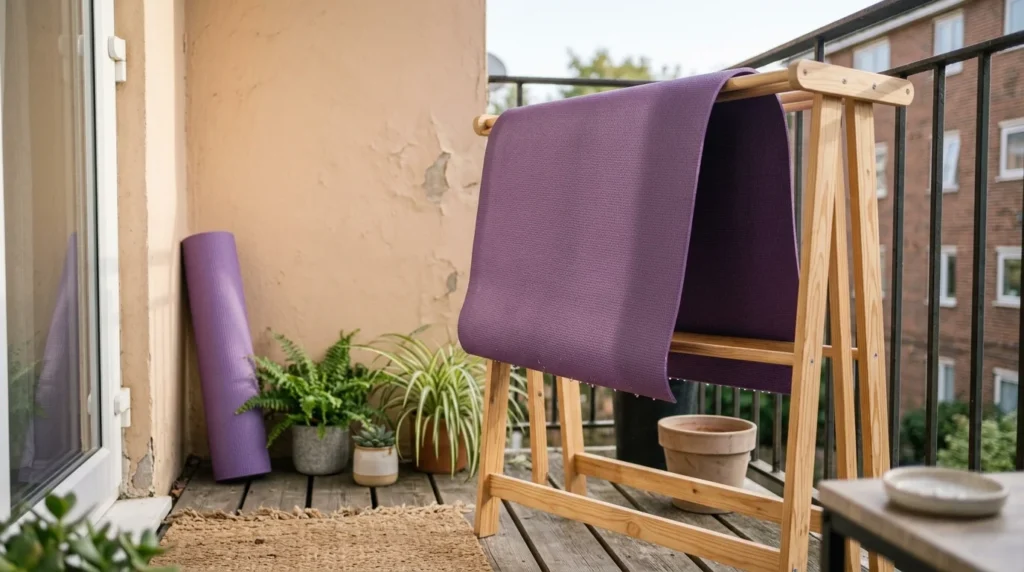
Once it is fully dry, roll it loosely with the top surface facing outward, which helps the edges lie flat. Store it in a closet or on a shelf indoors instead of leaving it in a hot car.
How Often to Clean Your Yoga Mat
The right schedule depends on how often you practice and how much you sweat. This table is a practical starting point, not a rule.
| Practice Pattern | Quick Wipe | Deep Clean |
| 1 to 2 sessions a week | When visibly sweaty | Every 2 to 3 months |
| 3 to 5 sessions a week | After each session | Every month |
| Daily or hot yoga | After every session | Every 2 weeks |
| Studio or shared mat | Before and after use | Not applicable |
The Look, Sniff, and Slide Test
Calendars only go so far, so use this three-part check once a month.
First, look at the spots where your hands and feet land for dark patches or a shiny, greasy sheen. Next, smell the mat after it has fully dried. A sour or musty smell means a deep clean is overdue.
Finally, press your palm flat and push forward. If your hand skids or the surface feels tacky, there is residue to remove, and a plain water wipe usually fixes it.
Cleaning a Yoga Mat After Hot Yoga or Heavy Sweat
Hot yoga puts far more sweat on a mat than a standard class. Salt from dried sweat leaves a gritty, slippery film, and the damp mat is an easy place for odor to settle in.
A grip towel across the top soaks up most of it and keeps the surface cleaner between washes. Wash the towel after each class. Rinse the mat with a damp cloth within a few hours of class, then follow the usual drying steps. Deep clean every two weeks, or sooner if the sniff test fails.
Are Store-Bought Mat Cleaners Worth It?
They can be, with caveats. Brands such as Manduka and Gaiam sell mat washes designed for their own materials, which removes the guesswork if your mat has a specialty surface. For a standard PVC or TPE mat, the soap spray above does the same job for pennies.
If a spray lists essential oils or alcohol, check that it suits your mat’s material before using it every day.
Keeping a Mat Clean Between Washes
Small habits cut down how often you need to scrub. Wash your hands and feet before class, and skip lotion or sunscreen on skin that touches the mat. Wipe the mat down while the sweat is fresh instead of letting it dry in. Keep pets off it, and store it away from the floor of a busy hallway or car trunk.
Signs It Is Time to Replace Your Yoga Mat
Cleaning restores a mat, but it can’t repair wear. Replace yours when the top layer flakes or peels, foam crumbs appear on the floor, or thin spots form under your hands and knees.
A smell that returns within days of a deep clean also points to a mat that has absorbed too much. So does grip that stays poor after a plain water rinse. Lifespan depends on how often and how hard you practice, so judge by condition, not by age.