
The cobra stretch is a floor-based backbend where you lie on your stomach and press your chest up, which lengthens the front of your torso and works the muscles along your spine. Most people do it for stiff hips, a tight abdomen, or a back that feels locked up after hours at a desk. Done with good form, it takes less than a minute and needs no equipment beyond a mat.
What the Cobra Stretch Actually Is
The cobra stretch comes from yoga, where it is called Bhujangasana, from the Sanskrit word for serpent. Physical therapists also use a close relative, often called the prone press-up, for back care. The two look nearly the same, and the main difference is intent: yoga cues emphasize breath and opening the chest, while rehab versions focus on controlled spinal extension.
It belongs to a group of movements called spinal extensions, meaning you bend the back backward. Most of daily life pushes the opposite way, with long stretches of sitting and looking down at a phone. That is why a gentle backbend feels so good after a long day in a chair.
Muscles Worked and Stretched
The cobra stretch does two jobs at once. It lengthens the muscles on the front of your body, and it strengthens the ones on the back.
The front muscles getting stretched include the rectus abdominis (the “six-pack” muscle), the hip flexors, the chest muscles, and the front of the shoulders. The back muscles doing the work include the erector spinae along your spine, your glutes, and the muscles between your shoulder blades, such as the rhomboids and middle trapezius.
How much of each you feel depends on how high you lift. A low cobra mostly stretches the abdomen and hip flexors. A higher one adds more load on the mid-back and more stretch across the chest.
How to Do the Cobra Stretch Step by Step
Use a mat or a carpeted floor so your hips and ribs are comfortable. Start with a few slow breaths before you move.
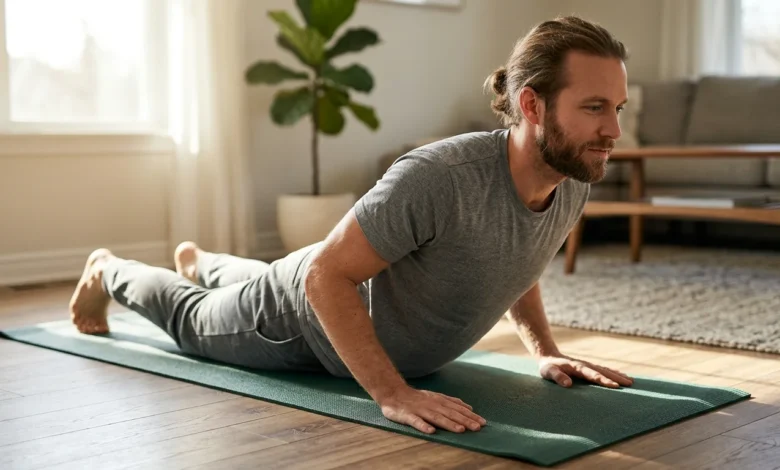
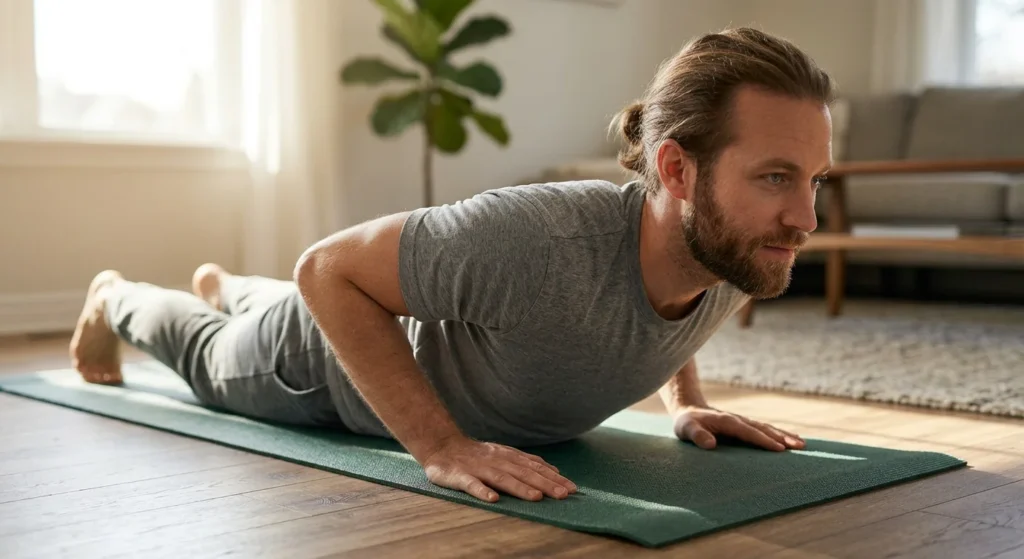
- Lie face down with your legs extended behind you, the tops of your feet on the floor, and your legs about hip-width apart.
- Place your palms flat on the floor beside your lower ribs, fingers pointing forward, with your elbows tucked close to your sides.
- Press the tops of your feet and your pubic bone into the floor, and use your back muscles to lift your head and chest a few inches.
- Straighten your arms only as far as feels comfortable. Keep a slight bend in the elbows so your back does the work instead of your wrists.
- Draw your shoulders down and back, away from your ears, and look straight ahead or slightly down so your neck stays long.
- Hold, breathe, and lower yourself slowly to the mat.
How Long to Hold It
The American College of Sports Medicine’s position stand on flexibility recommends holding a static stretch for 10 to 30 seconds for most adults, repeated two to four times. Older adults may get more benefit from holds closer to 60 seconds. That fits the cobra stretch well, since a few short holds are easier on the lower back than one long one.
A simple starting plan is three holds of 15 to 20 seconds, with a short rest on your stomach between each. Breathe normally the whole time rather than holding your breath.
How Often to Do It
The same ACSM guidance suggests stretching at least two to three days a week, with daily practice giving the best results. For the cobra stretch, many people find that once in the morning and once after a long stretch of sitting works well. If you notice soreness the next day that feels like a sharp pull rather than a mild muscle ache, do it less often and lift less high.
Cobra Stretch Benefits
The benefits are modest but real, and it helps to be honest about what they are. This is a mobility and posture exercise, not a cure for anything.
The first benefit is a better range of motion in the spine and hips. If you sit most of the day, your hip flexors stay shortened, and a regular backbend gives them a counter-position. People often report that standing up straight feels easier after a few weeks.
The second benefit is light strengthening of the back extensors. The Cleveland Clinic lists building strength along the spine as one of the reasons people practice cobra pose. These muscles help you stand tall and lift without rounding your back.
The third is a stretch through the chest and front of the shoulders, which tend to tighten when you work at a keyboard. Lifting your chest opens that area and can make deep breathing feel easier.
Can It Help With Lower Back Pain?
It can for some people, though not for everyone. Physical therapist Robin McKenzie built a well-known assessment method around repeated extension movements, including the prone press-up, for certain types of low back pain. In that approach, a clinician tests which direction of movement eases symptoms, and extension helps only some patients.
Harvard Health Publishing includes gentle back extension exercises among the movements it describes for people recovering from back strain, with the caveat that you should stop if pain spreads or worsens. The practical rule is simple: if the cobra stretch makes your pain move down a leg, increases numbness, or feels sharper, stop and get assessed.
People with spinal stenosis often feel worse when the back arches, since extension narrows the space around the nerves. If you have been diagnosed with stenosis, a herniated disc, or spondylolisthesis, ask your doctor or physical therapist before trying this stretch.
Common Mistakes to Avoid
Most problems with the cobra stretch come from lifting too high, too fast. A few fixes cover nearly all of them.
The most common mistake is locking the elbows and cranking the chest up with the arms. This crunches the lower back and puts the work in your wrists instead of your spine. Keep a soft bend in the elbows and think about lifting with your back muscles.
The second is shrugging the shoulders toward the ears. It tightens the neck and takes the stretch out of the chest. Slide the shoulder blades down your back before you lift.
The third is throwing the head back. Looking up at the ceiling compresses the neck for no gain. Keep your gaze forward or slightly down so your head follows the line of your spine.
The fourth is rushing the hold. A fast bounce up and down gives you none of the lengthening and adds strain. Move slowly in, breathe, and move slowly out.
Cobra Stretch Variations
Not everyone starts at the same place, and the best version of the cobra stretch is the one you can do without pain. These options cover most bodies and goals.
1. Baby Cobra
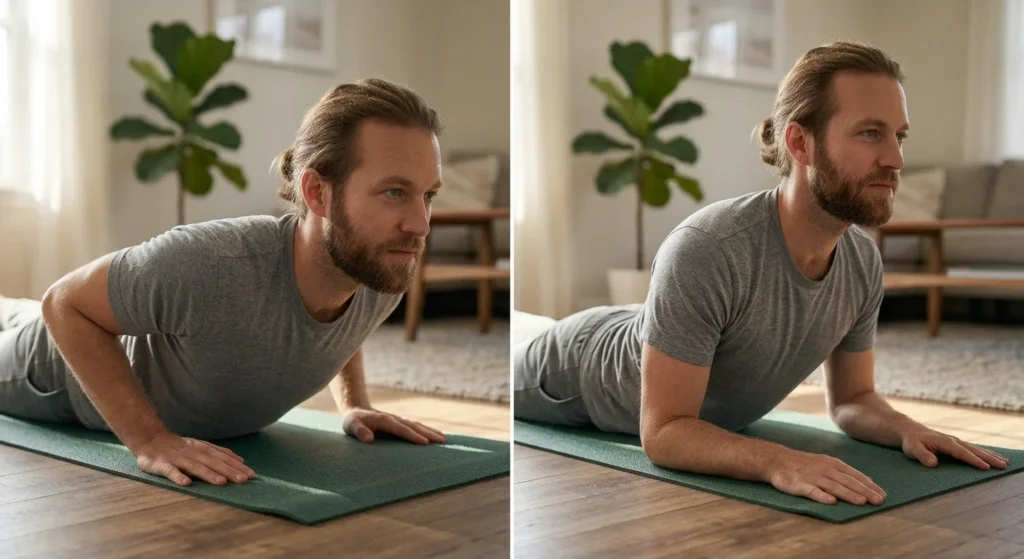
Keep your elbows on the floor under your shoulders, or lift only a few inches with hands lightly touching the mat. This is the easiest entry point and a good choice if your lower back is stiff or you are new to backbends. It stretches the abdomen and hip flexors with very little compression in the spine.
2. Sphinx Pose
Rest your forearms on the floor with elbows under the shoulders and press the tops of your hands and forearms down as you lift your chest. It is a deeper hold than baby cobra but still gentle on the wrists, which makes it useful if you have wrist pain or have been typing all day. Many yoga teachers use it as a bridge between a low cobra and a full one.
3. Full Cobra
Press through the palms until your arms are nearly straight while keeping your hips and thighs on the floor. Only go here if your lower back stays comfortable and you can keep your ribs from flaring. If your hips lift off the mat, you have gone too far.
4. Cobra Versus Upward-Facing Dog
Upward-Facing Dog is a related pose where your thighs and hips lift off the floor, and only your hands and the tops of your feet touch down. It asks for more arm and back strength and creates a deeper arch. The cobra stretch keeps the pelvis grounded, which is why it is the gentler and more accessible of the two.
Who Should Skip or Modify the Cobra Stretch
The cobra stretch is gentle for most healthy adults, but a few situations call for caution or a different exercise. Talk to a healthcare professional first if any of these apply.
- Pregnancy, especially after the first trimester, since lying on the stomach becomes uncomfortable and unsafe in later stages. Prenatal yoga teachers usually offer standing or seated chest-opening alternatives.
- Recent abdominal surgery or a hernia, because the pose stretches and loads the abdominal wall.
- Diagnosed spinal stenosis, herniated disc, or spondylolisthesis, where extension can aggravate symptoms.
- Carpal tunnel syndrome or wrist injury, where the baby cobra or sphinx versions put less load on the hands.
- Recent back, neck, or shoulder injury that has not been cleared for movement.
Healthline and the Mayo Clinic both advise anyone with pain that lingers or worsens after exercise to see a clinician instead of pushing through. That applies here too. A mild stretch is the goal, never pain.
Using the Cobra Stretch in a Short Routine
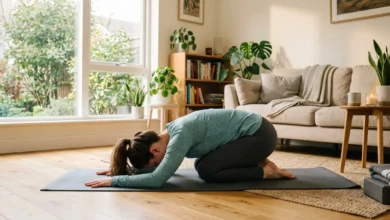
The cobra stretch works best as part of a pair or short sequence, because a backbend feels better when you also move the spine the other way. After a few holds, rest in child’s pose for about 30 seconds. That gently rounds the back and lets the muscles you just worked relax.
A simple five-minute sequence many people use at a desk break or before bed:
- Cat-cow on hands and knees, 8 to 10 slow rounds to warm up the spine.
- Baby cobra or sphinx, 3 holds of 15 to 20 seconds.
- Child’s pose, 30 seconds.
- Figure-four hip stretch lying on your back, 30 seconds per side.
If you run, lift, or play sports, the cobra stretch pairs well with hip flexor stretches and glute work because tight hips often drag the lower back into an overarched position. Think of it as one piece of a balanced routine, not a standalone fix.
Signs You Are Doing It Right
You should feel a pleasant stretch across the front of your belly and hips, along with a mild working sensation in the mid-back. Your breathing should stay easy, and you should be able to talk in a normal voice while holding the pose.
You should not feel pinching in the lower back, tingling in the hands or legs, or pressure behind the neck. Those are signals to lower yourself a few inches or back out of the pose. Pain that continues after you stop deserves a call to your doctor.
If you want to track progress, notice small things over a few weeks. Can you lift a little higher with the same comfort? Does standing up after sitting feel less stiff? Those everyday markers tell you more than how high your chest gets off the floor.
A Note on Warming Up and Timing
Stretching cold muscles is not dangerous, but you will feel more range after a few minutes of light movement. A short walk, a few rounds of cat-cow, or even a hot shower before you start can make the cobra stretch feel smoother. The ACSM guidance on flexibility also notes that stretching is most effective when the muscles are warm.
Timing is flexible. Some people like it first thing in the morning to shake off overnight stiffness, and others prefer it before bed to unwind. Pick the time you will keep doing, because steady practice beats a perfect schedule.
If you are stretching after a hard workout, keep the cobra stretch light. Your back muscles may already be tired, and a gentle baby cobra will do more good than pushing into a high, deep version.