

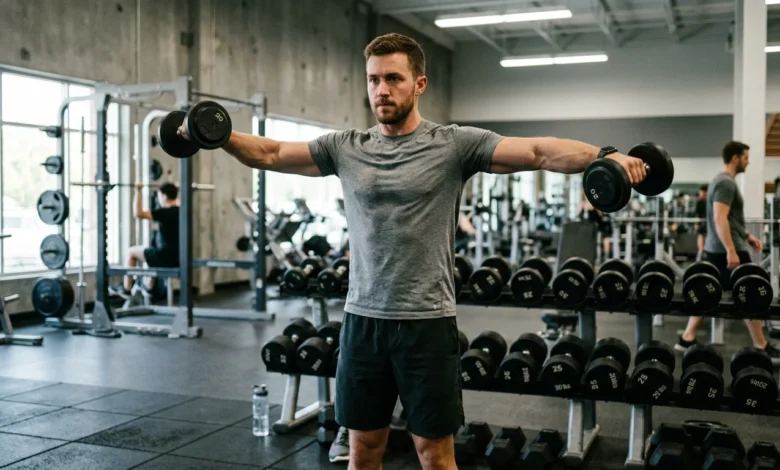
A lateral raise is a shoulder exercise where you lift a weight out to your sides until your arms reach shoulder height, which trains the side of the deltoid that gives your shoulders width. It is simple to learn and easy to do badly, and most people who stall on it are using too much weight or too much momentum. This guide covers correct form step by step, the muscles worked, how to pick a weight, the mistakes that waste reps, and the variations worth using. It applies whether you train at a commercial gym, a garage setup, or with one pair of adjustable dumbbells.
Muscles Worked by the Lateral Raise Exercise
The lateral raise exercise mainly trains the lateral (middle) head of the deltoid, the part of the shoulder on the outside of your upper arm. Pages from Muscle & Strength, PureGym, and Trufit Athletic Clubs all list the side delt as the primary target. Several other muscles assist without taking over.
The supraspinatus, a small rotator cuff muscle on top of the shoulder blade, starts the first few degrees of the lift. The upper trapezius helps as the arm rises, and the front delt works as a stabilizer. The rear delt and the muscles around the shoulder blade keep your upper back steady while the arms move.
This matters for programming because pressing movements like the overhead press hit the side delt only partly. Lateral raises isolate it with very little help from the triceps or chest. That is why they earn a place even in a routine that already includes presses.
Why Lateral Raises Belong in Your Routine
Developed side delts make the shoulders look wider, which also makes the waist look smaller by contrast. That is the main reason bodybuilders and general lifters alike program lateral raises. The movement also puts little load on the elbows and wrists, so it fits easily around heavier pressing days.
Because the weights are light, it is easy to add volume without piling up fatigue. A few extra sets of dumbbell lateral raises each week fill a gap that bench presses and overhead presses leave behind.
How to Do a Lateral Raise With Dumbbells
Dumbbell lateral raises are the standard version, and these steps work for both standing and seated sets.
- Pick a pair of dumbbells light enough to control. Most people start lighter than they expect.
- Stand with your feet about hip-width apart, knees softly bent, ribs down, and chest tall. Hold a dumbbell in each hand at your sides with palms facing your body.
- Bend your elbows about 15 to 20 degrees and keep that angle fixed for the whole set.
- Raise the weights out and slightly forward until your upper arms are about parallel with the floor.
- Lead with your elbows, not your hands, and keep your wrists in line with your forearms.
- Pause for a beat at the top, then lower the weights over two to three seconds.
The Scapular Plane Matters
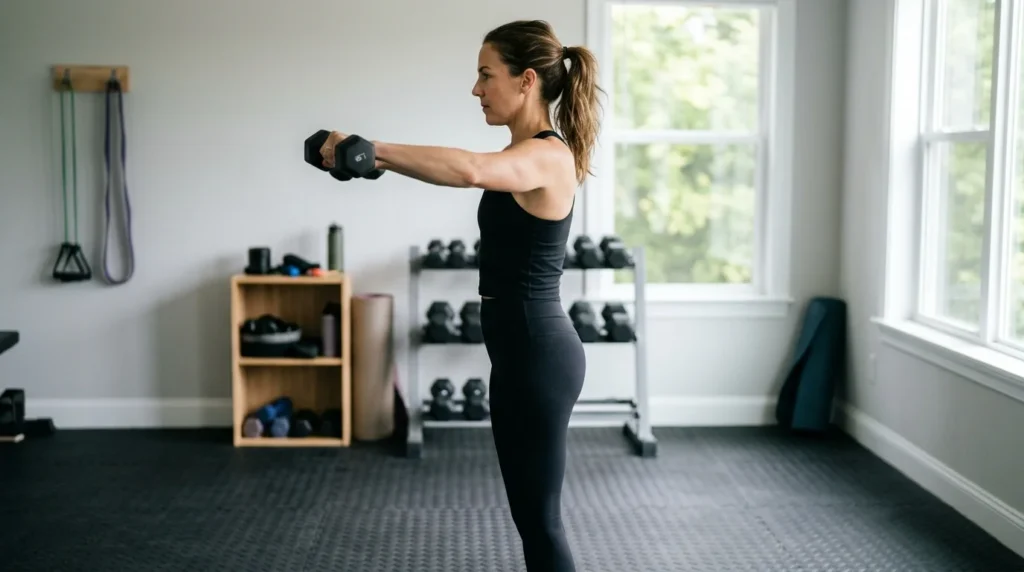
Lifting straight out to the sides works for many people, but raising the arms a few inches in front of the body is often more comfortable. Coaches call this the scapular plane, and it sits about 30 degrees forward of your torso. In that position, the shoulder joint tends to sit in a more natural alignment, which can reduce pinching at the top.
If your shoulders feel cranky during pure side-to-side raises, angle the movement slightly forward for a few weeks and compare how it feels.
Sets, Reps, and Frequency
For muscle growth, 3 to 4 sets of 10 to 20 reps work well. The side delt responds to higher repetitions, and the loads are light enough to keep those sets safe. Training lateral raises two to three times a week is common because the muscle is small and recovers quickly.
Place them after your heavy pressing or at the end of an upper body session, when the shoulders are already warm.
How to Choose the Right Dumbbell Weight
Most advice says to go light but never says how light. Use this test instead. Pick a weight, start a set, and hold a one-second pause at the top of your last three reps. If you cannot hold that pause without swinging or shrugging, the dumbbells are too heavy.
For reference, many beginners in US gyms land between 5 and 15 pounds per hand, and plenty of experienced lifters still use 20 to 30 pounds for strict reps. Treat those numbers as loose ranges, not targets. Many dumbbell racks jump in 5-pound steps, which is a big leap for this exercise, so adjustable dumbbells or small magnetic add-on plates let you progress in 1 to 2.5-pound increments.
Add reps first. When you reach the top of your rep range with clean form on every set, add a small amount of weight and start again at the low end.
Common Lateral Raise Mistakes and How to Fix Them
1. Swinging the Weights Up
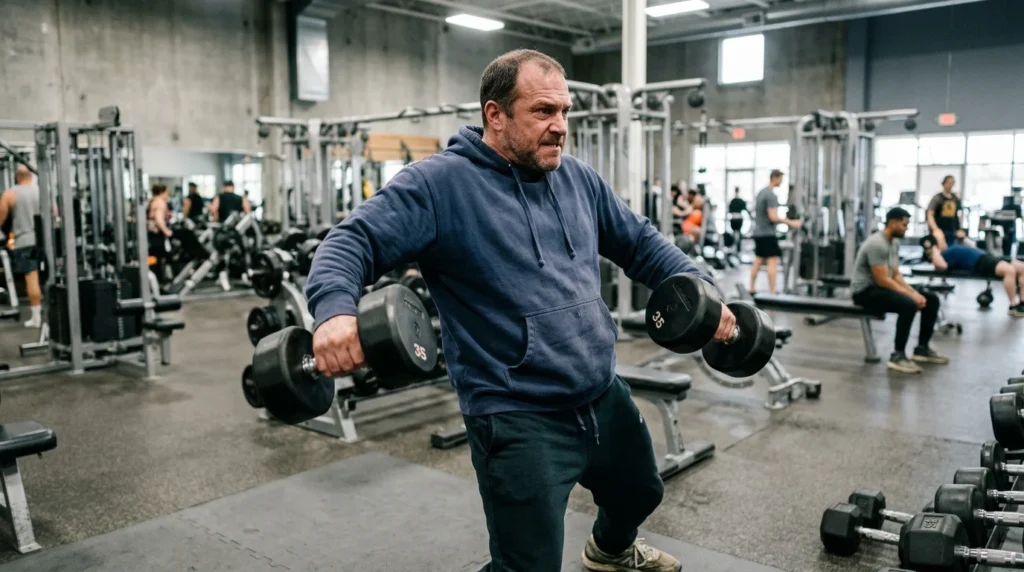
Momentum is the most common problem. If your torso rocks back and forth or your knees bounce, the delts are doing less of the work. Drop the weight by 20-30% and brace your core. Slow reps feel humbling at first and work much better.
2. Shrugging the Shoulders
When the upper traps take over, your shoulders creep toward your ears and the side delt loses tension. Keep your shoulders down and back as if sliding them into your back pockets. Think about moving your elbows out to the wall, not lifting your hands to the ceiling.
3. Lifting Above Shoulder Height
Raising your arms higher than parallel adds little for the side delt and shifts the work to the traps. It can also irritate the top of the shoulder for some lifters. Stop when your upper arms are level with the floor.
4. Locking the Elbows or Bending Too Much
Straight, locked arms lengthen the lever and strain the elbow joint. Bending too far turns the move into something closer to a front raise or a short pull. Keep a soft, steady bend of about 15 to 20 degrees.
5. Dropping the Weights on the Way Down
Letting the dumbbells fall throws away half the rep. Lower them over two to three seconds and keep the side delt tight until your hands reach your thighs.
Lateral Raise Variations Worth Trying
Once the standard version feels solid, swapping in one of these changes the tension and keeps training interesting.
1. Seated Dumbbell Lateral Raise
Sitting on a bench removes leg drive and body English. It forces strict reps, which is useful if you tend to swing when standing. Expect to use slightly lighter dumbbells than you do on your standing sets.
2. Cable Lateral Raise
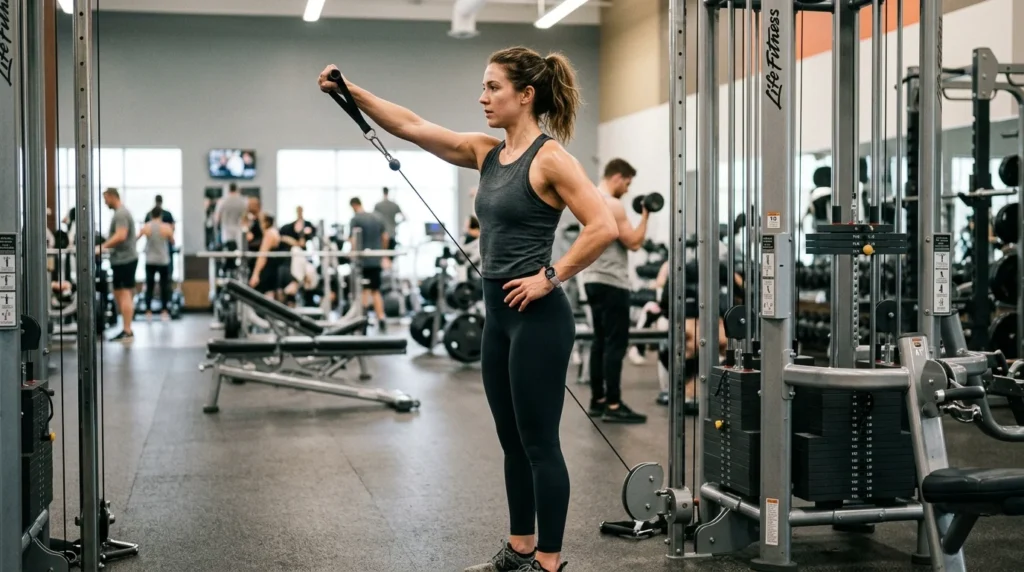
A cable station gives steady tension from the first inch of the lift. Stand sideways to a low pulley, hold the handle with the far hand, and raise your arm out to the side to shoulder height. Many lifters feel the side delt working earlier in the rep than with dumbbells.
3. Leaning Lateral Raise
Hold an upright post or rack with one hand and lean your body away so your torso tilts a few degrees to the side. The tilt moves the hardest part of the lift toward the bottom, where a standard dumbbell raise is easiest. Use one dumbbell and work one arm at a time.
4. Machine and Band Options
A lateral raise machine guides the path and is useful at the end of a workout when your form starts to slip. Resistance bands work well for travel or home sessions, since the band gets harder toward the top. Both are fine as finishers, though dumbbells and cables usually deserve the bulk of your volume.
Dumbbells vs Cables: Where Each One Is Hardest
Dumbbells use gravity, which pulls straight down. At the bottom, your arm hangs next to the weight, so the side delt barely works. The load builds as your arms rise and peaks near the top of the rep.
Cables pull along a different line, so tension starts almost at once and stays more even through the range. That is why a cable lateral raise can feel harder at the bottom, and a dumbbell raise feels harder at the top.
A practical way to use this: build your main sets with dumbbell lateral raises, then finish with a cable or leaning set to load the part of the range the dumbbell leaves easy.
Sample Shoulder Workout Using Lateral Raises
This sample fits an upper body or push day and takes about 30 minutes.
- Overhead dumbbell press: 3 sets of 6 to 10 reps
- Dumbbell lateral raise: 4 sets of 12 to 15 reps
- Cable lateral raise: 3 sets of 15 to 20 reps
- Rear delt fly: 3 sets of 12 to 15 reps
Rest 60 to 90 seconds between lateral raise sets. Stop each set one or two reps before form breaks down.
Safety, Pain, and When to Skip the Exercise
Some muscle burn in the side of the shoulder is normal. Sharp pain, a pinch at the top of the movement, or pain that lingers after your workout is not. If that happens, lower the weight, shorten the range, or try the scapular plane version.
If pain continues, see a doctor or physical therapist before continuing with lateral raises. This article is general fitness information and does not replace medical advice, especially if you have a past shoulder injury.