
If your shoulder feels loose, clicks during overhead reaches, or tires out fast when you carry groceries, the problem often starts at the shoulder blade, not the shoulder joint itself. Scapular stabilization exercises target the muscles that hold your shoulder blade against your rib cage, and they are one of the most overlooked pieces of shoulder rehab.
Most people jump straight to rotator cuff exercises when a shoulder hurts. That skips a step. The rotator cuff sits on top of the shoulder blade, so if the blade itself is unstable or sitting in the wrong position, the rotator cuff has to work from an unstable base. Fixing the base first makes every other shoulder exercise more effective.
What Scapular Stabilization Actually Means
Your shoulder blade, or scapula, is not fixed to your skeleton the way your hip bone is fixed to your pelvis. It floats on a layer of muscle over your rib cage, held in place entirely by the serratus anterior, trapezius, rhomboids, and levator scapulae. This setup gives your arm an enormous range of motion, but it also means the scapula depends completely on muscle strength and coordination to stay controlled.
When those muscles are weak or fire out of sequence, the shoulder blade can tilt, wing outward, or ride too high during arm movement. This is called scapular dyskinesis. It changes how the ball of your upper arm sits in the shoulder socket, which crowds the tendons that pass through that space and sets up the kind of pinching pain known as impingement.
Scapular stabilization exercises retrain the timing and strength of these muscles so the shoulder blade moves in sync with your arm instead of lagging behind or overcompensating.
Who Benefits Most From These Exercises
Overhead athletes, including swimmers, volleyball players, and throwers, place repeated stress on the shoulder blade stabilizers and tend to develop fatigue-related winging over a season. Desk workers who spend hours with rounded shoulders often develop weak, overstretched lower trapezius muscles paired with a tight, overactive upper trapezius, pulling the scapula out of its ideal resting position. Anyone recovering from a rotator cuff strain or shoulder impingement diagnosis usually has scapular work built into their rehab plan, since a stable base speeds up recovery of the smaller shoulder muscles.
A visible bump or ridge along your shoulder blade when you push against a wall is a classic sign of winging and a strong reason to start scapular work specifically.
Before You Start: Positioning and Setup
Two setup mistakes ruin most people’s results before they do a single repetition. The first is shrugging. When people try to pull their shoulder blades back, the upper trapezius takes over and hikes the shoulders up toward the ears. Keep your neck long and your shoulders down through every exercise here.
The second is confusing retraction with depression. Pulling your shoulder blades together is not the same as pressing them down. You want a slight downward and backward glide, sometimes cued as “put your shoulder blades in your back pockets.” If a movement causes your shoulders to creep upward, reduce the resistance or range until you can control it.
Work through these exercises slowly. A controlled two-second contraction with a brief hold builds far more stability than fast, momentum-driven reps.
Beginner Scapular Stabilization Exercises
Start here if you are new to shoulder rehab, recovering from an injury, or if your shoulder blade visibly wings during pushing movements.
Scapular Setting
Lie on your stomach with your arms resting by your sides, palms facing down. Without moving your arms, gently draw your shoulder blades down and together, as if trying to tuck them into your back pockets. Hold for five seconds, then release completely. Repeat 10 times. This isolates the lower trapezius without any arm movement to compensate with.
Scapular Retraction (Shoulder Blade Squeezes)
Sit or stand tall with your arms relaxed at your sides. Squeeze your shoulder blades together as if pinching a pencil between them, without shrugging. Hold for 10 seconds, then relax fully. Do three sets of 10, several times a day if you are working through acute pain, since this movement is gentle enough to repeat often.
Prone Scapular Retraction with Arm Raise
From the same face-down position as scapular setting, lift your arms an inch off the ground while squeezing your shoulder blades together. Hold for three seconds and lower slowly. This adds a light load to the pattern you just learned, bridging you toward resistance work.
Intermediate Exercises With Resistance Bands
Once you can hold a scapular squeeze without shrugging for 10 clean repetitions, move on to banded work.
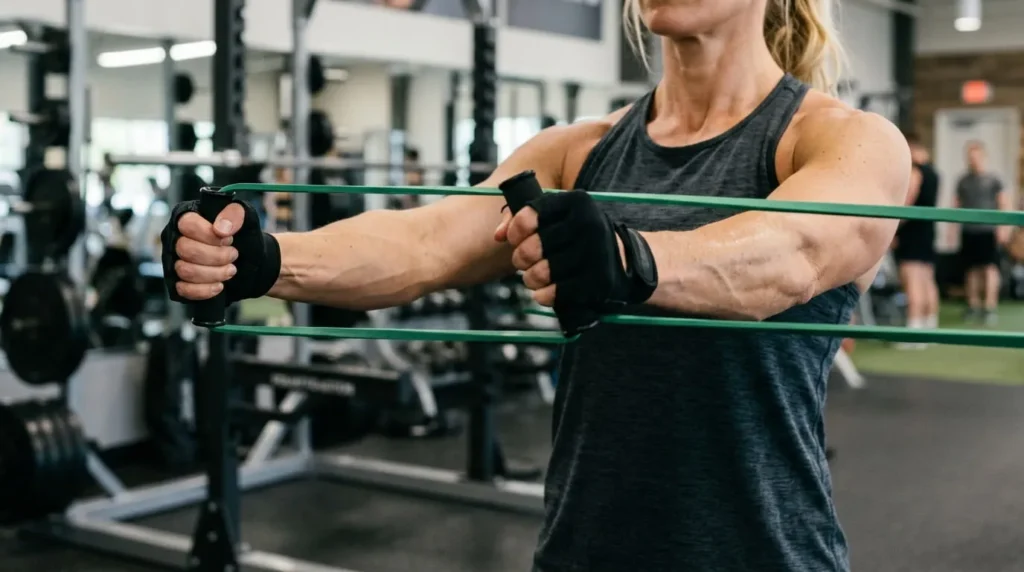
Band Pull-Apart
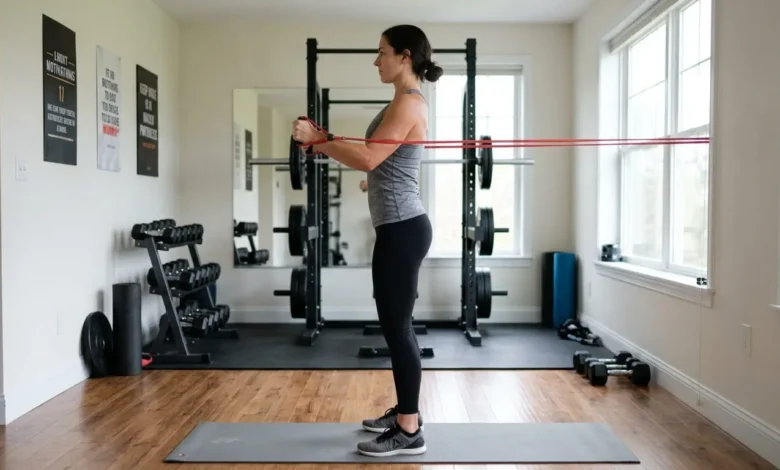
Hold a light resistance band with both hands at shoulder height, arms straight out in front of you, palms facing each other. Pull the band apart by driving your shoulder blades together, keeping your arms roughly parallel to the floor. Return slowly. Do three sets of 12 to 15. This exercise directly targets the rhomboids and middle trapezius, the muscles most responsible for pulling a rounded upper back into a neutral position.
Seated or Standing Band Row
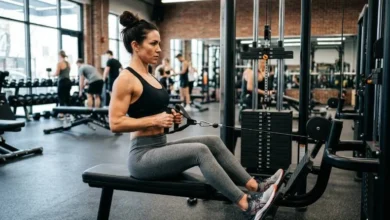
Anchor a band at chest height, or loop it around a sturdy object. Hold both ends and pull your elbows straight back past your ribs, leading the movement with your shoulder blades rather than your hands. Hold briefly at the end range, then release under control. Three sets of 12 works well here.
External Rotation with a Towel
Tuck a small towel between your elbow and your side to keep your upper arm still. Holding a light band anchored at waist height, rotate your forearm outward away from your stomach without letting your elbow drift backward. This exercise trains the infraspinatus and teres minor, which work alongside your scapular stabilizers to keep the shoulder joint centered during rotation.
Wall-Based Scapular Exercises
Wall drills are useful because the wall gives you instant feedback if your form breaks down.
Wall Slides
Stand with your back, head, and arms against a wall, elbows and wrists touching the wall in a goalpost position. Slowly slide your arms upward overhead while keeping every point of contact on the wall, then slide back down. If your arms or lower back peel off the wall, you have gone past your current control, so reduce the range. Do two to three sets of 10.
Wall Push-Up Plus
In a standing wall push-up position, after you push back to the starting point, round your upper back slightly further by protracting your shoulder blades away from your spine. This final push is what makes the exercise a “plus,” and it specifically trains the serratus anterior, the muscle most responsible for preventing scapular winging. Do two sets of 15.
Advanced Scapular Stabilization Exercises
These movements ask more of the stabilizers and are appropriate once basic control is established and pain-free.
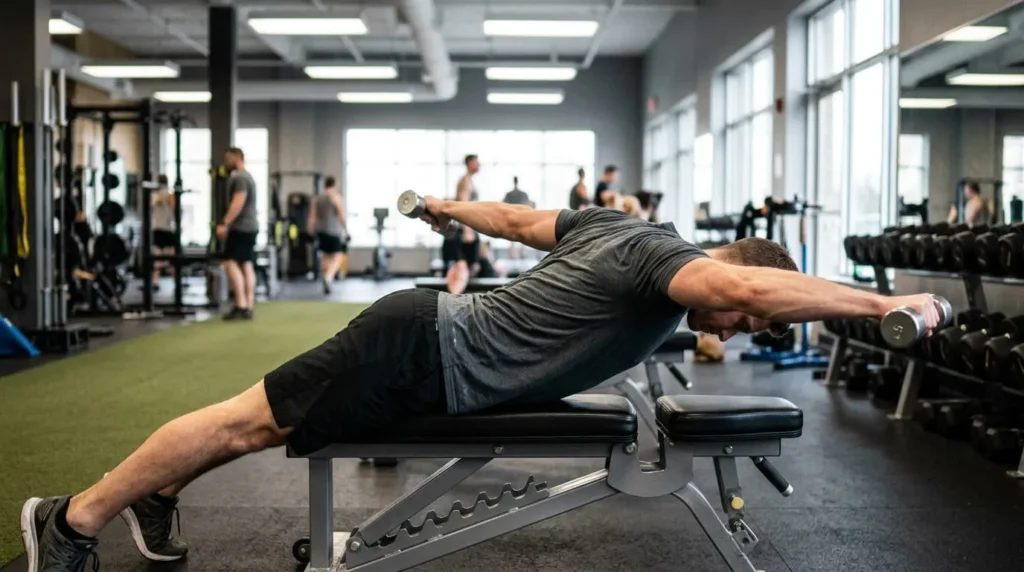
Prone Y-T-W Raises
Lie face down on an incline bench or the floor, holding light dumbbells or no weight at all. Raise your arms into a “Y” shape overhead, lower, then raise them out to a “T” at shoulder height, lower, then bend your elbows into a “W” shape by squeezing your shoulder blades together. Each letter targets a different portion of the trapezius and rotator cuff. Two to three sets of eight per position is plenty, since this is demanding work even without added weight.
Shoulder Diagonals (D2 Pattern)
Anchor a band low near your opposite foot. Starting with your hand near your opposite hip, draw the band diagonally up and across your body, finishing with your arm raised overhead and rotated outward, as though drawing a sword from its sheath. This diagonal pattern mimics real throwing and reaching motions far more closely than exercises performed in a single plane, which makes it valuable for athletes returning to overhead sports.
How Often to Train Scapular Stabilization
For general shoulder health, two to three sessions a week is enough to build and maintain strength, with each session taking 15 to 20 minutes. If you are rehabbing an active injury, gentle exercises like scapular setting and retraction can often be done daily, while banded and advanced work should follow the frequency set by a physical therapist based on your specific diagnosis.
Progress by adding resistance or range before adding speed. A slow, controlled band row with perfect form builds more stability in six weeks than fast, sloppy reps ever will.
Common Mistakes That Undermine These Exercises
Shrugging during retraction is the single most common error, training the upper trapezius to dominate a movement that should belong to the mid and lower trapezius. Using too much resistance too soon is a close second. If you cannot complete a full set without your shoulder blade winging or your neck straining, the band is too strong.
Skipping the beginner exercises is another frequent mistake. People with visible winging often want to jump straight to banded rows because the beginner movements look too easy. Those simple movements rebuild the mind-muscle connection to muscles that have gone dormant, and skipping them usually means the advanced exercises get compensated by the wrong muscles anyway.