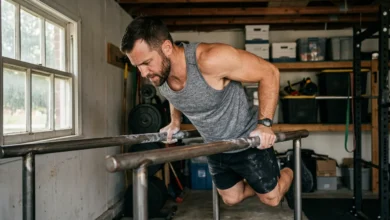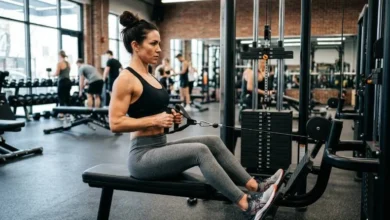


The pull up is one of the toughest bodyweight tests in strength training. Most people who fail at it are not weak, they are just missing the right progression. Learning how to do a pull up comes down to building grip strength, scapular control, and pulling power in a specific order, not just hanging from a bar and hoping for the best.
This guide breaks down exact form, a full training progression, a sample workout, and what to do if you do not have access to a pull up bar at all.
What Muscles Does a Pull Up Work
A pull up is a compound movement, meaning it trains several muscle groups at once instead of isolating one area. The primary mover is the latissimus dorsi, the large back muscle that gives a V-taper shape when developed. The biceps, rear deltoids, rhomboids, and lower trapezius all assist the pull, while the core and forearms work isometrically to keep the body stable through the range of motion.
This is why a pull up is considered a better strength benchmark than a lat pulldown machine. It requires your whole body to work together, not just your arms.
How to Do a Pull Up With Proper Form
Before adding volume or worrying about reps, the form has to be right. A sloppy pull up trains bad habits and increases shoulder strain.
- Grip the bar slightly wider than shoulder width, palms facing away from you.
- Start from a dead hang with arms fully extended and shoulders relaxed, not shrugged up toward your ears.
- Pull your shoulder blades down and back before bending your elbows. This is called scapular retraction and it protects the shoulder joint.
- Drive your elbows down toward your hips, pulling your chest toward the bar rather than just lifting your chin.
- Pause briefly when your chin clears the bar.
- Lower yourself under control until your arms are fully straight again. Do not drop.
A full rep includes both the pull and a controlled lowering phase. Half reps or bouncing at the bottom will not build the strength you are training for.
Common Pull Up Mistakes That Stall Progress
Kipping or swinging the legs is the most common error among beginners trying to force a rep. It turns a strength exercise into a momentum exercise and teaches the nervous system the wrong pattern.
Another frequent mistake is only training the pulling phase and ignoring the lowering phase. The eccentric, or lowering, portion of a pull up builds significant strength and should never be rushed.
Gripping too wide is also a problem. A grip much wider than shoulder width reduces range of motion and shifts unnecessary stress onto the shoulders and elbows. Shoulder width to just outside shoulder width is ideal for most people.
How to Train to Do a Pull Up If You Cannot Do One Yet
If you cannot currently perform a single rep, you are not alone, and you do not need to start with the full movement. Build the pattern in stages.
Step 1: Build Grip and Hang Strength
Grip is often the limiting factor before back strength even becomes relevant. Practice dead hangs from a pull up bar for 20 to 40 seconds at a time, for 3 to 4 sets, a few times per week. This builds the tendon strength and grip endurance needed to support your bodyweight.
Step 2: Master the Scapular Pull
From a dead hang, practice pulling your shoulder blades down and together without bending your elbows. This is called a scapular pull or scapular retraction. It teaches your back muscles to initiate the pull instead of relying purely on your arms. Aim for 3 sets of 8 to 10 controlled reps.
Step 3: Negative Pull Ups
Use a box or bench to jump or step up so your chin is above the bar, then lower yourself as slowly as possible, ideally taking 4 to 6 seconds to reach full extension. Negatives build strength through the full range of motion and are one of the fastest ways to earn your first pull up. Start with 3 sets of 3 to 5 slow negatives.
Step 4: Band-Assisted or Machine-Assisted Pull Ups
A resistance band looped over the bar and under your foot or knee removes part of your bodyweight, letting you practice the full pulling motion with proper form. An assisted pull up machine at the gym works the same way with adjustable counterweight. Gradually reduce the assistance as you get stronger.
A 6-Week Pull Up Progression Plan
This plan works whether you are starting from zero or trying to add your first clean rep. Train it 3 non-consecutive days per week.
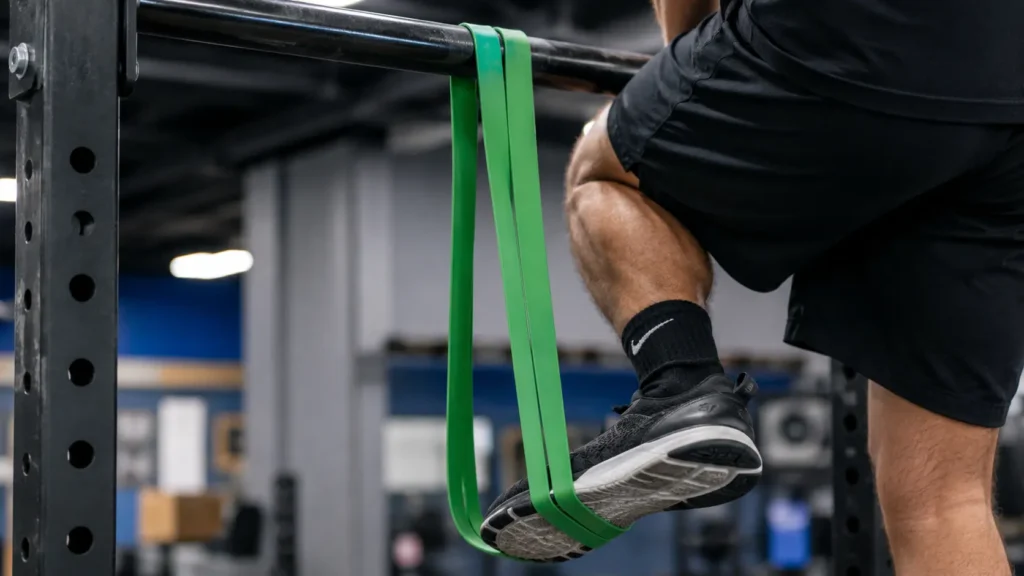
Weeks 1 to 2: Dead hangs (3 sets, 20 to 30 seconds), scapular pulls (3 sets of 10), band-assisted pull ups (3 sets of 5).
Weeks 3 to 4: Negative pull ups (4 sets of 4, 5 second lowering), band-assisted pull ups with a lighter band (3 sets of 6), inverted rows (3 sets of 10) to build supporting back strength.
Weeks 5 to 6: Attempt full pull ups every session, resting when needed, aiming for 1 to 3 unassisted reps. Continue negatives and band work on days you fall short, treating them as backup training rather than a failure.
Progress is rarely linear. Some people earn their first rep in three weeks, others need ten. Consistency matters more than the exact timeline.
How to Do More Pull Ups Once You Have Your First One
Getting your first rep is the hardest part, but going from 1 rep to 10 requires a different approach: training volume and frequency.
Grease the groove training works well here. Instead of one hard set to failure, perform single reps or small sets of 2 to 3 pull ups spread throughout the day, several times, well short of failure each time. This builds strength without excessive fatigue and trains your nervous system to fire more efficiently.
Weighted pull ups are the next step once you can do 8 or more clean bodyweight reps. Adding 5 to 10 pounds via a dip belt or weighted vest continues to build strength once bodyweight alone stops being challenging.
Also train your pulling muscles indirectly with rows, lat pulldowns, and dead hangs on separate days. A stronger back overall translates directly into more pull up capacity.
Sample Pull Up Workout for All Levels
Beginner (working toward first rep): Band-assisted pull ups 3×5, negative pull ups 3×4, dead hangs 3×30 seconds, inverted rows 3×10.
Intermediate (1 to 8 reps): Pull ups 4 sets to near failure, chin ups 3×6, weighted dead hangs 3×20 seconds, face pulls 3×15.
Advanced (8+ reps): Weighted pull ups 5×5, wide grip pull ups 3×8, L-sit pull ups 3×6, single arm negatives 3×3 per side.
Rest 90 seconds to 2 minutes between sets for strength work, and train pull ups 2 to 3 times per week with at least one rest day between sessions for recovery.
Pull Up Alternatives You Can Do at Home Without a Bar
Not everyone has access to a pull up bar, and that does not mean progress has to stop.
Inverted rows using a sturdy table edge or a low bar work the same pulling muscles from a horizontal angle and are easier to scale for beginners.
Resistance band pulldowns, done by anchoring a band overhead and pulling down and back, mimic the pull up motion and let you control resistance easily.
Doorway pull up bars are inexpensive and mount without permanent installation, making them the closest at-home substitute to a real pull up bar.

Superman holds and reverse snow angels build the same posterior chain muscles used to stabilize a pull up, and require no equipment at all.
Towel rows, done by looping a towel over a sturdy door top or beam, add a grip strength challenge on top of the pulling motion.
How Long Does It Take to Learn a Pull Up
For someone starting with zero pulling strength, 6 to 10 weeks of consistent training is a realistic range to achieve a first clean rep. Grip strength, bodyweight, and training frequency all affect this timeline. Lighter individuals with some upper body training background often progress faster, while those starting from a fully sedentary baseline may need closer to 3 months.
The key variable is not talent, it is consistency. Training the progression steps 3 times per week without long gaps between sessions produces far better results than sporadic, inconsistent effort.
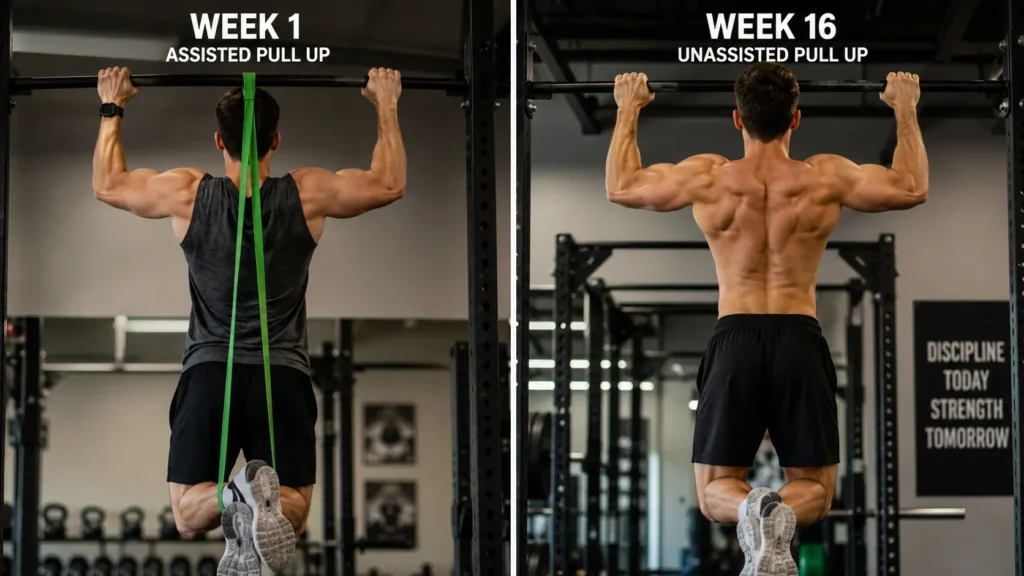
Building your first pull up, and then adding reps beyond it, comes down to following the right order: grip and hang strength first, scapular control second, negatives and assistance third, then full reps under load. Skip the shortcuts, train the steps, and the strength will follow.