


Here is how to tighten skin after weight loss naturally: build muscle with resistance training, eat enough protein and vitamin C, protect your skin from the sun, and give your body time. These habits work best after small-to-moderate weight loss. After major weight loss, they can improve how loose skin looks and feels, but they rarely remove it.
That gap between promise and reality is where most online advice goes wrong. Creams, wraps, and supplements are sold as fixes, while surgeons say the evidence is thin. This guide sorts out what research supports, what a realistic routine looks like, and when a doctor’s visit makes sense.
Why Skin Loosens After You Lose Weight
Skin is built largely from collagen, which gives it strength, and elastin, which lets it spring back. Healthline’s medically reviewed overview notes that collagen makes up 80% of the skin’s structure. When skin stays stretched for a long time, those fibers get damaged and lose some of their ability to retract.
Think of it like a waistband stretched for years. A few weeks of stretching bounces back. Years of it does not. That is why the length of time you carried extra weight also matters, alongside the number of pounds lost.
Healthline lists several factors that shape the outcome: how long someone lived with overweight or obesity, how much weight came off and how fast, age, genetics, sun exposure, and smoking. UnityPoint Health plastic surgeon Samuel Maurice, MD, adds that no single weight-loss number predicts who gets loose skin. Bodies differ too much.
Loose skin can also cause physical problems. In a 2014 study of 124 people who requested plastic surgery after weight-loss surgery, 44% reported skin pain, ulcers, or infections linked to excess skin (Wagenblast et al., 2014, as cited by Healthline).
Will Loose Skin Tighten on Its Own?
Sometimes, yes. Healthline says skin will likely retract by itself after small to moderate weight loss. UnityPoint’s Dr. Maurice says the same, with a catch: skin stretched significantly for a long period typically will not fully retract, no matter how much time passes.
West Medical’s bariatric surgeon, Hooman Shabatian, MD, says some people notice changes within months while others need a year or longer. Treat that as a rough range. Photos taken every four weeks in the same light make slow progress easier to see.
A Quick Reality Check
This rough guide, built from the sources above, shows where different situations tend to land.
| Situation | What to Expect | Best Starting Point |
| Small to moderate weight loss, younger skin | Skin often retracts on its own | Strength training, protein, sun protection |
| Large loss over a long time, or older skin | Partial improvement at best | Same habits, plus a surgeon consult |
| Loose skin causing rashes or pain | Natural methods will not fix it | See a doctor |
What Natural Methods Can and Cannot Do
Natural methods work on two things: the skin itself and the tissue underneath it. Collagen-supporting nutrition and sun protection support the skin. Muscle gain fills out the space fat used to occupy, which may make skin look smoother.
Neither approach is known to repair heavily stretched fibers. Dr. Maurice told UnityPoint that after significant weight loss with a lot of extra skin, there is not really a better option than surgery. So when you set out to tighten skin after weight loss naturally, aim for a firmer, smoother look and less discomfort. A complete reset is unlikely.
Build Muscle With Resistance Training
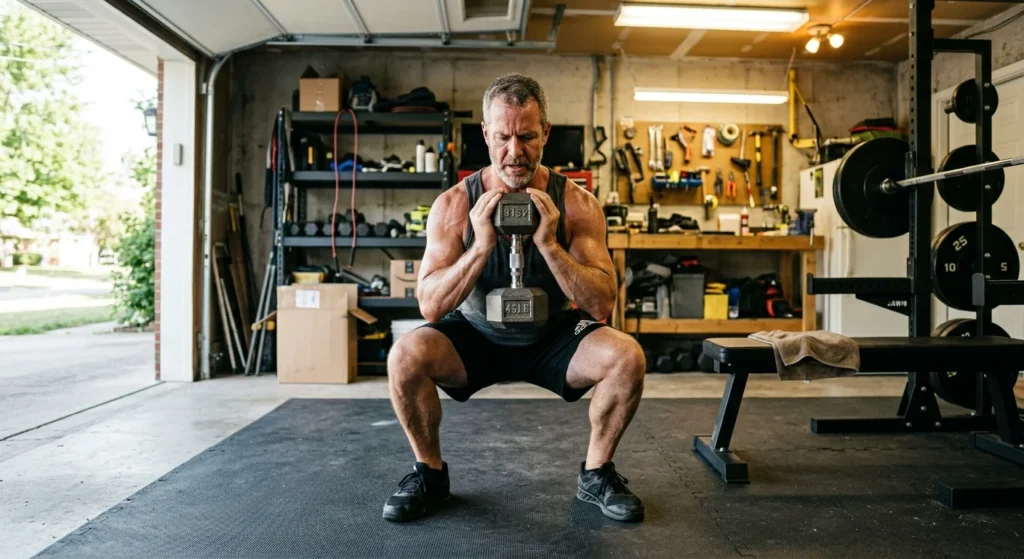
Resistance training is the best-supported natural step, with an honest caveat. Healthline says research has not yet tested whether added muscle improves the look of loose skin, though it is plausible. Dr. Maurice agrees that lifting and toning may increase muscle mass and help.
The Physical Activity Guidelines for Americans from the U.S. Department of Health and Human Services recommend muscle-strengthening activity on at least two days a week. Treat that as the minimum and build from there once your routine feels steady.
A Simple Weekly Plan
Start with three full-body sessions a week, 30 to 45 minutes each, with a rest day between them. Pick one pushing move, one pulling move, one squat or lunge pattern, and one hinge such as a deadlift or hip bridge. Add weight slowly once you can finish every set with good form.
Target the areas that bother you most. West Medical suggests push-ups and tricep dips for the arms, planks for the core, and squats and lunges for the thighs and glutes. These are sensible choices, though the research does not show they tighten skin in a specific spot.
UnityPoint reports that GLP-1 medications and bariatric surgery are producing more cases of major weight loss, with some patients losing 100 pounds or more. If that is your route, ask your care team about protein and strength work early, before the weight comes off.
Eat for Collagen Support
No food tightens skin by itself. What nutrition can do is supply the raw materials your body uses to maintain collagen and repair skin. Healthline names protein, vitamin C, omega-3 fats, and water as the main ones.
1. Protein
Collagen is a protein, and the amino acids proline, hydroxyproline, and glycine take part directly in making it, according to Healthline. The National Academies of Sciences, Engineering, and Medicine set the adult recommended dietary allowance at 0.8 grams of protein per kilogram of body weight, about 0.36 grams per pound. Your doctor or a registered dietitian can say whether you need more during and after weight loss.
Spread protein across meals. Eggs, Greek yogurt, fish, poultry, tofu, and beans all work, and a protein source at each meal is easier to keep up than one large serving at dinner.
2. Vitamin C and Other Nutrients
Vitamin C is needed for collagen synthesis, and it also helps protect skin from sun damage, per Healthline’s review of the research. Citrus, strawberries, bell peppers, and broccoli are easy sources. Omega-3 fats from salmon, walnuts, chia, and flaxseed may help increase skin elasticity, according to the research Healthline cites.
West Medical also lists vitamins A and E and biotin from foods such as sweet potatoes, almonds, and eggs. Food is a safer route than high-dose pills because too much vitamin A can be harmful. Talk to your doctor before adding supplements.
3. Water
A 2015 study by Palma and colleagues found that women who increased their daily water intake had significant improvements in skin hydration and function (cited by Healthline). Hydration helps skin function, but it will not rebuild stretched collagen. Drink when you are thirsty and keep water nearby during workouts.
Do Collagen Supplements Work for Loose Skin?
The evidence is limited, and collagen has not been tested in people with loose skin from major weight loss, as Healthline notes. One 2019 controlled study (Bolke et al.) found better skin elasticity, texture, and hydration after 12 weeks on a liquid collagen supplement. That drink also contained vitamins C and E, biotin, and zinc, so collagen alone cannot take the credit.
Dr. Maurice is more direct. He told UnityPoint that supplements, collagen, and lotions have not been shown to meaningfully get rid of loose skin. If you try collagen anyway, check with your doctor first and set a 12-week trial, which matches the length of the study above.
Protect Your Skin From Sun and Smoke
Sun and tobacco both break down collagen, and you can control both. Healthline says chronic sun exposure reduces collagen and elastin production, and smoking reduces collagen production and damages existing collagen. Protecting the collagen you have costs far less than any treatment.
The American Academy of Dermatology recommends broad-spectrum, water-resistant sunscreen with an SPF of 30 or higher on all exposed skin. Cover areas that are newly visible after weight loss, such as upper arms and thighs, because skin that has been covered for years may burn easily. If you smoke, ask your doctor about quit programs, including the free national quitline at 1-800-QUIT-NOW.
Creams, Dry Brushing, Wraps, and Other Home Remedies
Most of these are low risk and unproven. West Medical suggests moisturizers with vitamin E and aloe, massage or dry brushing, and homemade masks made with green tea and honey. They can make skin feel softer, but Dr. Maurice says no magic potion or lotion makes loose skin better.
Patch test any new product on a small area first, and stop if it stings or reddens.

Be wary of body wraps, gadgets, and spa treatments that promise permanent tightening. If a product claims results that sound like surgery, ask a board-certified dermatologist or plastic surgeon what evidence supports it.
Lose Weight at a Pace That Gives Skin a Chance
There is no proven way to guarantee you will avoid loose skin, Dr. Maurice told UnityPoint, though slower weight loss might help depending on the person. West Medical suggests aiming for 1 to 2 pounds per week, which is also the gradual pace the Centers for Disease Control and Prevention links to keeping weight off.
Crash diets are a poor trade here. West Medical warns that severe calorie cuts can deprive skin of nutrients it needs. If you are using medication or surgery, your medical team sets the pace, so ask them how to protect muscle and nutrition along the way.
When Natural Methods Are Not Enough
If you have lost a lot of weight, or you have loose skin that is irritated, painful, or limits exercise, medical options exist. Healthline describes two groups: less invasive procedures and body contouring surgery.
Non-Surgical Options
Radiofrequency and ultrasound treatments are the main non-surgical choices Healthline covers. A 2019 research review of ultrasound for skin tightening found it effective and safe with minimal side effects. Healthline notes that results may be less dramatic than surgery.
Body Contouring Surgery
Body contouring covers procedures such as a tummy tuck, lower-body lift, upper-body lift, thigh lift, and arm lift. Surgeons usually stage them over time. Dr. Maurice says he often avoids operating on arms and legs together because recovering all four limbs at once is very hard, while breasts and arms pair more easily.
Timing matters. Dr. Maurice recommends reaching your goal weight and holding it for about six months before surgery, because later weight changes can alter results. Early consultations are still useful for planning and for asking whether insurance may cover part of a procedure when related symptoms are present. Healthline notes that these operations can require a brief hospital stay and carry risks such as bleeding and infection.

Skin removal is not a permanent shield. Dr. Maurice says weight gained after surgery will affect the result, and further weight loss can create extra skin again.
When to See a Doctor
Book a visit if loose skin causes rashes, open sores, recurring infections, pain, or trouble exercising. Those problems are treatable, and in some cases insurance may help with costs. Also check in before you start supplements, a high-protein plan, or strength training if you have a medical condition or take medication.
The feelings around loose skin are real too. Healthline cites an older study that found a possible increase in self-consciousness after weight loss, and body image can lag behind the scale. Telling your doctor about it is a good reason to schedule a visit on its own.
A practical way to start this week: schedule three strength sessions, add a protein source to every meal, buy a broad-spectrum sunscreen, and take your first photo. Check back in 12 weeks with the same lighting and pose. If the changes are not enough, you will have a clear record to bring to a dermatologist or plastic surgeon.