

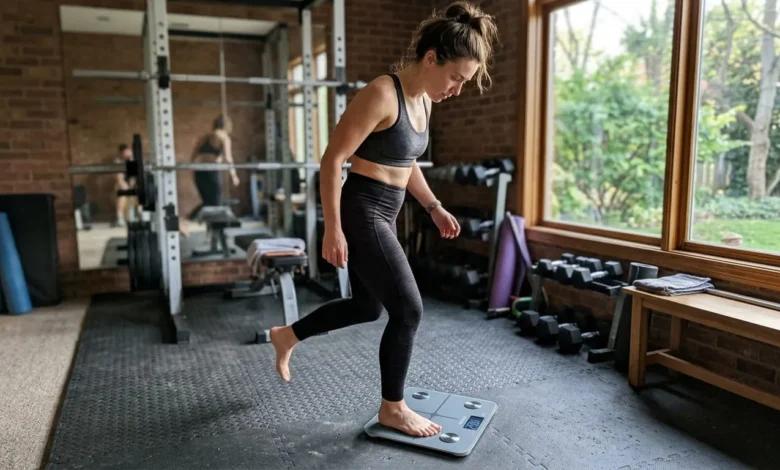
Twenty pounds of body fat takes up about 2.5 to 2.7 gallons of space, close to half of a standard five-gallon water cooler jug. That volume stays the same for everyone, but how those 20 pounds change your appearance depends on your sex, your starting weight, and where your body tends to store fat.
How Much Space Does 20 Pounds of Fat Actually Take Up
Body fat has a measured density of about 0.9 grams per cubic centimeter, slightly lighter than water and close to the density of olive oil. Using that figure, one pound of fat measures out to roughly 2 cups, or about 490 cubic centimeters. Twenty pounds works out to close to 10 liters, similar to five 2-liter soda bottles lined up side by side.
Put another way, 20 pounds of fat is about the same volume as two and a half standard one-gallon jugs, or a full case of 24 canned beverages. It is also close to the combined size of two 10-pound bowling balls, a 20-pound bag of dog food, or a compact car tire. None of these comparisons account for shape or where fat actually sits on your frame, but they give you a real sense of the physical bulk involved before body fat percentage even enters the picture.

That bulk does not sit in one neat block on the body. It spreads across the abdomen, hips, thighs, arms, and face in different amounts for different people, which is why the same 20 pounds can look like a completely different transformation from one person to the next.
Why Fat Takes Up More Room Than Muscle
Muscle tissue is denser than fat, typically 15 to 20 percent more compact for the same weight. A pound of muscle and a pound of fat weigh the same on a scale, but the muscle takes up noticeably less physical space.
This is part of why two people at an identical weight can look different, and why someone can drop a clothing size while the scale barely moves. Swap fat for muscle through strength training while losing weight, and you will look leaner than the number on the scale suggests.
What 20 Pounds of Fat Loss Looks Like on the Body
Losing 20 pounds of fat changes your shape differently depending on your sex, hormones, and genetics. Men and women store fat in different patterns, and those patterns decide where the loss becomes visible first.
How It Differs Between Men and Women
Men tend to store fat in an “android” pattern, concentrated around the abdomen, chest, and lower back. When men lose fat, the midsection is often where the change shows up first, with a flatter stomach, a more defined waistline, and a leaner jawline.

Women more often store fat in a “gynoid” pattern, spread through the hips, thighs, buttocks, and chest, largely driven by estrogen. Fat loss in women tends to show first in the face, arms, and upper body, with the hips and thighs changing more gradually. Twenty pounds lost by a man and 20 pounds lost by a woman at similar starting weights can produce noticeably different before-and-after photos, even with the same number on the scale.
How Your Starting Body Fat Percentage Changes the Result
Body composition matters more than the raw number on the scale. A 200-pound person at 30 percent body fat carries about 60 pounds of fat. Losing 20 pounds of pure fat brings that person to 180 pounds at roughly 22 percent body fat, a shift that moves them from the average category toward the edge of the fitness range for most men.
That same 20-pound loss looks different on someone who starts lighter or leaner. A 150-pound person at 20 percent body fat carries about 30 pounds of fat, so losing a full 20 pounds of fat would cut their body fat percentage dramatically and is not a realistic or healthy target for most people starting from that point. As a general pattern, the heavier your starting weight and the higher your starting body fat percentage, the more visible a 20-pound fat loss tends to be.
Other Factors That Change How 20 Pounds of Fat Looks
Height and frame size play a bigger role than most people expect. On a six-foot frame, 20 pounds of fat spreads across more surface area and can look subtle. On a five-foot-two frame, the same 20 pounds is concentrated into far less space and tends to look more dramatic.
Muscle mass matters just as much. Someone who strength trains regularly usually has a lower percentage of body fat at the same weight as someone who does not, so losing 20 pounds of fat brings a trained body closer to visible definition faster. Age plays a role too, since fat distribution shifts toward the abdomen for many people after their thirties and forties, partly due to hormonal changes.
Where the fat sits also matters for appearance, not just health. Visceral fat, the kind stored around internal organs, sits deeper and contributes to a firmer, more rounded midsection. Subcutaneous fat, the kind you can pinch just under the skin, tends to show up more directly in how loose or tight clothing fits. Losing 20 pounds usually reduces both, but the visible change often shows in subcutaneous fat first.
Body Fat Percentage Chart: What Each Range Looks Like
The American Council on Exercise (ACE) breaks body fat into five categories, and the ranges differ by sex because women carry more essential fat for hormonal and reproductive function.
| Category | Men | Women |
| Essential Fat | 2 to 5 percent | 10 to 13 percent |
| Athletes | 6 to 13 percent | 14 to 20 percent |
| Fitness | 14 to 17 percent | 21 to 24 percent |
| Average | 18 to 24 percent | 25 to 31 percent |
| Obese | 25 percent and up | 32 percent and up |
At 18 to 24 percent, men typically carry a soft midsection with little visible muscle definition. At 14 to 17 percent, the waist flattens and faint ab outlines start to show. Women in the 25 to 31 percent range usually carry a smooth, soft look through the hips and midsection, while 21 to 24 percent brings out more visible tone in the arms and legs.
Why the Scale Doesn’t Tell the Whole Story
Body weight includes water, glycogen, food still moving through your digestive tract, and muscle, not just fat. Water retention alone can shift the scale by several pounds in a single day, especially around sodium intake, hormonal cycles, or a recent hard workout.
A high-sodium meal can hold extra water for a day or two. A new strength training routine can add water into muscle tissue as it repairs. Neither of these reflects a change in body fat, which is why judging progress from a single scale reading is unreliable even when your fat loss is real and on track.
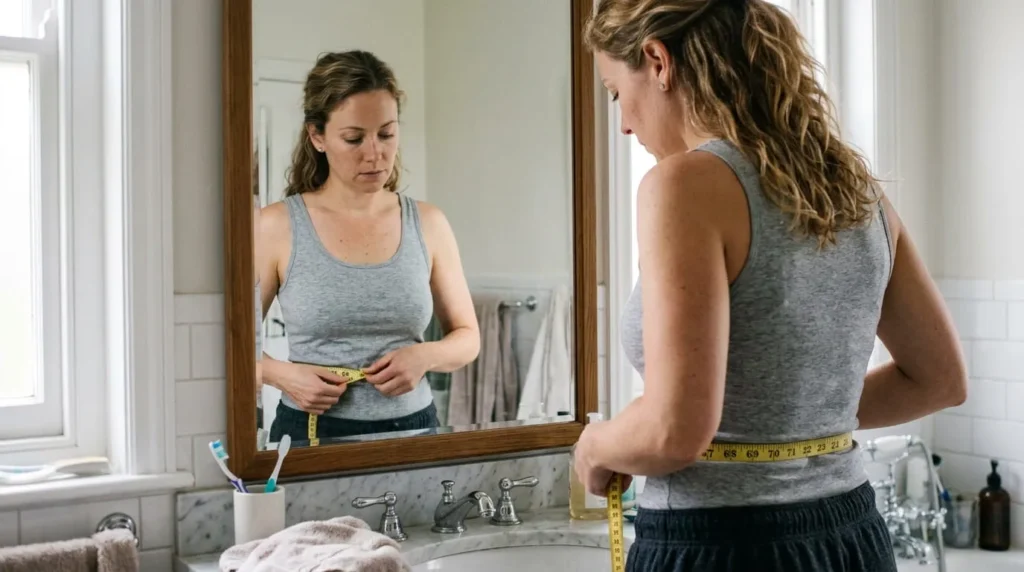
A tape measure around the waist, hips, and thighs often tracks real fat loss more reliably than the scale, since fat takes up more space than muscle at the same weight. DEXA scans and bioelectrical impedance devices go a step further and separate fat mass from lean mass directly instead of estimating from a single number.
How Long It Realistically Takes to Lose 20 Pounds of Fat
The Centers for Disease Control and Prevention recommends a pace of 1 to 2 pounds of weight loss per week for results that last. At that pace, losing 20 pounds of actual fat takes about 10 to 20 weeks, or roughly two and a half to five months.
Losing weight faster than that usually pulls muscle along with the fat, which changes how the final result looks even when the number on the scale is identical. Slower, steadier fat loss through a moderate calorie deficit, commonly in the range of 500 to 750 calories below maintenance, combined with regular resistance training, tends to preserve muscle and produce a more defined result at the same body weight.
Sleep and stress affect the timeline too. Poor sleep raises cortisol and hunger hormones, which can make a calorie deficit harder to maintain consistently over the 10 to 20 weeks this process typically takes.
Tracking Real Fat Loss Beyond the Scale
Progress photos taken in the same lighting, pose, and clothing every two to four weeks reveal changes that day-to-day scale weight hides. Pair them with waist, hip, and thigh measurements for a fuller picture of what is actually happening.
If you have access to a DEXA scan or a consistent bioelectrical impedance device, checking body fat percentage every two to three months gives a clearer read than weekly scale check-ins. Twenty pounds of fat loss is a real, physical amount of tissue leaving your body, close to a full case of canned drinks or half a water cooler jug in volume. How visible that change looks on you personally depends on your starting point, your sex, and how much of that 20 pounds is fat versus muscle or water.
As with any significant change in diet or exercise, check with a doctor or registered dietitian before starting, especially if you have an existing health condition