
The fire hydrant exercise is a bodyweight glute move done on all fours, where you lift one bent leg out to the side like a dog at a fire hydrant. It targets the outer glutes and hip stabilizers, muscles that squats and lunges often miss. This guide covers proper form, the muscles it works, and how to add it to a workout routine.
What Is the Fire Hydrant Exercise
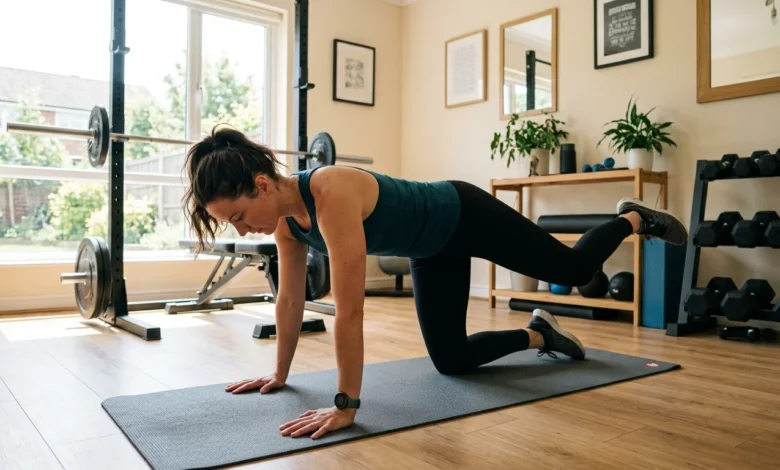
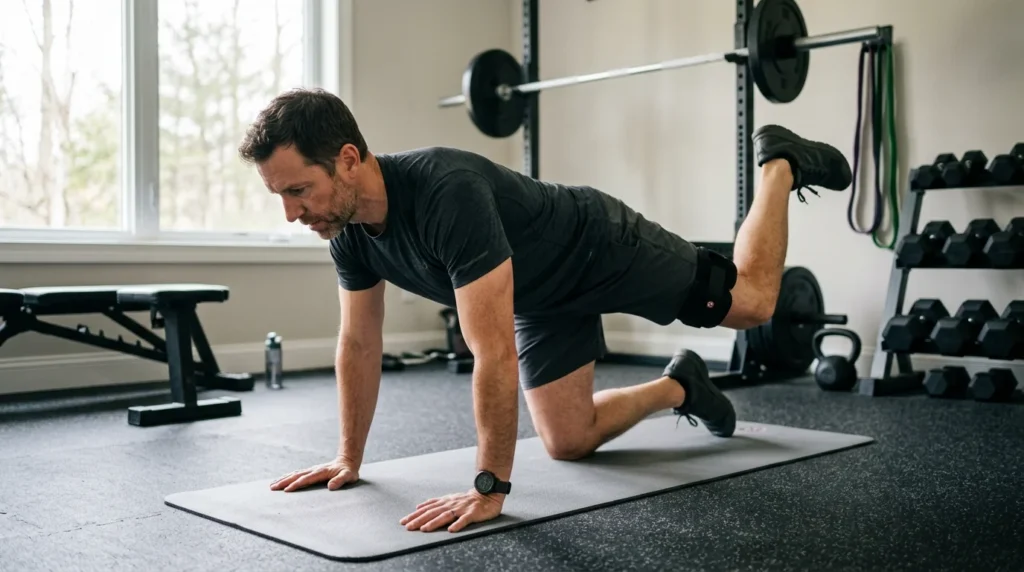
The fire hydrant exercise gets its name from the motion, which resembles a dog lifting its leg. You start on your hands and knees, then lift one bent leg out to the side while keeping your core braced and your back flat.
It is a hip abduction movement, meaning the leg moves away from the body’s midline. Trainers often program it as a glute activation drill before heavier lower-body lifts, or as a standalone move in a glute-focused workout.
Muscles Worked by the Fire Hydrant Exercise
The primary muscle trained is the gluteus medius, the smaller muscle on the side of the hip that stabilizes the pelvis during walking, running, and single-leg movements. A weak gluteus medius is linked to knee and lower back issues, especially in runners.
Secondary muscles include the gluteus maximus, the hip flexors, and the deep core muscles that keep the spine stable while one leg moves independently. The shoulders and triceps also get light isometric work from holding the quadruped position.
Benefits of the Fire Hydrant Exercise
Building the gluteus medius has real carryover to everyday movement, not just aesthetics. A stronger outer hip helps reduce the inward knee collapse that shows up in squats, lunges, and stairs.
Runners and hikers in particular benefit, since the gluteus medius controls hip drop with every stride. Physical therapists frequently prescribe fire hydrants during rehab for hip and knee pain because the movement isolates a muscle that compound lifts tend to undertrain.
The exercise also requires no equipment, which makes it easy to do at home, in a hotel room, or as part of a warm-up before a gym session.
How to Do the Fire Hydrant Exercise With Proper Form
Good form is what separates a fire hydrant that strengthens the hip from one that just swings the leg around without much benefit. The goal is a controlled, isolated hip movement, not momentum.
1. Step-by-Step Instructions
Start on a mat on your hands and knees, with wrists stacked under shoulders and knees under hips. Keep your spine in a neutral, flat position, with your gaze down toward the mat.
Brace your core, then lift one knee out to the side while keeping it bent at roughly a 90-degree angle. Raise the leg only as high as you can without rotating your hips or shifting your weight onto the opposite hand.
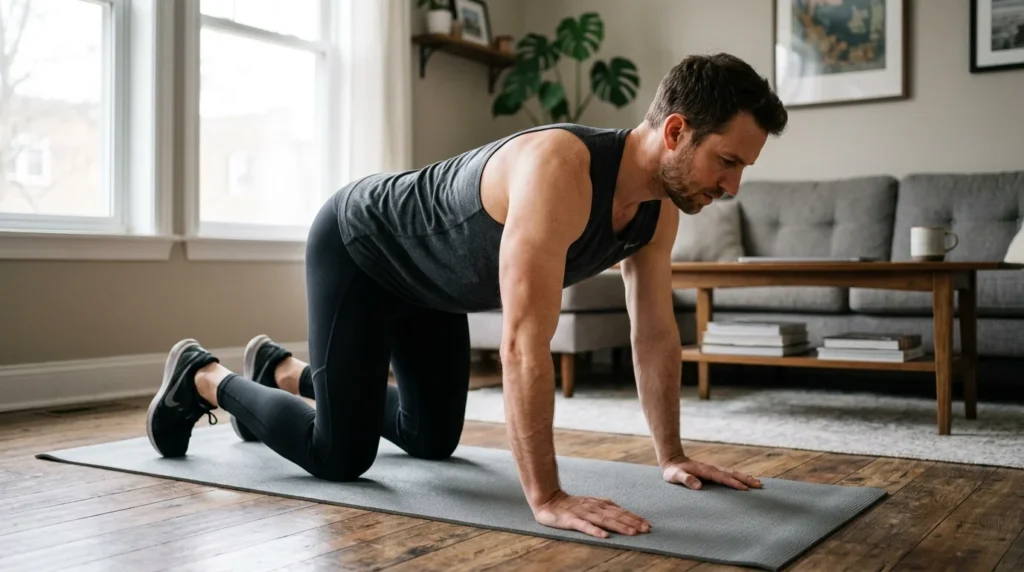
Pause briefly at the top, then lower the leg back down with control. Complete 12 to 15 reps on one side before switching to the other.
2. Common Form Mistakes to Avoid
The most common mistake is letting the hips rotate open as the leg lifts, which shifts the work away from the glute and into the lower back. Keep the hips square to the floor throughout the movement.
Another frequent error is lifting the leg too high, past the point where the hip can control the motion. This usually causes the supporting hip to sink or the spine to arch, both of which reduce the exercise’s effectiveness.
Rushing through reps with momentum instead of a slow, controlled tempo is another issue. A two-second lift and two-second lower produces far better muscle activation than a fast, bouncing rep.
Fire Hydrant Exercise Variations
Once the basic bodyweight version feels easy, a few variations add resistance or change the stimulus. These are useful for anyone who has plateaued on the standard move.
1. Banded Fire Hydrant
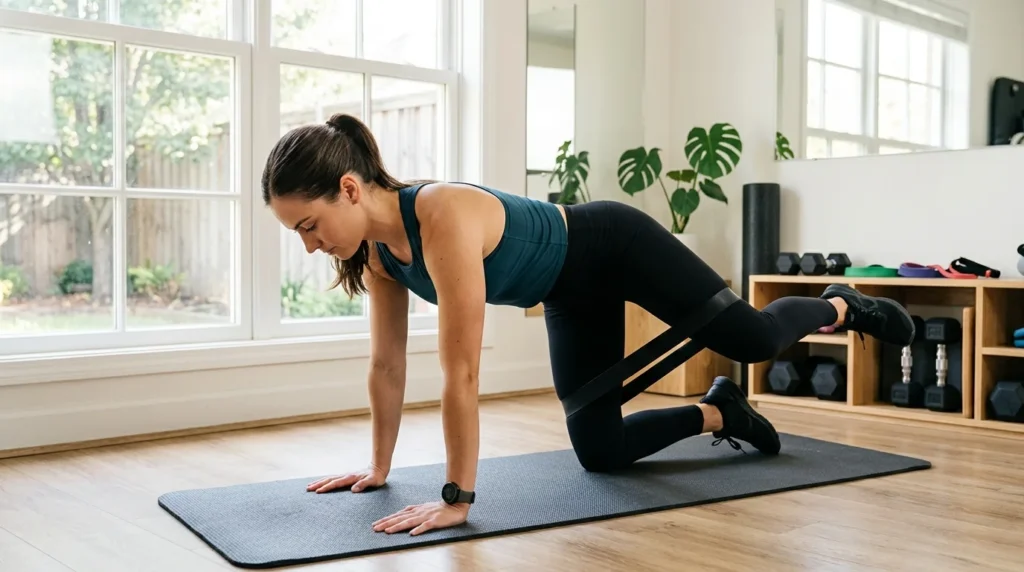
Looping a mini resistance band just above the knees adds tension throughout the entire range of motion. This variation is popular because it increases the burn without needing dumbbells or a gym setup.
2. Weighted Fire Hydrant
Strapping a light ankle weight, usually 2 to 5 pounds to start, above the knee increases the load the glute has to move against. This works well for people who have built a solid base of control with the bodyweight version and want to progress further.
3. Fire Hydrant Pulse
Instead of a full lift and lower, this version holds the leg near the top of the range and performs small, quick pulses for 15 to 20 reps. The shorter range of motion keeps constant tension on the gluteus medius and is often used at the end of a glute workout to finish the muscle.
How to Add Fire Hydrants to Your Workout Routine
Fire hydrants work well as a warm-up move before lower body training, since they activate the glutes before squats, deadlifts, or lunges. Two to three sets of 12 to 15 reps per side is enough to wake up the muscle without causing fatigue.
They also fit into a dedicated glute or lower body workout, paired with hip thrusts, clamshells, and lateral band walks. For general fitness, doing fire hydrants two to three times per week is enough to see improvements in hip stability within a few weeks of consistent practice.
Who Should Be Careful With This Exercise
Anyone with an existing knee injury should pay close attention to how the knee feels during the movement, since sustained pressure on a bent knee in the quadruped position can aggravate certain issues. Wrist discomfort is also common for people with limited wrist mobility and can be reduced by performing the exercise on closed fists or using a padded mat.
Pregnant individuals, particularly in later trimesters, may find the quadruped position uncomfortable and should check with a doctor or physical therapist before adding it to a routine. As with any new exercise, starting with fewer reps and lighter resistance allows the body to adapt safely.
How Fire Hydrants Compare to Other Glute Exercises
Hip thrusts and squats build overall glute size and strength, but they rely heavily on the gluteus maximus and give the gluteus medius only limited work. Fire hydrants fill that gap by isolating the smaller stabilizer muscle directly.
Clamshells target a similar area, but the fire hydrant adds a standing hip extension component that clamshells do not, since the working leg moves through a slightly larger range against gravity. Many trainers use both moves together rather than choosing one over the other, since they reinforce different parts of the same muscle group.
Signs Your Gluteus Medius Needs More Work
A weak gluteus medius often shows up before someone realizes the muscle is the cause. Knees that cave inward during squats or when walking down stairs are one of the clearest signals, along with a noticeable hip drop on one side when running or walking.
Lower back tightness after standing for long periods can also point to a weak outer hip, since the spine and lower back compensate when the glutes fail to stabilize the pelvis. Anyone who notices these patterns can use fire hydrants as a targeted fix rather than guessing at a broader lower body program.
How Long It Takes to See Results
Strength gains in a small stabilizer muscle like the gluteus medius tend to show up faster than size gains in larger muscle groups. Most people notice better hip stability and less knee cave within two to four weeks of doing fire hydrants consistently, two to three times per week.
Visible shape changes take longer, generally six to eight weeks of consistent training combined with adequate protein intake and overall lower body work. Progress also depends on starting point, since someone with an already active lifestyle will typically see functional improvements sooner than someone starting from a fully sedentary baseline.