
A mild pulled muscle usually heals in one to three weeks. A moderate strain takes three to six weeks. A severe, fully torn muscle can take three months or longer, and some cases need surgery. The right timeline for you depends on which muscle is hurt and how severe the tear is.
How Long a Pulled Muscle Takes to Heal, by Grade
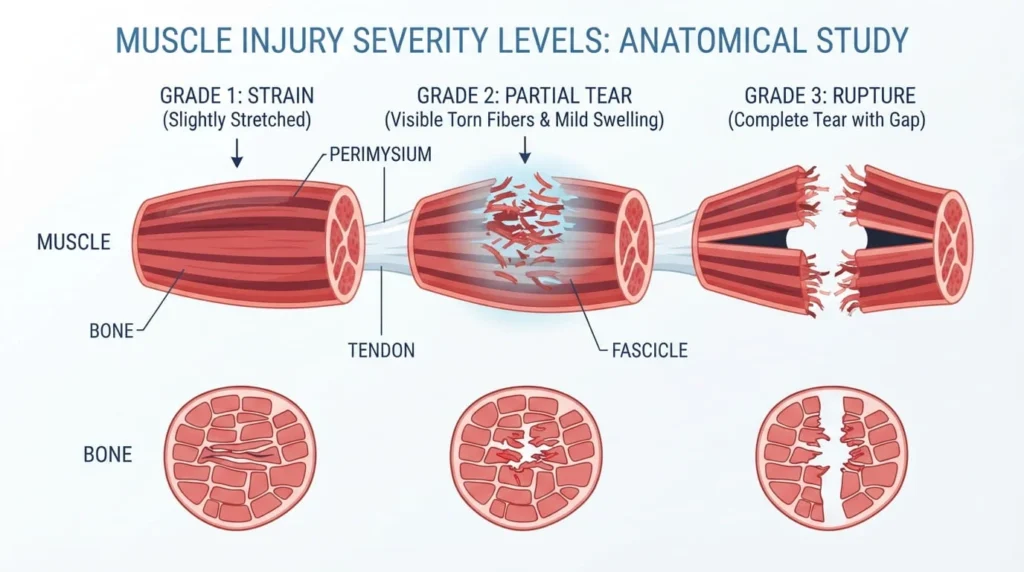
Doctors grade muscle strains by how much of the muscle is torn. The grade is the single biggest factor in how long recovery takes.
A grade 1 strain means a few muscle fibers are overstretched or slightly torn. There’s mild soreness and maybe some tightness, but you can usually still move and use the muscle. Most grade 1 strains heal in one to three weeks with rest and basic home care.
A grade 2 strain is a partial tear. More fibers are damaged, so you’ll notice more pain, swelling, and some loss of strength. This is the type most people mean when they say they “pulled a muscle” badly. Recovery generally takes three to six weeks, and some grade 2 injuries stretch closer to two or three months if the muscle is large (like the hamstring) or the person returns to activity too soon.
A grade 3 strain is a complete tear or rupture. The muscle has torn all the way through, and you may feel a pop, see a visible gap, or lose the ability to use the muscle at all. Grade 3 tears often need imaging to confirm the extent of damage and sometimes require surgery to reconnect the torn ends. Recovery after surgery can run three to six months, including a period of immobilization before rehab even starts.
What’s Happening Inside the Muscle While It Heals
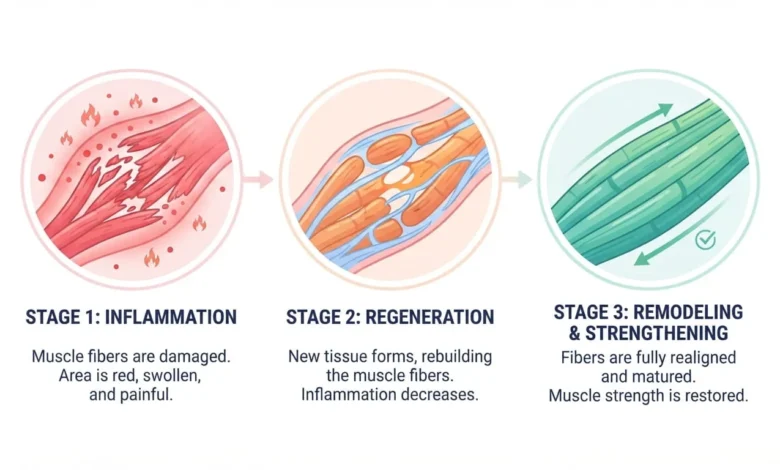
Muscle tissue doesn’t heal all at once. It moves through three overlapping stages, and knowing where you are in that process helps explain why pain and tightness change week to week.
1. Inflammation (Roughly Days 1 to 5)
Right after the injury, the body sends inflammatory cells to clear away damaged tissue. This is why the area is swollen, warm, and tender in the first few days. Ice, light compression, and short-term rest help manage this stage, but the muscle isn’t meant to sit still for long.
2. Repair (Starting Around Day 3, Lasting Several Weeks)
New cells begin replacing the damaged tissue, but they’re weak and disorganized at first. This is the stage where gentle movement matters. Staying completely still for too long lets the new tissue form in a way that’s stiffer and less functional than the muscle it’s replacing.
3. Remodeling (Weeks to Several Months)
The new tissue gradually strengthens and realigns with the rest of the muscle. For a mild strain, this stage can wrap up within about four weeks. For a strain involving the tendon, remodeling can continue for months, since tendon collagen rebuilds much more slowly than muscle tissue.
What Affects How Fast a Pulled Muscle Heals
Grade isn’t the only variable. A few other things push recovery time up or down:
Muscle size and location matter. Large, high-demand muscles like the hamstring or quadriceps tend to take longer than smaller muscles because they’re under constant load just from walking.
Blood supply plays a role too. Muscle tissue generally heals faster than tendon, since tendons have a thinner blood supply and rely on slower-growing collagen.
How quickly you start treatment matters. Icing and resting in the first 48 to 72 hours limits how much damage spreads, while ignoring the injury and continuing to push through it usually makes the tear worse.
Age and overall health influence healing speed as well, since tissue repair slows somewhat with age and with conditions that affect circulation.
And re-injury risk is real: a muscle that’s healed with scar tissue is stiffer than the tissue around it, which makes it more prone to tearing again if you return to full activity too soon.
How to Speed Up Recovery
There’s no way to force a torn muscle to heal overnight, but you can avoid slowing it down.
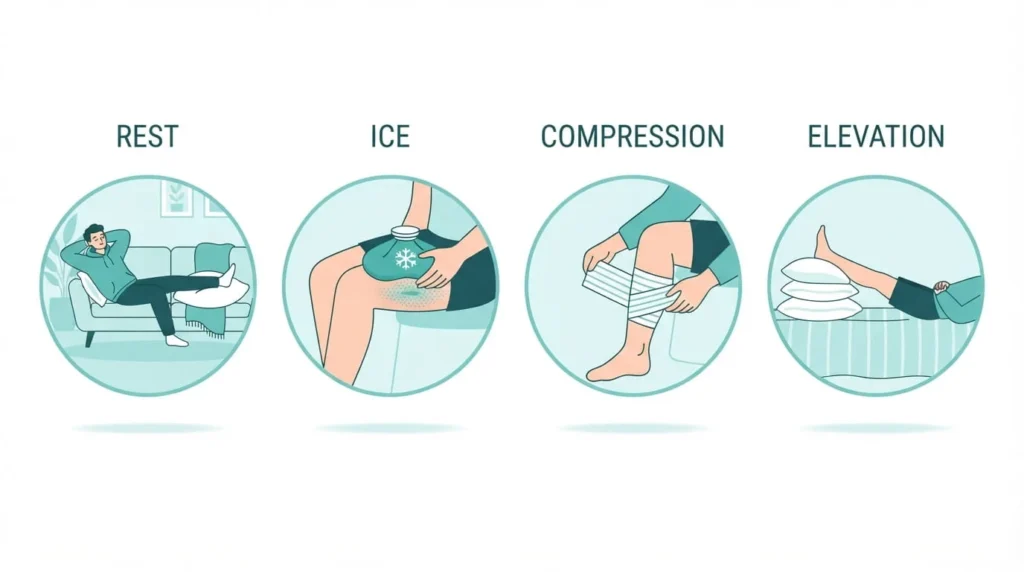
For the first two to three days, rest the muscle, apply ice for 15 to 20 minutes every couple of hours, use light compression with an elastic bandage, and keep the area elevated when possible. This is the classic RICE approach, and it’s mainly about limiting swelling, not speeding up cell growth.
When to See a Doctor for a Pulled Muscle
Most pulled muscles heal at home. See a doctor if you heard or felt a pop at the moment of injury, if you can’t put weight on the leg or use the arm at all, if there’s a visible gap or dent in the muscle, if bruising and swelling are severe, or if pain hasn’t started improving within five to seven days. These are signs the strain may be more severe than a simple grade 1 pull and could need imaging or a referral to a specialist.
Healing Time for Common Pulled Muscle Locations
The general grade-based timelines above hold up across the body, but a few spots are worth calling out.
A pulled hamstring is one of the slowest to heal because it’s a long muscle under constant tension, even during walking. A mild hamstring strain often takes two to three weeks, while a moderate tear can take six to twelve weeks.
A calf strain behaves similarly. Mild calf strains often clear up in one to two weeks, but a partial tear can keep you off it for four to eight weeks, especially for runners going back to full pace too early.
A pulled lower back muscle typically improves within two to four weeks, though the pain can feel disproportionate to the actual damage since back muscles are involved in almost every movement you make.
Getting Back to Normal
A pulled muscle is uncomfortable, but most people recover fully. Grade 1 strains clear up in about a week to three weeks, grade 2 strains take three weeks to a few months, and grade 3 tears need real patience, sometimes with surgery involved. The biggest factor you actually control is how you treat the muscle in the first few days and how gradually you return to full activity afterward. Rushing back is the most common reason a healed strain turns into a repeat injury.
Frequently Asked Questions
1. How Do I Know if I Pulled a Muscle or Tore It?
A pull usually causes soreness and tightness but you can still move the area. A tear causes sharper pain, visible swelling or bruising, and noticeable weakness or loss of motion. If you felt or heard a pop, or can’t use the muscle at all, treat it as a possible tear and get it checked.
2. Can a pulled muscle heal in a few days?
A very mild grade 1 strain can feel much better within three to five days, but “feeling better” isn’t the same as fully healed. The tissue is usually still repairing itself for another one to two weeks even after the pain fades.
3. Is it bad to keep moving a pulled muscle?
Complete rest for more than a few days can actually slow healing, since the new tissue needs gentle movement to form correctly. The general rule is to rest for the first 48 to 72 hours, then reintroduce light movement as pain allows.
4. Does a pulled muscle ever fully heal, or does it stay weaker?
Most mild and moderate strains heal without lasting weakness if you follow a proper rehab progression. Severe tears that involve scar tissue can leave the area slightly stiffer than before, which is why doctors recommend a gradual, structured return to activity rather than jumping straight back to full intensity.
5. When should I worry a pulled muscle needs a doctor?
See a doctor if you can’t bear weight or use the limb, if there’s a visible gap in the muscle, if swelling or bruising is severe, or if pain hasn’t improved at all after five to seven days.