

The rep fitness bench lineup, and how to pick the right one
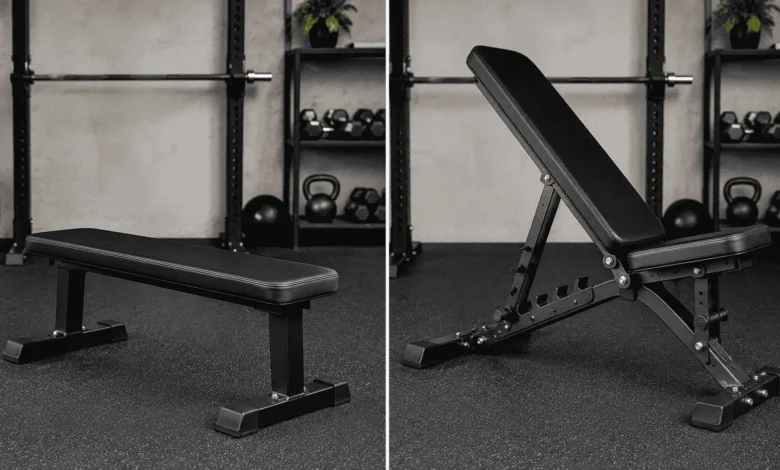
REP Fitness makes two kinds of bench: flat benches (FB-3000, FB-4000, FB-5000) built for straightforward barbell work, and adjustable benches (AB-3000 2.0, Nighthawk, BlackWing) that add incline and decline positions. Which rep fitness bench fits your gym comes down mostly to budget, floor space, and how heavy you plan to load the bar.
Flat vs adjustable: the first decision
A flat bench only does one thing, but it does it well. There’s no gap between pads, no ladder mechanism to fuss with, and less weight to move around a garage gym. If your training is mostly barbell bench press, rows, and step-ups, a flat bench covers it. An adjustable bench costs more and weighs more, but it opens up incline presses, shoulder work, and decline sit-ups. If your programming includes anything beyond flat pressing, the extra cost usually pays for itself within a few months of varied training.
FB-3000: the budget flat bench
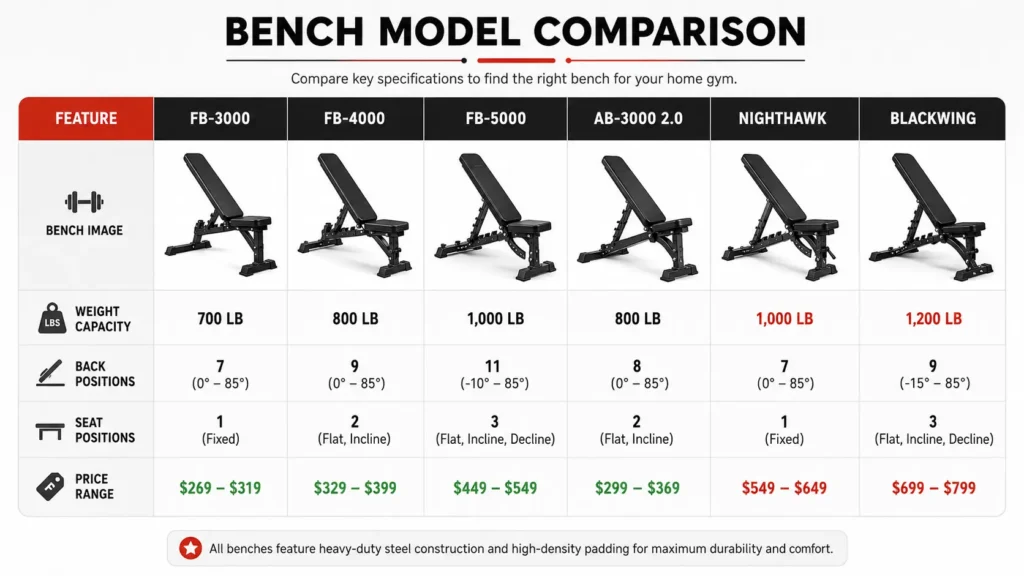
The FB-3000 is REP’s entry point into flat benches, built from 11-gauge steel and rated to handle 1,000 pounds, according to Garage Gym Reviews’ testing. It’s lightweight enough to move around a small space without much effort, which matters if your bench needs to slide under a rack between sessions rather than sit permanently in the middle of the floor. There’s nothing fancy here. No wheels, no storage post, just a stable flat pad at a fixed height. For lifters who only need one thing from a bench, that simplicity is the appeal.
FB-4000: the competition tripod bench
The FB-4000 uses a three-post tripod design that meets IPF competition standards, letting lifters get their legs fully under the bench the way they would in a meet. Garage Gym Reviews notes it’s become one of REP’s most popular benches, with more than 150 five-star reviews and a tendency to sell out. The tradeoff shows up at the extremes. The same review found the padding isn’t quite firm enough for lifters regularly loading 500 pounds or more, and the 12-inch pad width can feel narrow for wider-framed lifters. For most home gym lifters below that threshold, it’s not an issue.
FB-5000: the competition transport bench
The FB-5000 sits above the FB-4000 as REP’s other competition-style flat bench, built with an easy-transport handle for moving it between a rack and a platform. REP’s own product listing describes it as suited to lifters who want a dedicated competition setup rather than a general-use bench. Stat needed here: detailed weight capacity and steel gauge figures for the FB-5000 weren’t confirmed in the sources I checked, so confirm the current spec sheet on REP’s site before publishing exact numbers.
AB-3000 2.0: the value adjustable bench
At $349.99, the AB-3000 2.0 is REP’s mid-tier adjustable bench, and Gymcrafter’s owner review, based on 18 months of use, called it one of the best value options in its price range. It carries a 1,000-pound weight capacity, eight back pad positions, and five seat positions, with built-in leg rollers that lock into six settings for decline sit-ups and Nordic curls. The updated CleanGrip vinyl pads are denser and easier to wipe down than the original version, per REP’s product page. One limitation: it can’t be stored vertically, so it needs a permanent footprint on the floor.
Nighthawk: the lighter flagship adjustable bench
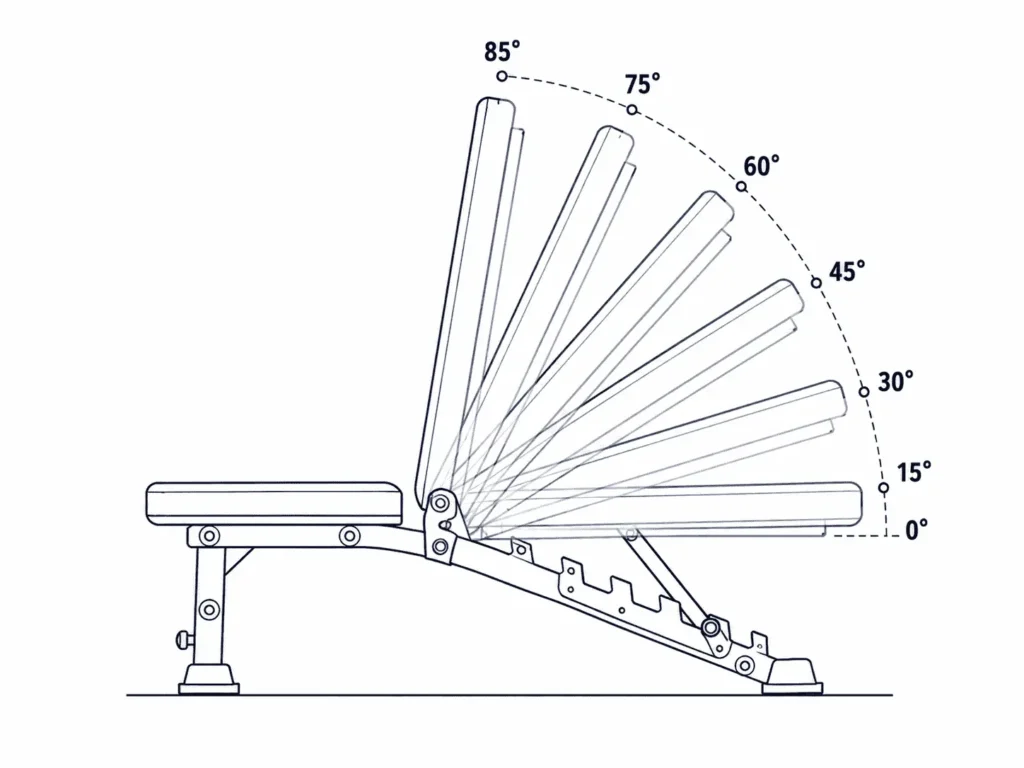
The Nighthawk is REP’s newer flagship adjustable bench, weighing 88 pounds with seven back positions (0, 15, 30, 45, 60, 75, and 85 degrees) and four seat positions, built from 7- and 14-gauge steel. Gray Matter Lifting’s long-term review describes it as roughly $150 cheaper than the BlackWing while dropping the ZeroGap seat mechanism, which that reviewer considers a fair tradeoff since manually adjusting the gap every rep position change is easy to skip. It includes a knurled front handle and wheels for moving it around a gym, plus a built-in vertical storage post to save floor space when it’s not in use.
BlackWing: the zero-gap flagship
The BlackWing is REP’s top-tier adjustable bench, built from 11-gauge steel with a 1,000-pound weight capacity that includes the lifter’s body weight, per BarBend’s review. It offers 12 back pad angles and 6 seat pad angles, along with REP’s ZeroGap seat technology, which keeps the seat and back pad flush against each other at every angle instead of leaving a gap. At around $600, plus another $110 for the optional leg roller attachment, it’s the most expensive bench in the lineup. The Jungle Gym Reviews’ long-term test found it worth that price for lifters doing heavy, repeated pressing work, though at roughly 130 pounds, it’s not a bench you casually reposition mid-workout.
How to choose the right rep fitness bench for your gym
Start with what you actually train. If your programming is flat barbell work only, an FB-series flat bench costs less, weighs less, and does the job without a ladder mechanism to maintain. If you regularly do incline dumbbell work, decline sit-ups, or vary your bench angle by exercise, one of the AB-series adjustable benches earns its higher price. Floor space matters more than it seems at first. The AB-3000 2.0 can’t stand vertically, so measure your rack room before assuming it’ll fit. The Nighthawk and BlackWing both store upright, which helps in a shared garage gym where the bench needs to move out of the way between sessions. Budget splits fairly cleanly across the lineup: the FB-3000 and AB-3000 2.0 sit at the accessible end, the FB-4000 and Nighthawk in the middle, and the FB-5000 and BlackWing at the premium end for lifters who want the most adjustment options or competition-specific features.
The bottom line
There isn’t a single best rep fitness bench, only the one that matches your training style, your space, and your budget. Flat benches keep things simple and cheap; adjustable benches trade weight and cost for versatility. Match the bench to what you’ll actually do on it three or four times a week, and the rest of the decision gets easier.
FAQ
1. What’s the difference between REP’s flat and adjustable benches?
Flat benches (FB-3000, FB-4000, FB-5000) only sit at one fixed height and suit barbell pressing and rows. Adjustable benches (AB-3000 2.0, Nighthawk, BlackWing) add incline and decline positions for dumbbell work, shoulder presses, and decline sit-ups, at a higher price and weight.
2. Which REP Fitness bench is best for heavy lifting?
The BlackWing and FB-4000 both meet or approach competition-style build standards, with the BlackWing’s 1,000-pound capacity and ZeroGap seat suited to lifters pressing heavy and often. The FB-4000’s padding is the one limit reviewers flag for lifters loading 500 pounds or more.
3. Is the REP Nighthawk worth it over the BlackWing?
It depends on priorities. The Nighthawk costs less, weighs less, and stores upright more easily, while the BlackWing offers more adjustment angles and the ZeroGap mechanism. Reviewers generally frame it as a tradeoff between convenience and features rather than one bench being objectively better.
4. Can I store a REP adjustable bench vertically?
The Nighthawk and BlackWing both support vertical storage. The AB-3000 2.0 does not, so it needs a permanent spot on the floor.
5. Is a flat bench enough for a home gym, or do I need adjustable?
A flat bench covers barbell bench press, rows, and step-ups, which is enough for many lifters. If your routine includes incline presses, decline work, or varied dumbbell angles, an adjustable bench adds those options without needing a second piece of equipment.
